

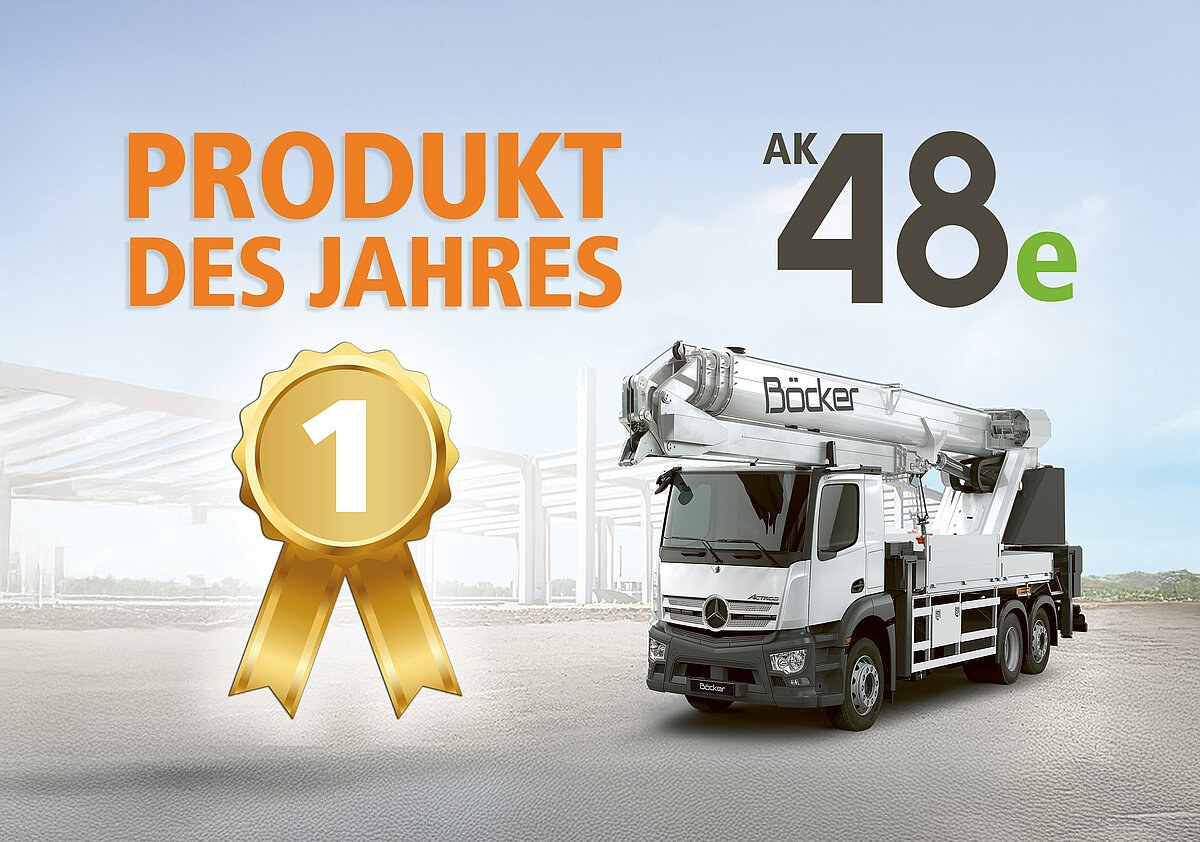
Battery-electric AK 48e takes first place in the Product of the Year 2026 readers’ poll
Böcker’s battery-electric AK 48e truck crane has won the site, workshop and safety category in the Product of the Year 2026 readers’ vote run by buildingnet.de, dachbaumagazin and mikado.
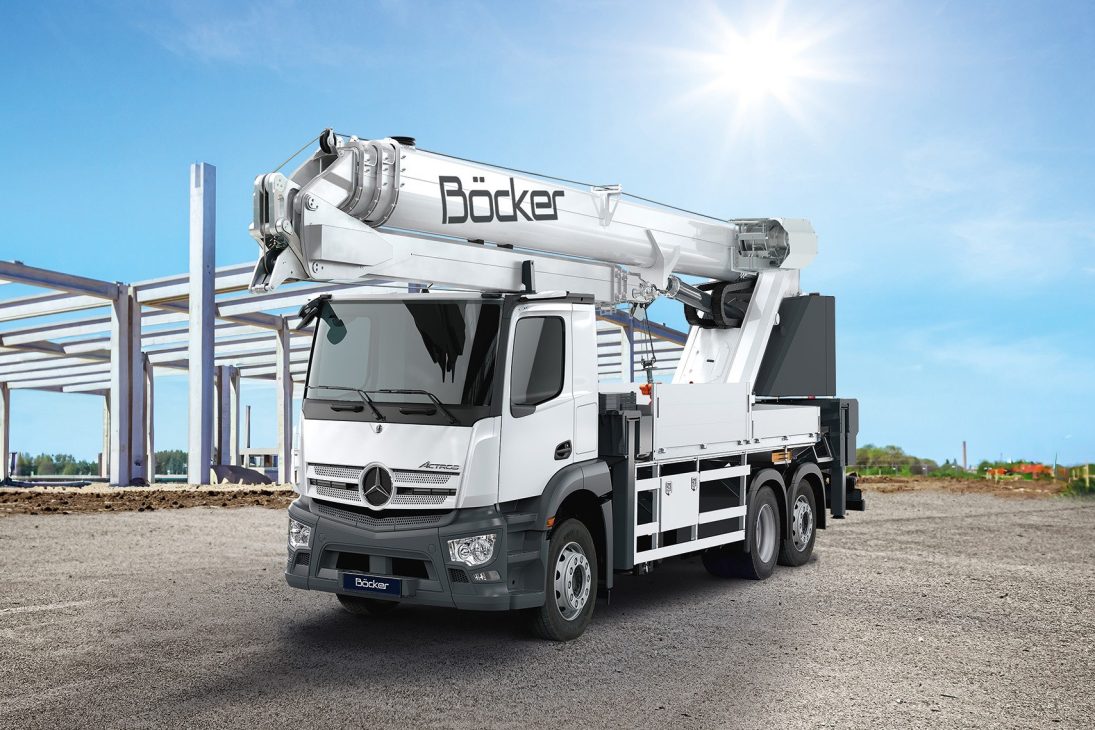

Electric crane work on a diesel chassis
The AK 48e splits the job between two power sources. The carrier vehicle keeps a conventional combustion engine for the road run to site, while all crane functions — slewing, telescoping and hoisting — are driven electrically from a 30 kWh battery. That arrangement avoids the range and payload penalties of a fully electric truck while still allowing the crane itself to work without engine noise or exhaust at the working position, which matters on inner-city roofing jobs and in built-up residential streets.
Böcker rates the machine for a full working day, or more than eight hours of average duty, without a mains connection. High-efficiency electric motors, an electric winch and energy recovery when lowering a load are what stretch the battery that far. Recharging is possible from a 230 V household socket or a 400 V supply, with wallbox charging to follow.
What the vote rewarded
Readers’ polls of this kind are not a technical test, but they do indicate which machines contractors regard as answering a real problem. In the AK 48e’s case that problem is straightforward: roofing and facade contractors increasingly work on sites where noise limits, emission zones or simple neighbour relations make a diesel-driven crane awkward, yet they cannot accept a drop in lifting performance to get around it.
On paper the electric version does not concede much. Payload runs to 3 t, and to 6 t with the optional configuration, while extension lengths reach 49 m, or 52 m optionally. Those are figures comparable with Böcker’s combustion-engined models in the same class, which is the point the manufacturer has been making since the electric line was introduced.
The comparison the manufacturer draws is with its own combustion-engined machines rather than with rival electric cranes, and that is a fair reflection of where the market sits: for most roofing and cladding contractors the decision is still whether to give up a diesel crane, not which battery crane to choose. Charging practice is the other half of the argument. A 230 V socket is available on virtually every site and in every yard, so an overnight charge is realistic without any investment in infrastructure; a 400 V supply shortens the turnaround where one is present.
Böcker thanked the readers who voted for the crane and said the result confirmed that the machine matches what modern sites now require.
Böcker AK 48e at a glance
- Type: battery-electric truck-mounted aluminium crane
- Payload: up to 3 t (optionally up to 6 t)
- Extension length: up to 49 m (optionally up to 52 m)
- Battery: 30 kWh
- Duty: more than 8 hours average operation without a mains connection
- Charging: 230 V or 400 V; wallbox charging planned
- Award: Product of the Year 2026, category site / workshop / occupational safety
Related Stories
Hoeflon sets out four-step plan for lifting on cramped jobsites
Dutch mini crane builder Hoeflon has published practical guidance for contractors who must place steel, glass or machinery…
Jekko SPX1280 named best mini crane at PEM Awards 2026
Jekko's SPX1280 has won the Best Product of the Year title in the mini crane category at the…
Tadano names Mang Chong as mobile crane distributor for Taiwan
Tadano has appointed Taoyuan-based Mang Chong Enterprise, a partner since the 1980s, as its official distributor for mobile…