

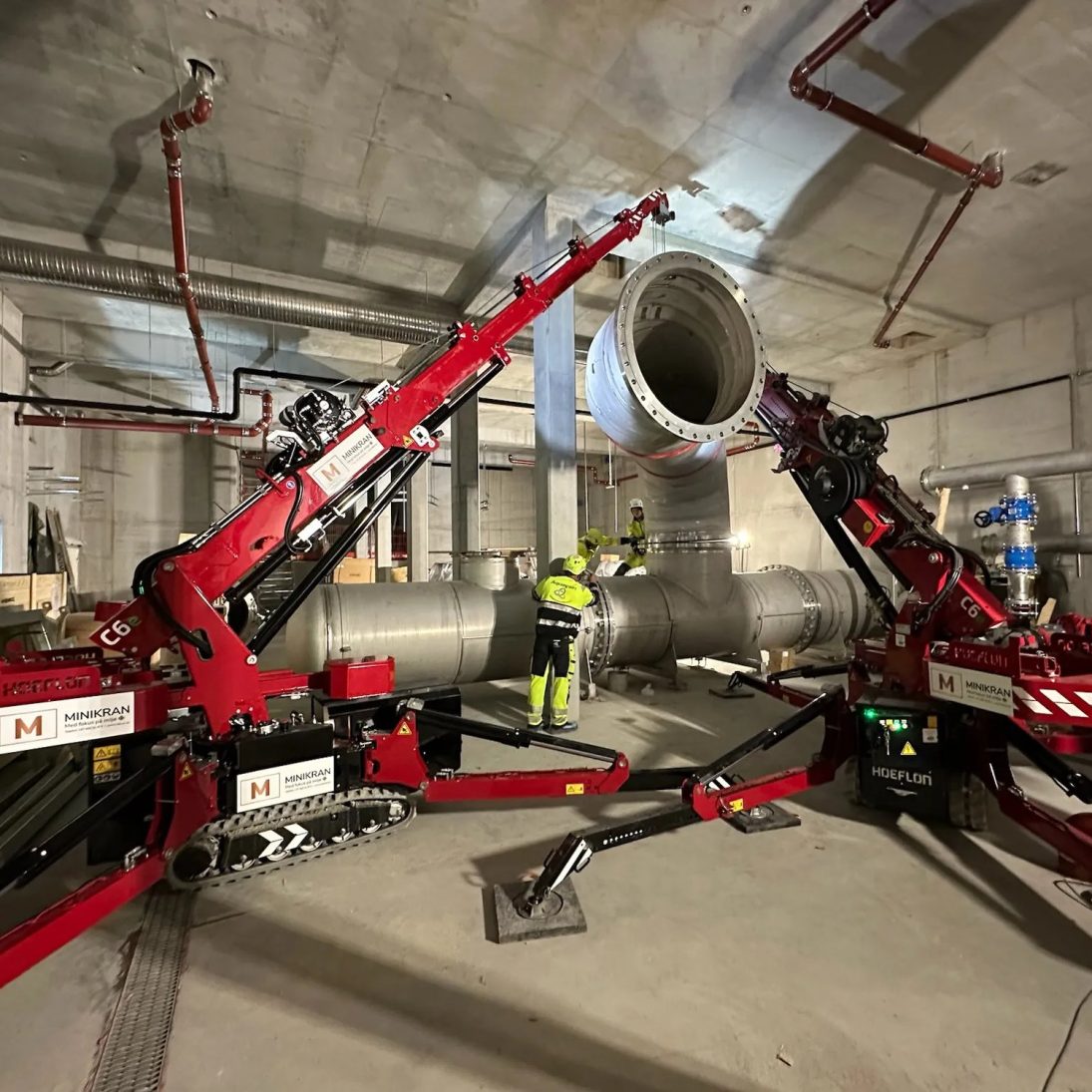
How to lift heavy loads where big cranes cannot go: Hoeflon’s four-step plan for confined jobsites
Inner-city renovations, narrow rear gardens and factory interiors leave little room for lifting equipment. Dutch mini crane manufacturer Hoeflon has set out a four-step plan for moving steel beams, glass panels and machinery safely on confined sites.
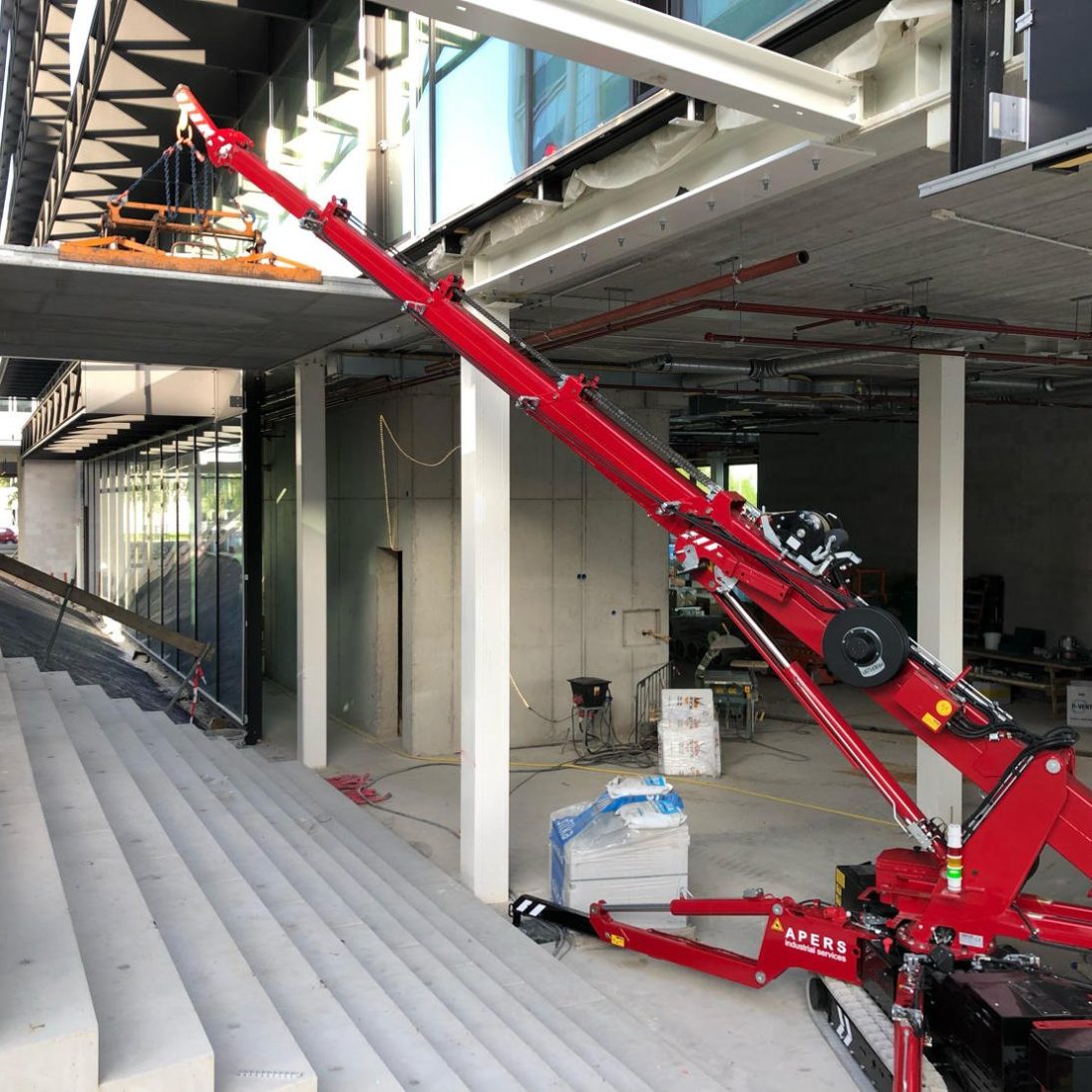
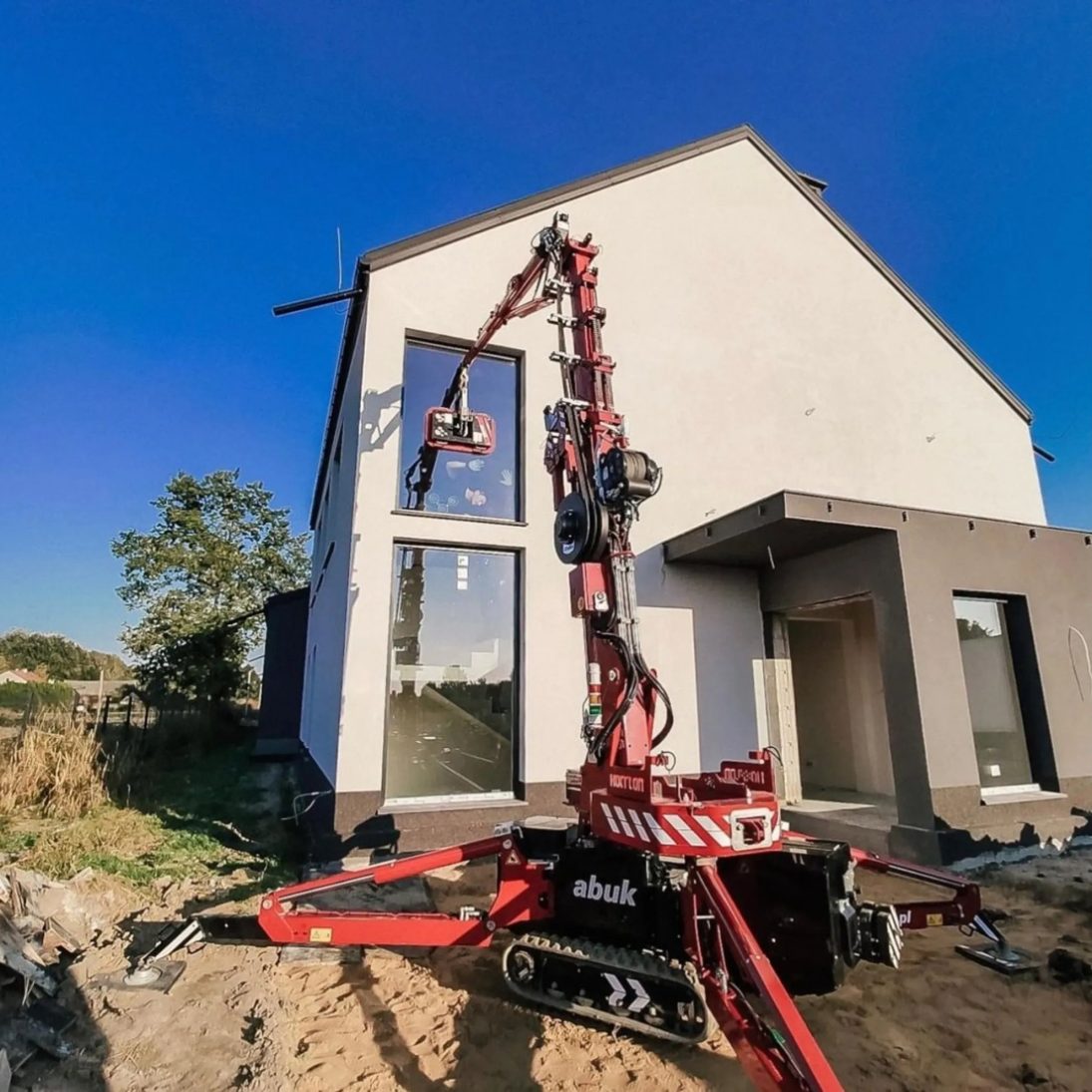
According to the Barneveld-based manufacturer, contractors increasingly face locations where a large mobile crane or tower crane physically does not fit on site or would block the public road, while manual handling of heavy components carries serious health and safety risks.
Four steps before the lift
Hoeflon’s guidance starts with the access route: measure the narrowest passage — a doorway, alley or gate — and select equipment with a transport width that clears it comfortably, typically 70 to 80 cm. Second, check whether the ground or floor, such as an upper storey, courtyard or timber deck, can take the loading, using outrigger mats to spread the pressure. The third step is choosing suitably compact lifting equipment, with the manufacturer unsurprisingly pointing to the electric spider crane, which combines a small footprint with capacities up to 9,000 kg. Finally, for indoor or poorly ventilated locations Hoeflon says a fully electric, battery-powered crane is a must to avoid exhaust emissions and noise.
Why the spider crane fits
The company argues the mini crane is purpose-built for the constraints of a tight site. Models such as its C1e and C6e have transport widths of just 70 to 77 cm, so the tracked machines drive through a standard doorway or narrow passage and even fit in a goods lift. On the lifting position, hydraulic outriggers can each be set at a different angle and length, allowing a stable set-up between walls, on staircases or on uneven ground. Where loads have to travel over a roof, wall or scaffold, a fly-jib extends the reach and an articulated arm lets the operator work around a corner.
Weighing the alternatives
The guide also compares the alternatives. Manual handling with aids remains cheap but is physically demanding and limited to roughly 100 kg per person. Glass robots and forklifts handle 300 to 1,000 kg but need a flat, paved floor and are often too wide for narrow access. A large mobile crane offers capacities of 30 tonnes and more, yet requires a wide street and generous set-up space. Hoeflon’s own mini crane range spans 550 kg for the smallest lift-transportable unit to 9,000 kg for heavy industrial work, with non-marking tracks and a low dead weight keeping point loads on fragile floors down.
Related Stories
Jekko SPX1280 named best mini crane at PEM Awards 2026
Jekko's SPX1280 has won the Best Product of the Year title in the mini crane category at the…
Tadano names Mang Chong as mobile crane distributor for Taiwan
Tadano has appointed Taoyuan-based Mang Chong Enterprise, a partner since the 1980s, as its official distributor for mobile…
Potain doubles MCT 2205 output as Zhangjiagang factory ramps up
Lean manufacturing methods at Manitowoc's Zhangjiagang plant in China have doubled production of the 80-tonne Potain MCT 2205…