Salmon farms, a national hospital and a geothermal plant: where Liebherr cranes work in Iceland
From a land-based salmon farm on the exposed south coast to Reykjavík’s new national hospital and a geothermal plant surrounded by volcanic activity, Liebherr tower cranes are on most of Iceland’s largest sites. Here is where they are, and in what numbers.
Seven cranes for a salmon farm
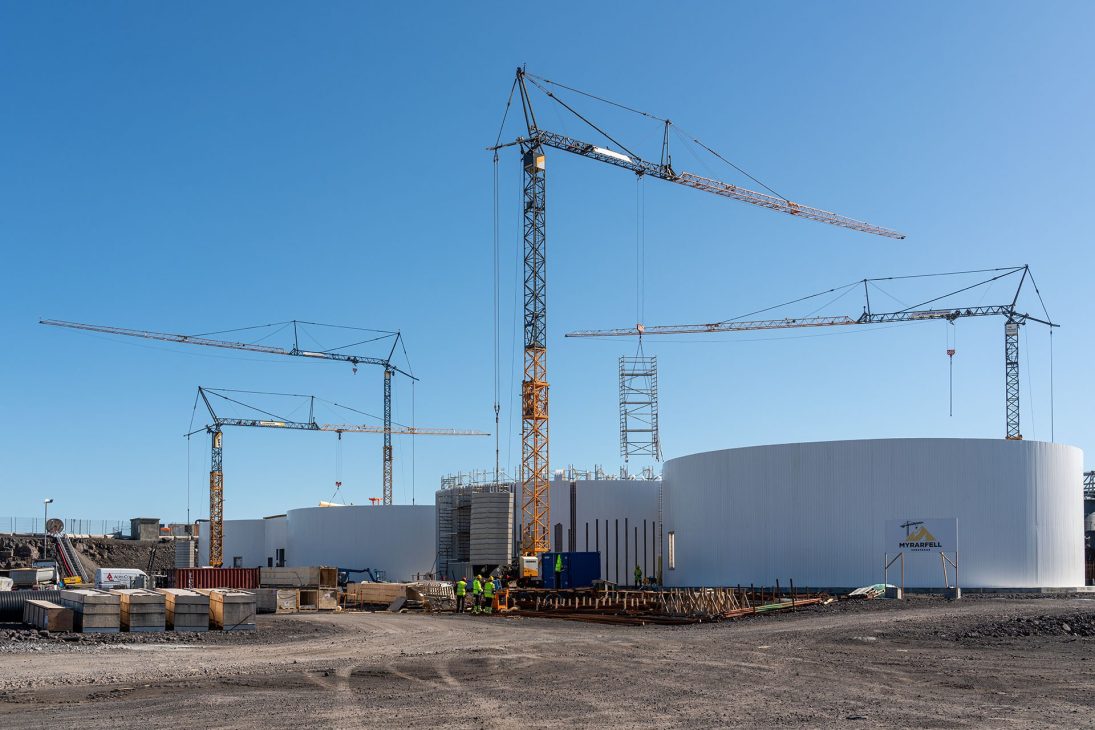
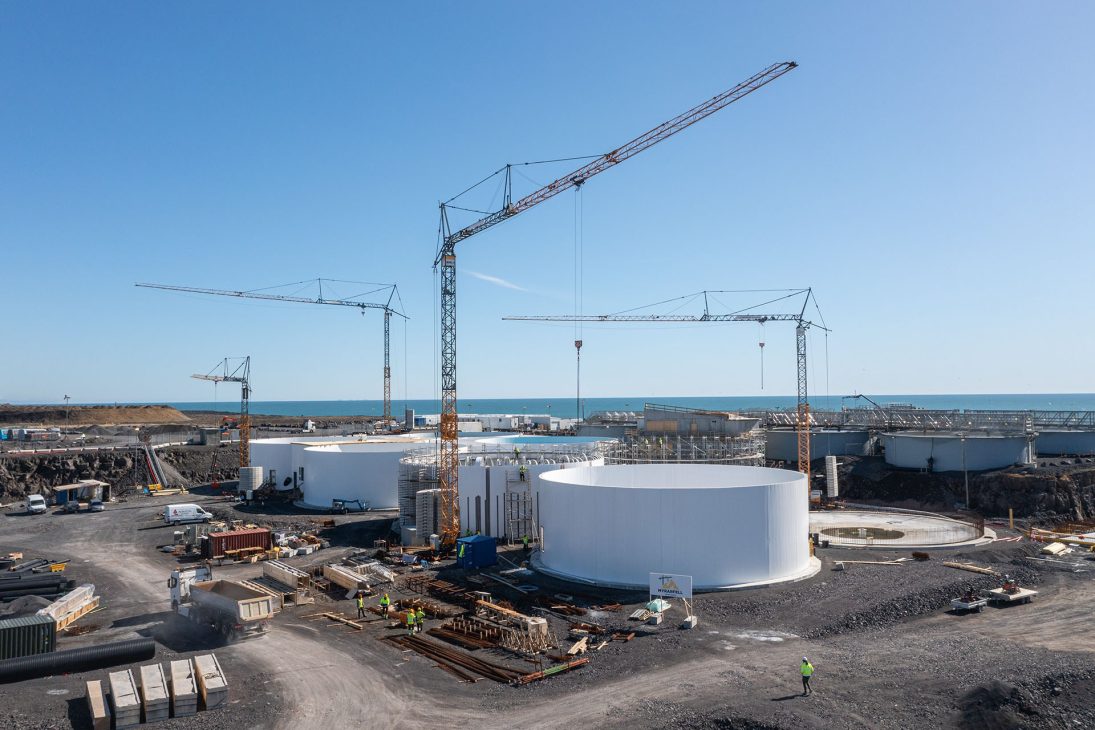
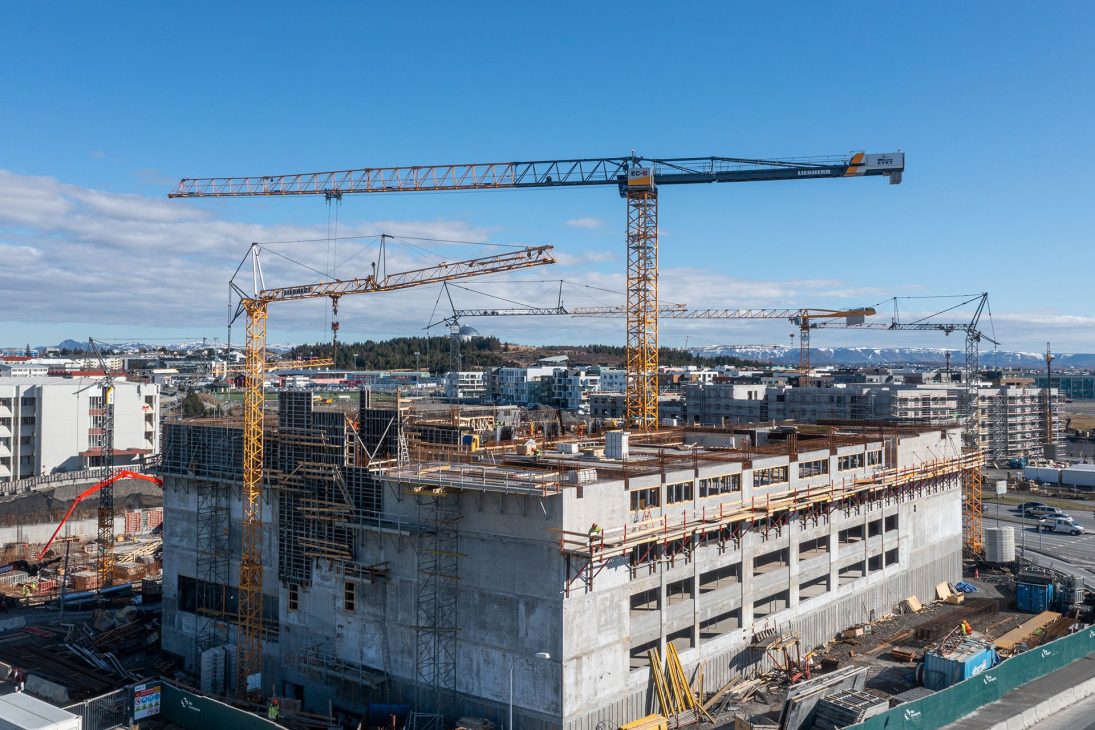
The First Water land-based salmon farming facility at Þorlákshöfn on Iceland’s south coast is among the country’s most ambitious projects under way. It is being built in six phases, each designed for roughly 10,000 tonnes of Atlantic salmon a year, with a target of around 60,000 tonnes at full build-out.
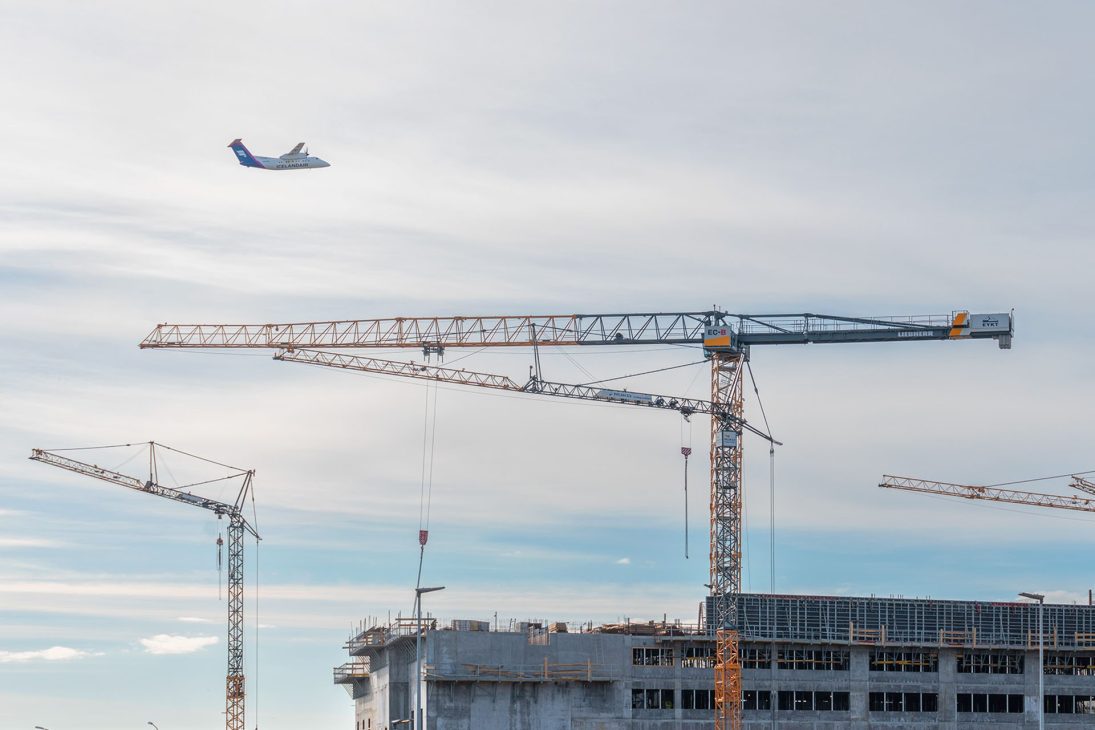
Seven Liebherr cranes are at work there: two 270 EC-B, two 81K.1, two 53K and one 125K, handling the tank infrastructure and ancillary buildings. The site is coastal and wind-exposed, with strong saline winds and rapidly changing weather adding constraints to every lift. The facility runs on geothermal and hydroelectric power and has already begun shipping to international markets.
Fifteen cranes on the new national hospital
In central Reykjavík, the New National Hospital has been under construction since June 2021 and is approaching its later stages. The crane fleet on the campus is unusually varied: one 280 EC-H, two 340 EC-B, two 81K.1, one 34K, four 53K, one 172 EC-B, one 132 EC-B, one 71K, one 130 EC-B and one 150 EC-B. Configurations were worked out with Liebherr Tower Crane Solutions (TCS) during the planning phases. The completed hospital will consolidate clinical care, research space and supporting infrastructure currently spread across several campuses.
Geothermal work between eruptions
The expansion of the Svartsengi geothermal power plant – one of Iceland’s oldest and most important, supplying electricity, district heating and hot water – began in 2023 and ran to completion in late 2025. It did so while volcanic activity in the nearby Sundhnúkur area produced multiple eruptions and protective earthworks were built around the plant. An 81K.1 handled the lifting and assembly of the extension’s structural components.
In downtown Selfoss, the Midbær Selfoss mixed-use scheme – first phase completed in 2021, second phase running from 2024 to 2028 – is served by two 81K.1, one 53K and one L1 32, coordinating lifts with minimal laydown area and tight access.
A market shifting to rental
Across these sectors the Icelandic market has moved noticeably from crane purchase to rental since around 2017-2018, reflecting both economic conditions and a contractor preference for fleet flexibility. Liebherr’s local partner Rüko, active since 2012, runs approximately 45 tower cranes and covers more than 46 per cent of Iceland’s tower crane requirement.
Liebherr cranes in Iceland
- First Water, Þorlákshöfn: 7 cranes – 2x 270 EC-B, 2x 81K.1, 2x 53K, 1x 125K
- New National Hospital, Reykjavík: 15 cranes incl. 280 EC-H, 2x 340 EC-B, 4x 53K, 172 EC-B, 150 EC-B
- Svartsengi geothermal plant: 81K.1, expansion 2023 to late 2025
- Midbær Selfoss: 2x 81K.1, 53K, L1 32; phase two 2024–2028
- Dealer: Rüko, active since 2012, approx. 45 tower cranes
- Market share: more than 46% of Iceland’s tower crane needs
Related Stories
Link-Belt Cranes singled out in Kentucky Manufacturing Month
The Kentucky Association of Manufacturers has highlighted Link-Belt Cranes and its Lexington factory as part of its October…
Zoomlion opens Brisbane branch with all-terrain crane orders
Zoomlion has inaugurated a Brisbane branch, with first orders signed at the opening covering 120-tonne all-terrain cranes and…
Hiab renews ProCare lifecycle services for its crane fleets
Hiab's next-generation ProCare portfolio combines service agreements with remote diagnostics and AI-driven monitoring for loader cranes, rolling out…