İDÇ Liman has converted diesel material handlers to electric drive — and cut energy costs by up to 80 per cent
At İDÇ Liman near Aliağa, 7.5 million tonnes of coal, scrap and iron ore cross a 475-metre quay each year. Ten Sennebogen machines do the handling, and the port has spent two decades moving them off diesel.
A steel producer that runs its own port
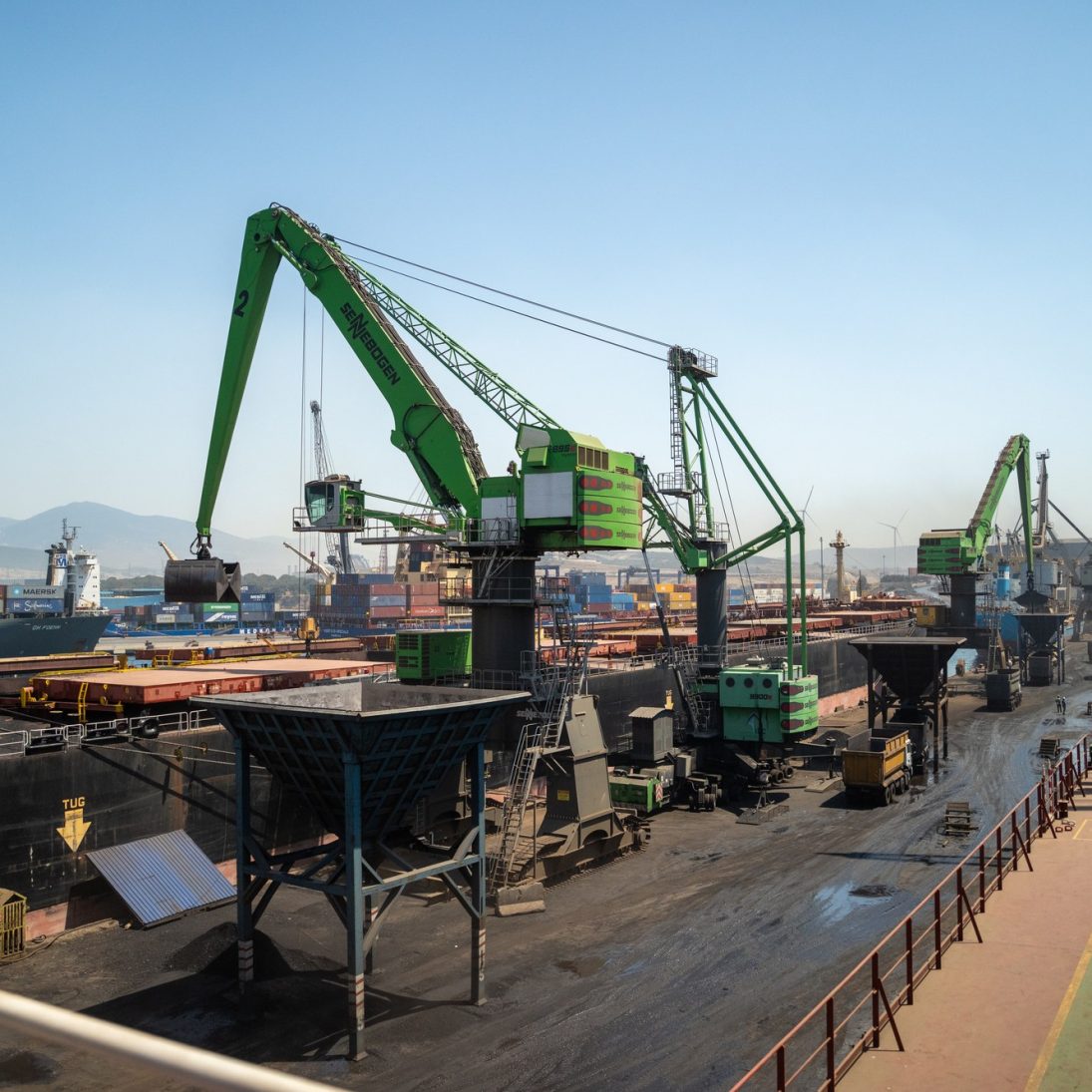
İzmir Demir Çelik Sanayi A.Ş. is one of Türkiye’s larger listed steel producers, and its port sits two kilometres from its own steelworks on the Aliağa–Izmir axis. The quay is 475 metres long, can take vessels of up to 120,000 DWT, and turns over about 7.5 million tonnes of bulk material a year.
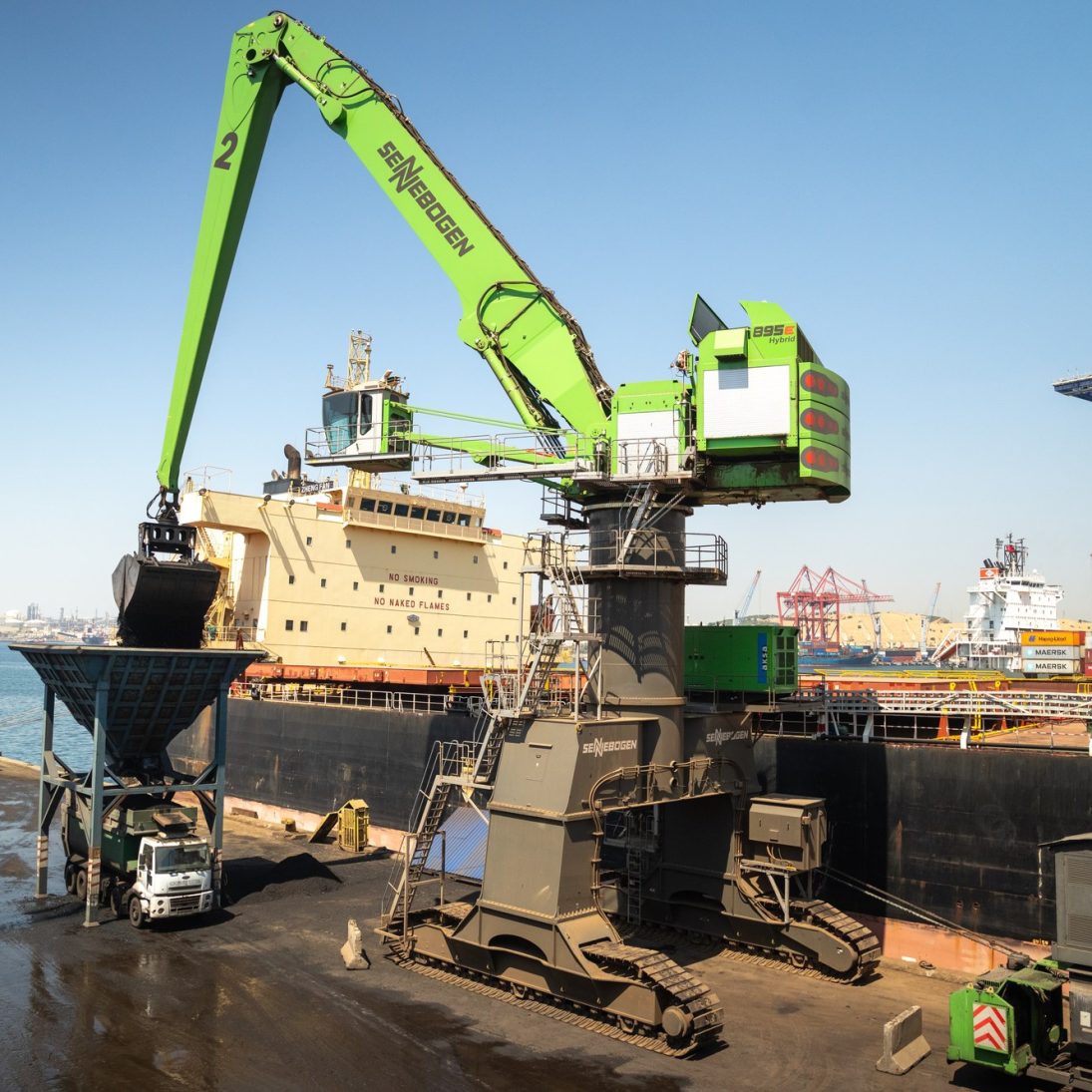
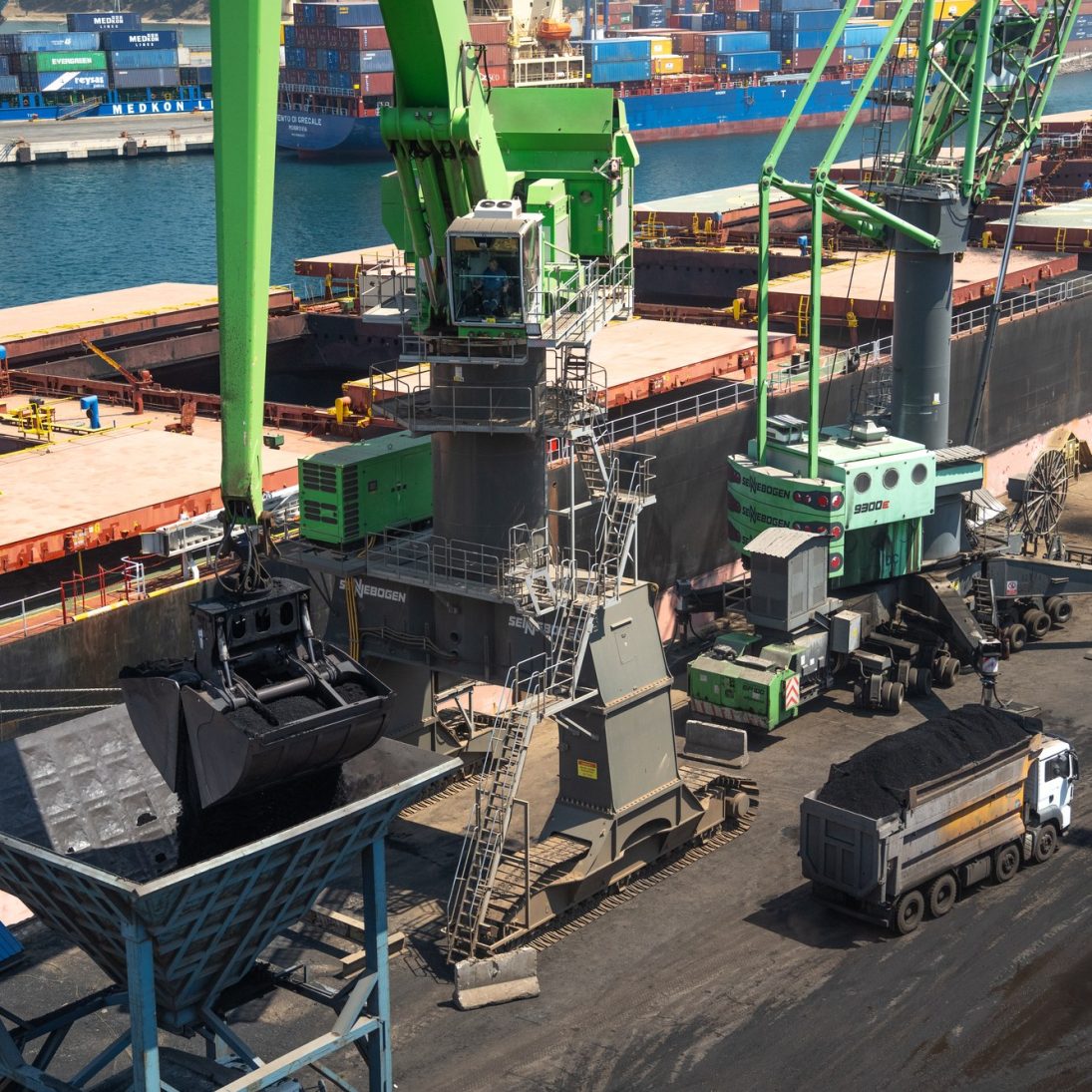
Ten Sennebogen machines cover the work: four 880 EQ Balancers, two 895 E material handlers, a 9300 harbour mobile crane and several other harbour cranes. The two 895 E machines are the backbone. Both stand on crawler portal undercarriages, reach 40 metres and are specified for continuous duty on the largest vessels calling at the berth, with the Green Hybrid energy recovery system that Sennebogen credits with cutting operating costs by up to half.
Why the port keeps choosing electric
Few operators are as well placed to answer the diesel-versus-electric question as İDÇ Liman, which has bought electric for new machines for years and has also converted existing diesel material handlers. The clearest evidence comes from one of the 880 EQ Balancers.
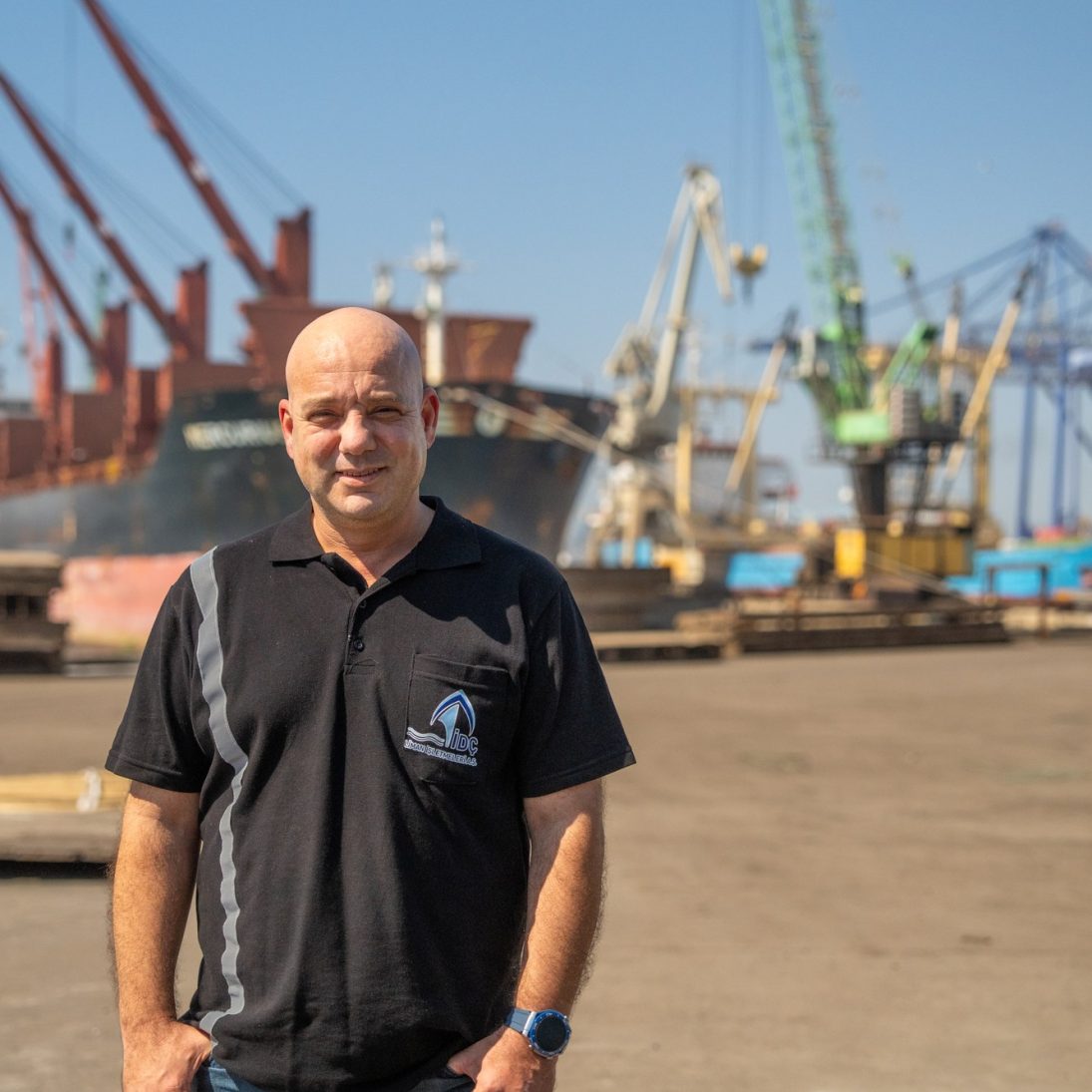
“We reduced our energy costs by up to 80 % after converting the machine from diesel to electric, without any loss in performance.”
— Emre Söyler, port manager, İDÇ Liman
Cost is only part of it. Electric machines extend service intervals, carry fewer wear parts and remove refuelling from the daily routine, all of which lifts availability on a quay that works continuously. And an electric motor simply has less to go wrong than a diesel engine — no pistons, plain bearings or injection system — so the expensive, time-consuming repairs come round less often.
50,000 hours and still working
The durability argument at İDÇ Liman is made by one 880 EQ Balancer in particular.
“This machine has logged more than 50,000 operating hours, and even after more than two decades it is still running flawlessly. All of our machines are in operation every day – that says everything about the reliability of SENNEBOGEN machines.”
— Emre Söyler, port manager, İDÇ Liman
Behind the machines sits Sennebogen’s Turkish sales and service partner Forsen Makina, which has worked with the port for 20 years.
“We don’t just sell machines. We provide lifetime support – spare parts, maintenance, training, everything. At İDÇ, we have built a relationship that has lasted for 20 years. It’s not just about machines, it’s about trust.”
— Emin Gök, Forsen Makina
İDÇ Liman in numbers
- Location: Aliağa, Türkiye
- Annual throughput: 7.5 million tonnes
- Quay length: 475 m · Max vessel: 120,000 DWT
- Fleet: ten Sennebogen machines — four 880 EQ Balancers, two 895 E, one 9300 harbour mobile crane, plus further harbour cranes
- 895 E: 40 m reach, crawler portal undercarriage, electric drive
- Energy saving: up to 80% after diesel-to-electric conversion of an 880 EQ
- Green Hybrid: up to 50% lower operating costs
- Longevity: one 880 EQ past 50,000 operating hours
Related Stories
Liebherr extends Fibre rope service life for tower cranes
Liebherr has increased the overall service life of its Fibre tower crane ropes from 14 to 16 years,…
Grove Wire Rope Cleaner updated to fit ropes on any crane brand
Customer feedback has led Manitowoc to redesign its automated Wire Rope Cleaner, which now suits ropes from 12…
Spierings eLift wins JDL d’Or 2026 for equipment electrification
Spierings Mobile Cranes has won the JDL d'Or 2026 at JDL Expo in Beaune, taking first place in…