

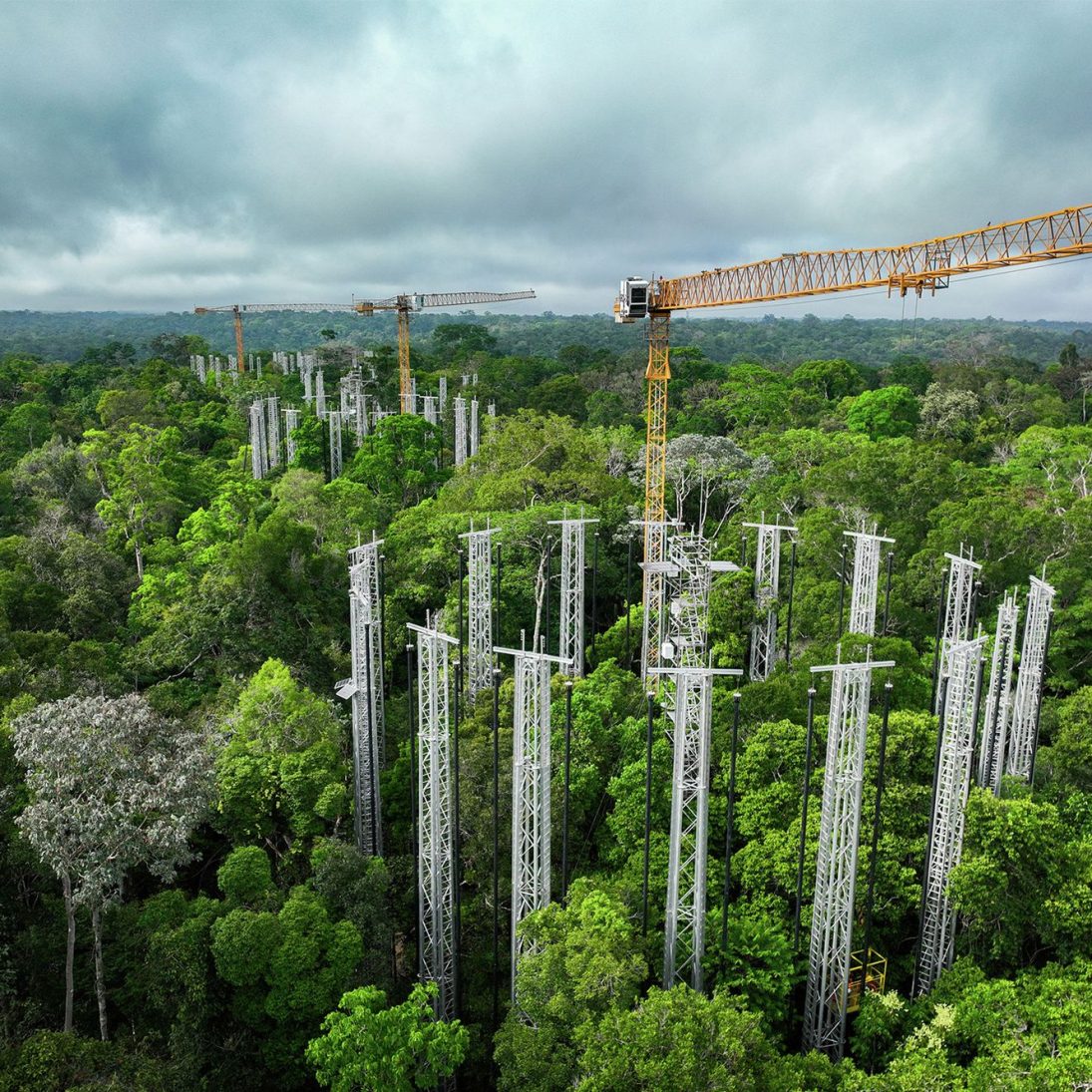
Four Liebherr 85 EC-B flat-tops lift climate researchers above the Amazon canopy
At the AmazonFACE research site near Manaus, Brazil, four Liebherr 85 EC-B tower cranes are hoisting scientists and instruments more than 45 metres above old-growth rainforest, giving a major CO2 experiment safe access to the canopy without disturbing the forest floor.
A crane job with no building in sight
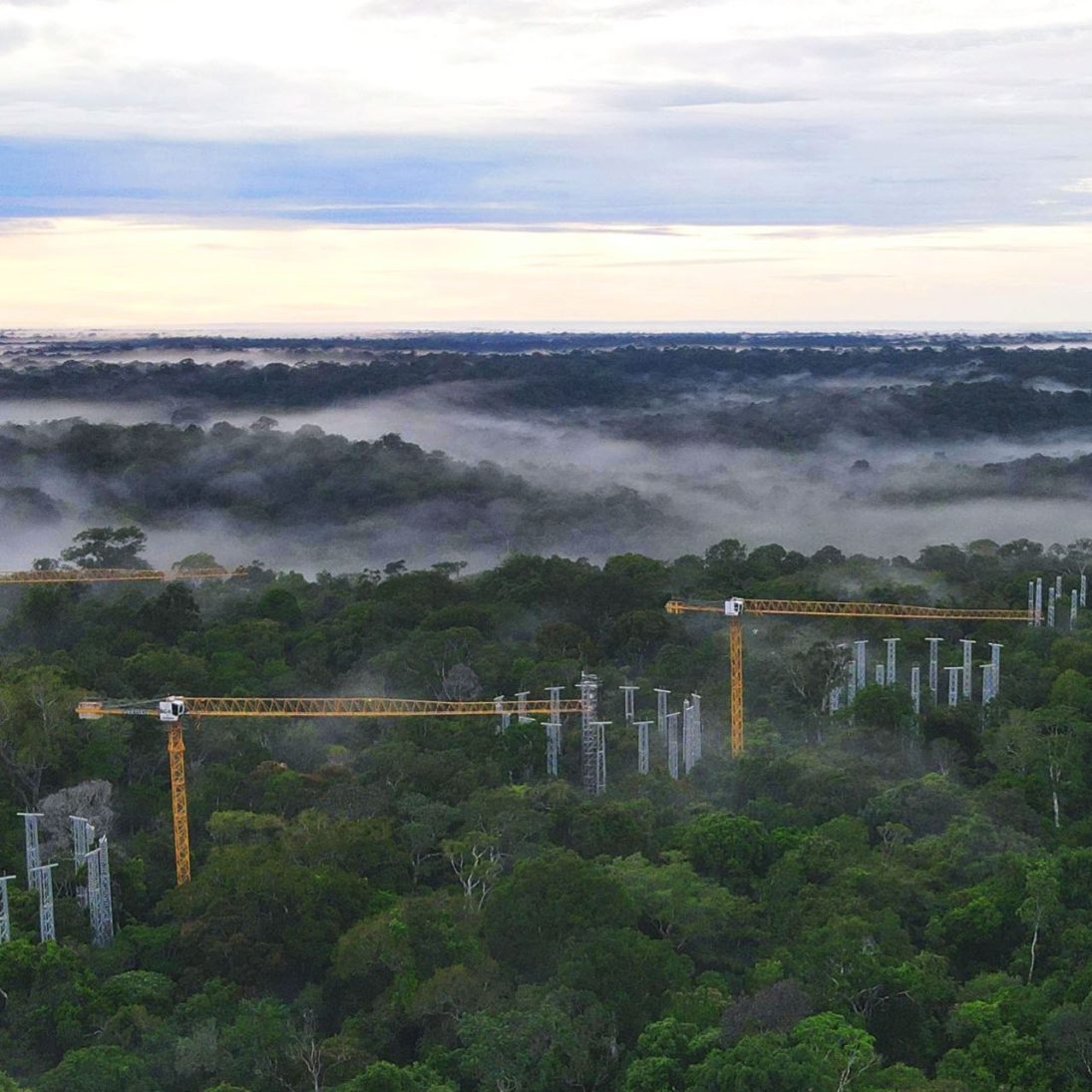
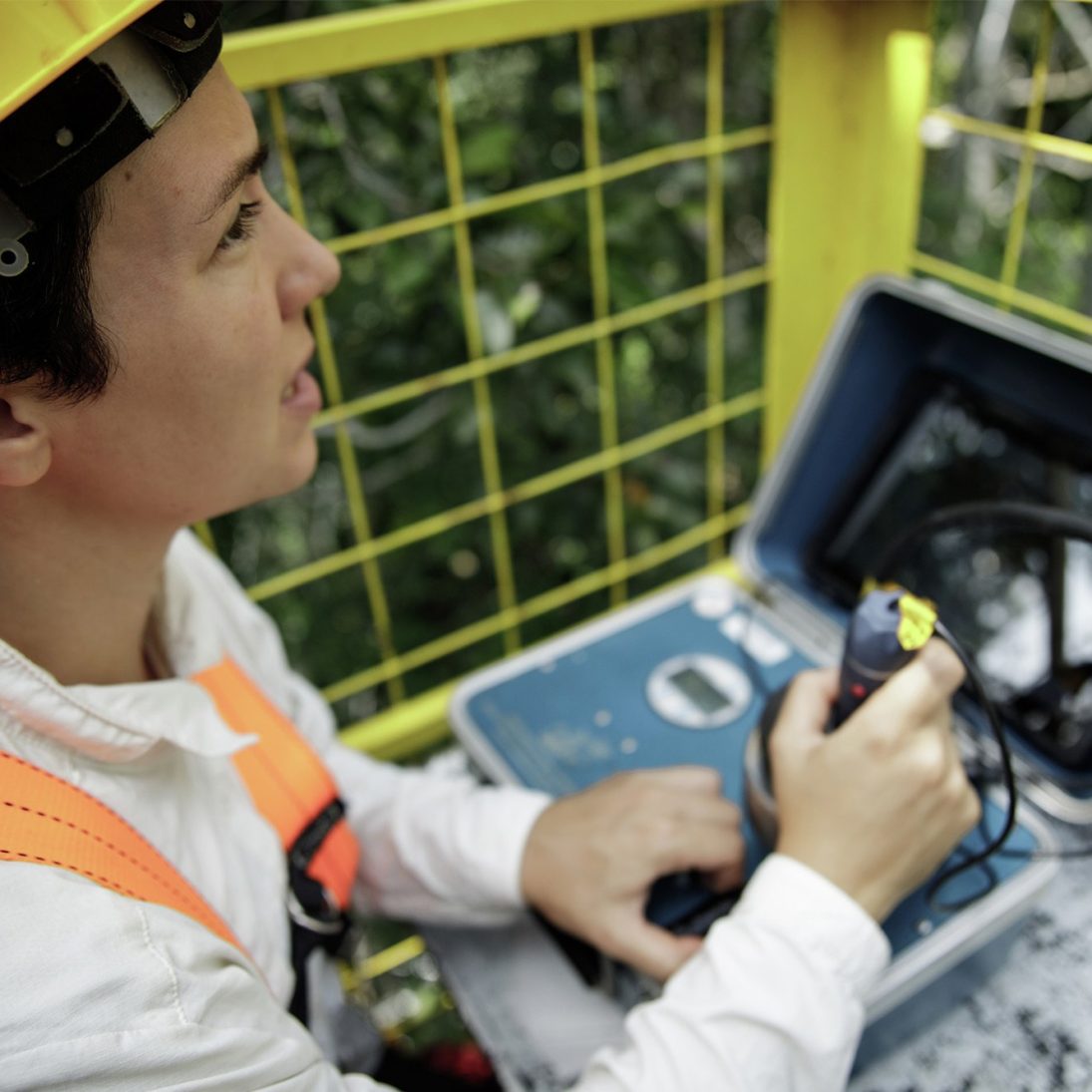
The AmazonFACE (Free-Air Carbon Dioxide Enrichment) programme, led by Brazil’s National Institute for Amazonian Research (INPA) with the University of Campinas and the UK Met Office, exposes an intact section of old-growth Amazon rainforest to the CO2 concentrations expected in the coming decades. To find out how the canopy, soil and carbon uptake respond, researchers need regular, safe access to the treetops — and that is where the four flat-top cranes come in. Rather than erecting anything, the 85 EC-B units serve as the site’s primary access platform, lifting personnel and sensitive instruments such as gas analysers and sampling equipment to measurement height.
The stakes are considerable: the Amazon basin holds an estimated 150 to 200 billion tonnes of carbon in its vegetation and soil, and whether that store grows or shrinks under rising CO2 levels is one of the big open questions in climate science.
“Some phenomena that occurred very rarely began to be very frequent. The entire climate of the region started to become very abnormal.”
— Bruno Takeshi, operations lead, AmazonFACE programme
Why tower cranes beat walkways
The choice of tower cranes over scaffolding or elevated walkways was made on environmental grounds. A crane mast takes up very little ground area — critical in an old-growth forest where soil compaction, root damage and canopy openings must be kept to a minimum — while the horizontal jib covers a wide slice of the experimental plot without repeated repositioning. The flat-top design of the EC-B series, with no A-frame above the jib, also lets the four machines slew in overlapping radius zones without passing loads over each other’s masts. The programme has secured the national authorisations and safety certifications required for lifting personnel by tower crane.
“The four Liebherr 85 EC-B 5 tower cranes were chosen precisely because they can withstand the extremes of heat and humidity and not disturb the habitat.”
— Bruna Prisco, application engineer, Liebherr-Brasil
Smooth drives for delicate loads
With a maximum jib of 50 metres and a top capacity of 5,000 kg, the 85 EC-B is a compact machine by tower crane standards, but its frequency-controlled hoist and slewing drives are what matter here: smooth acceleration protects fragile instruments on the way up through the canopy layers. Two of the four cranes were built at Liebherr’s factory in Brazil, the other pair in Spain. Liebherr-Brasil backs the remote site with operator training, maintenance instruction, spare parts and on-call technical support.
Site engineer Maria Juliana Monte says working from the cranes changes one’s view of the forest: “You don’t expect to be so close to the forest. And then I’m working within it — you can understand its real importance very well.”
Facts
- Cranes: 4x Liebherr 85 EC-B 5 flat-top tower cranes
- Max jib length: 50 m
- Max capacity: 5,000 kg
- Lifting height: over 45 m, above the rainforest canopy
- Site: AmazonFACE research site near Manaus, Brazil
- Manufactured: two in Brazil, two in Spain
Related Stories
Seven jobs that show the range of Liebherr Tower Crane Solutions
From a luffing jib crane above the Sagrada Familia to rail-mounted flat-tops at Santiago airport and more than…
Link-Belt RTC-80130 SII builds emergency-route bridge in California
A Shimmick crew used a 130 US ton Link-Belt RTC-80130 SII to build the new Mosquito Road bridge…
Four Liebherr LTC 1050-3.1s build THW’s 70-metre Danube bridge
Germany's THW used four Liebherr LTC 1050-3.1 compact cranes to pre-assemble a 70-metre temporary Danube crossing at Tuttlingen,…