

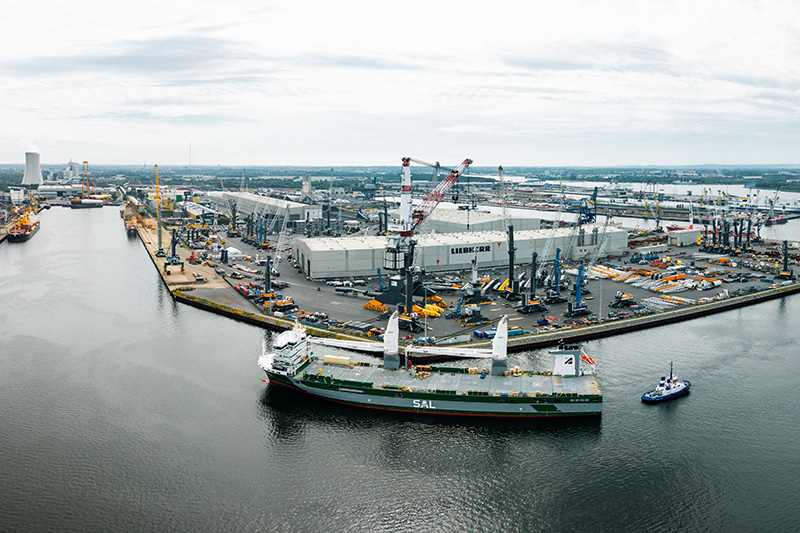
Twin all-electric LS 800 E cranes give SAL’s newest Orca-class vessel a 1,600-tonne tandem lift
SAL Heavy Lift’s third Orca-class newbuild has been christened MV Patricia at Liebherr’s maritime crane plant in Rostock. The vessel’s principal cargo gear comprises two all-electric Liebherr LS 800 E ship cranes, each rated at 800 tonnes and capable of tandem lifts of 1,600 tonnes.
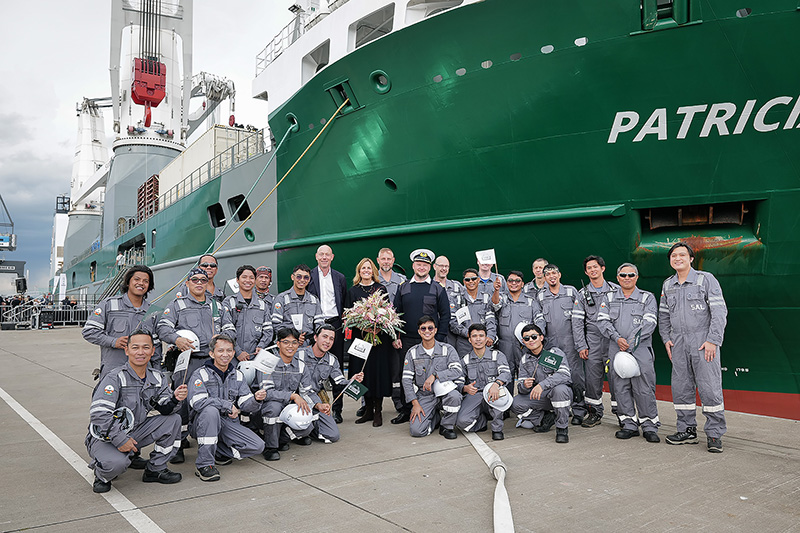
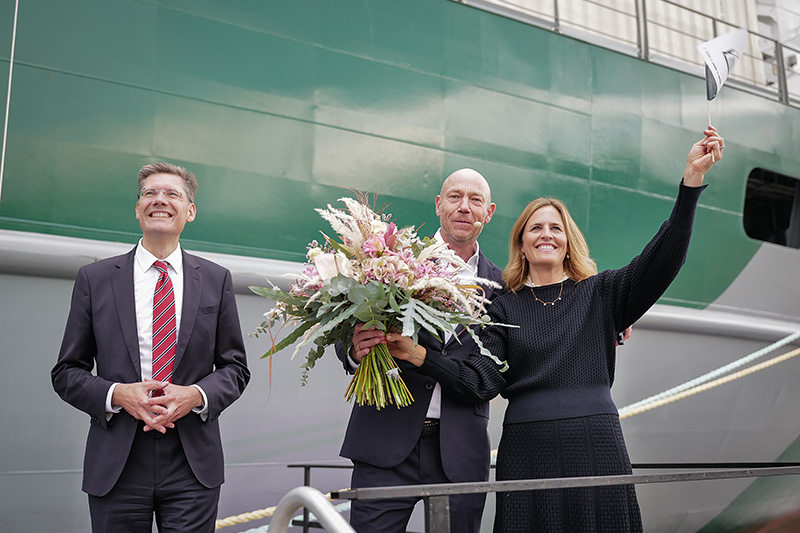
The naming ceremony, held at the Liebherr site on the Baltic coast, drew more than 350 guests including customers, partners, suppliers and representatives of the Harren Group and Liebherr, together with the project teams and the ship’s officers and crew. Patricia Rüf, member of the administrative board at Liebherr-International AG, acted as godmother and gave the vessel her name, following the maritime tradition of wishing the ship safe voyages and dependable service.
“When I look at the MV Patricia, I see far more than a vessel ready for service. I see the knowledge, dedication and passion of the many people whose efforts have shaped her journey. The ORCA fleet is a powerful example of what can be achieved when companies share a common vision and the ambition to push boundaries together.”
— Patricia Rüf, Member of the administrative board, Liebherr-International AG
Electric cranes tied into the ship’s power network
The two LS 800 E cranes are the heart of the vessel’s cargo-handling system. Beyond their headline capacity, the cranes are integrated with the ship’s power-management system so that their energy demand can be coordinated with other onboard consumers. Energy recovered during crane movements is fed back into the vessel’s electrical network, stored and reused when demand rises – an arrangement intended to make better use of available onboard power and cut fuel consumption and CO2 emissions during cargo-handling cycles.
Liebherr’s Litronic control system handles load movements, while the electric drives and key components are arranged and protected for maritime duty. Liebherr service teams will support the cranes along the vessel’s trading routes with maintenance planning, diagnostics and spare-parts coordination.
The Orca class was developed by SAL around heavy-lift, offshore, renewable-energy and industrial transport work, with a multipurpose configuration that lets lifting, stowage and voyage plans be adapted to individual cargoes – from single heavy components to multi-port project shipments. During the design phase, Liebherr worked with the vessel designers on crane integration, electrical architecture and control functions, continuing a relationship between the two companies that goes back more than 30 years.
“The Orca Class was conceived for the next 30 years of heavy-lift shipping, with the flexibility, efficiency and performance required by our customers’ evolving projects. Naming this vessel Patricia reflects the close relationship between our companies and our appreciation for everyone who has supported this ambitious programme.”
— Dr Martin Harren, Owner and CEO, Harren Group
Leaving Rostock with cranes as cargo
Fittingly, MV Patricia’s first departure from Rostock is itself a crane shipment. On board are an LHM 800 mobile harbour crane bound for Luanda, Angola, and an LPS 550 portal crane destined for Casablanca, Morocco – bringing together three branches of Liebherr’s maritime crane portfolio on a single voyage: the ship cranes on deck, the mobile harbour crane and the portal crane in the hold.
Facts
- Vessel: MV Patricia, third delivered unit of SAL’s Orca-class newbuilding programme
- Cargo gear: two all-electric Liebherr LS 800 E ship cranes
- Capacity: 800 tonnes per crane; 1,600 tonnes in tandem
- Control: Liebherr Litronic; energy recovery fed back into the ship’s grid
- First cargo: LHM 800 mobile harbour crane for Luanda, LPS 550 portal crane for Casablanca
Related Stories
Kato renews 220-tonne KA-2200R all terrain crane with Stage V engine
Kato Works will put an updated version of its 220-tonne KA-2200R all terrain crane on sale in September…
Centro Oeste takes delivery of Brazil’s first Liebherr LTM 1300-6.4
Centro Oeste is the first Brazilian company to run the 300-tonne Liebherr LTM 1300-6.4, whose 90-metre boom and…
Jandt enters the 400-tonne class with its first Liebherr LTM 1400-6.1
Jandt Kranvermietung has taken delivery of its first Liebherr LTM 1400-6.1, moving the family-run rental firm into the…