

One machine, three jobs: how Hölscher’s 27-tonne duty cycle crane sinks a well in hours
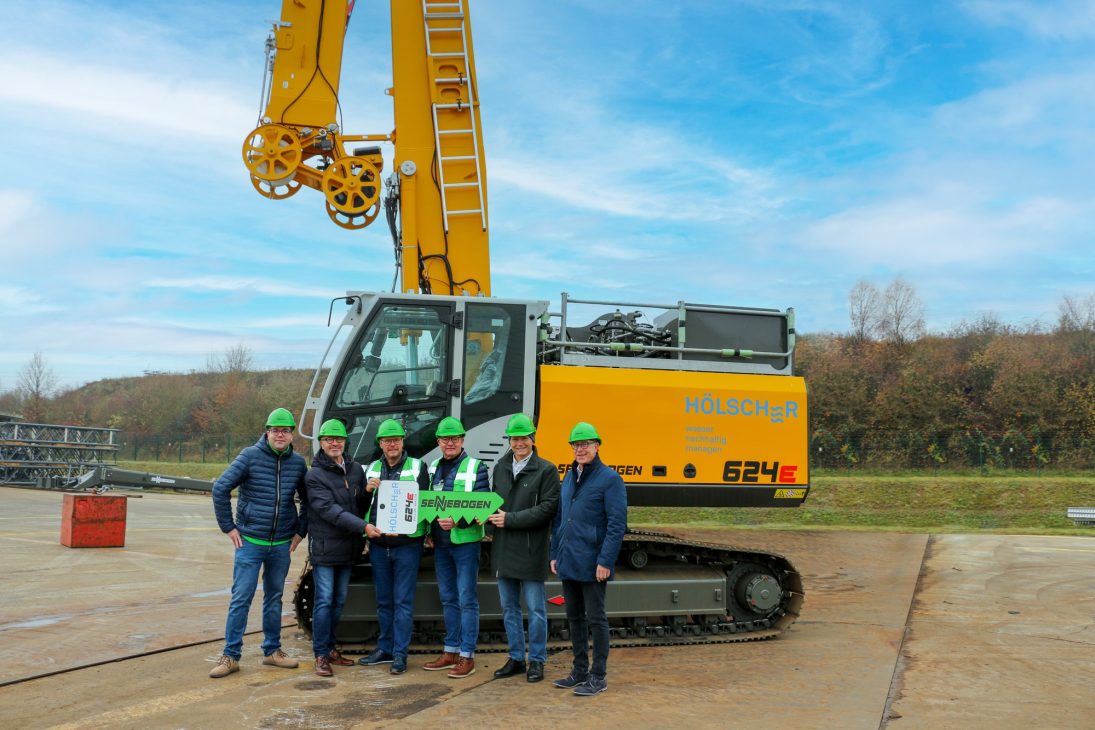
Hölscher Wasserbau runs one of Germany’s largest fleets of free-fall duty cycle cranes for well construction, including a 27-tonne Sennebogen machine designed to the driller’s own specification.
A crane specified by the customer
Hölscher and Sennebogen have worked together since the 1980s, and the German well-construction contractor puts a good deal of weight on being able to take requirements straight to the manufacturer. The clearest result of that is a 27-tonne duty cycle crane developed around Hölscher’s own working methods.
“This intensive exchange makes SENNEBOGEN a true partner on equal footing.”
— Heinz Hölscher, managing director, Hölscher Wasserbau
Instead of a lattice boom the machines carry a folding box boom, which drops into transport position in a few steps and allows the unit to be moved between sites without additional permits – a significant factor for a contractor that changes location every few weeks. Machine operation has been adapted to the customer’s requirements, and the boom design was reworked to suit Hölscher’s process.
Groundwater lowering for the SuedOstLink
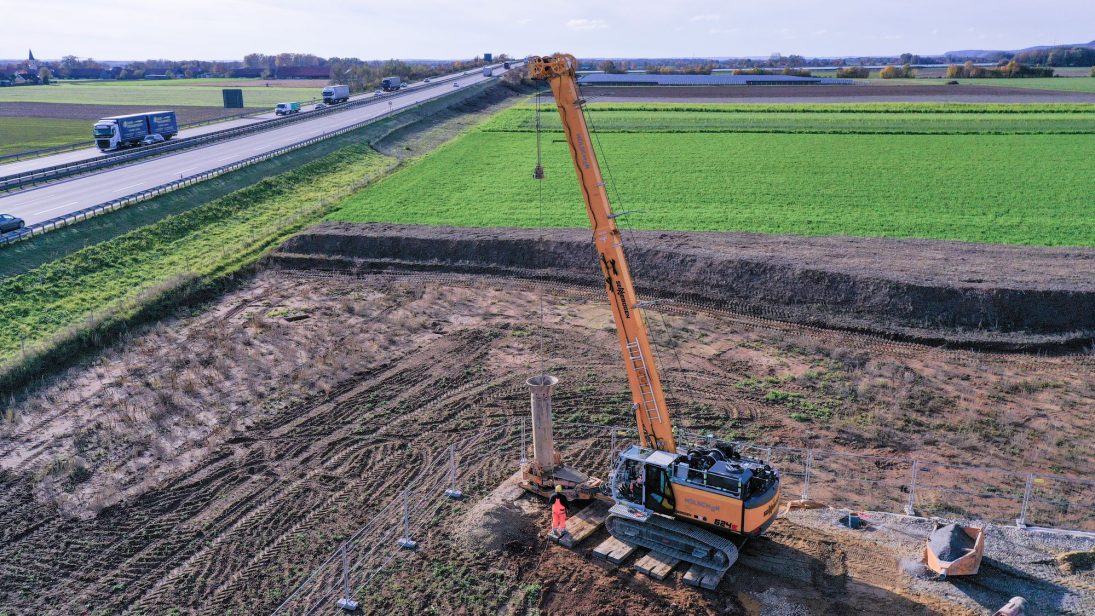
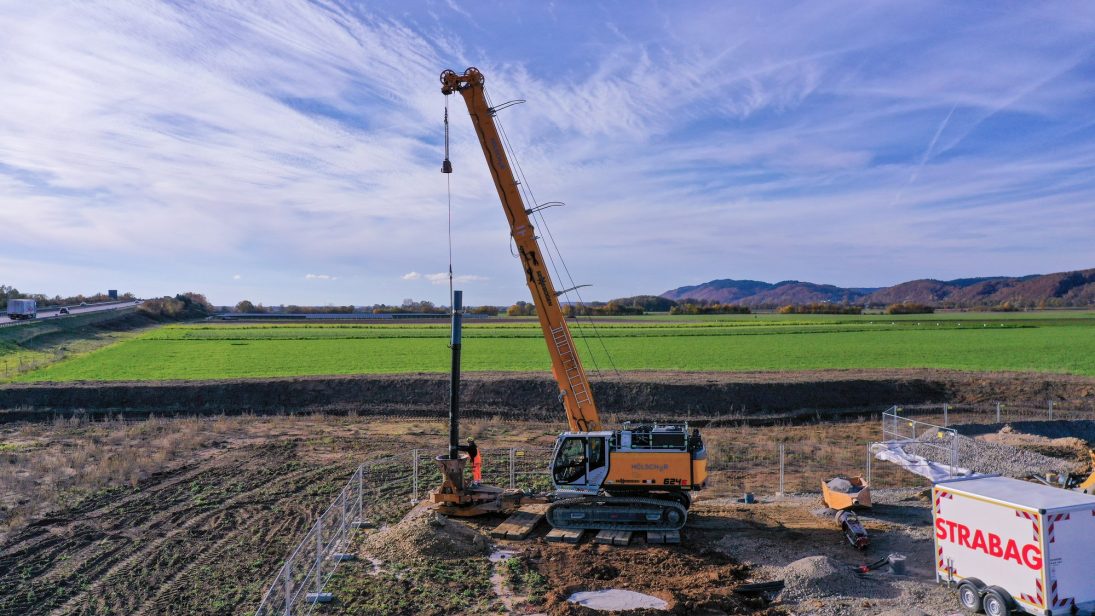
A current example is the SuedOstLink, a planned direct-current underground cable route running across Germany. Sites next to the Wörth/Wiesent exit of the A3 motorway opened in March 2025 and remained active for several months. Before the cable ducts can be laid the groundwater has to be lowered, and Hölscher Wasserbau was contracted to sink the wells.
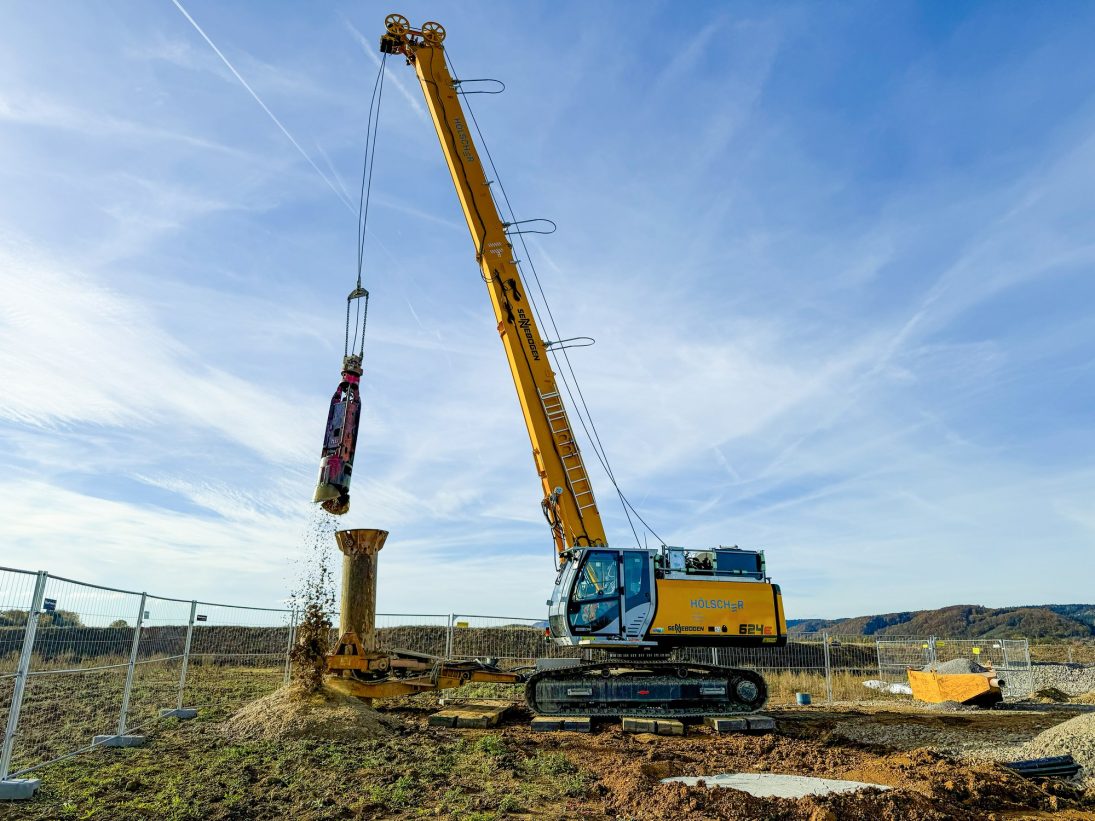
At Wörth/Wiesent, crane operators André Tinius and Hagen Fiebig build around twelve wells per site. Fitted with a casing machine, the crane first drives the drill pipe into the ground. A grab is then attached to excavate the material inside the casing before the well pipe – a good nine metres long – is lifted and inserted into the drill pipe. The annulus is filled with filter gravel and the drill pipe withdrawn. All of it is done with one machine, working as a cable excavator and as a crane in turn. With no complications, a well can be finished in a few hours.
Serviceability and set-up
Hölscher rates ease of maintenance highly: technicians can reach all areas, documentation is clearly structured, and the machine can be rigged and derigged quickly. Safety detail has also been addressed – the mast bolts can be inserted from ground level rather than at height. The contractor reports that older machines in its fleet are still running.
Once the twelve wells at Wörth/Wiesent are complete the crew moves on. The groundwater lowering there was scheduled to run to the end of March 2026, after which the cable ducts are welded and laid, the wells removed and the groundwater allowed to return.
Related Stories
Link-Belt Cranes singled out in Kentucky Manufacturing Month
The Kentucky Association of Manufacturers has highlighted Link-Belt Cranes and its Lexington factory as part of its October…
Zoomlion opens Brisbane branch with all-terrain crane orders
Zoomlion has inaugurated a Brisbane branch, with first orders signed at the opening covering 120-tonne all-terrain cranes and…
Hiab renews ProCare lifecycle services for its crane fleets
Hiab's next-generation ProCare portfolio combines service agreements with remote diagnostics and AI-driven monitoring for loader cranes, rolling out…