

Schmidbauer’s LR 11350 completes 365-metre GICON high-altitude wind turbine
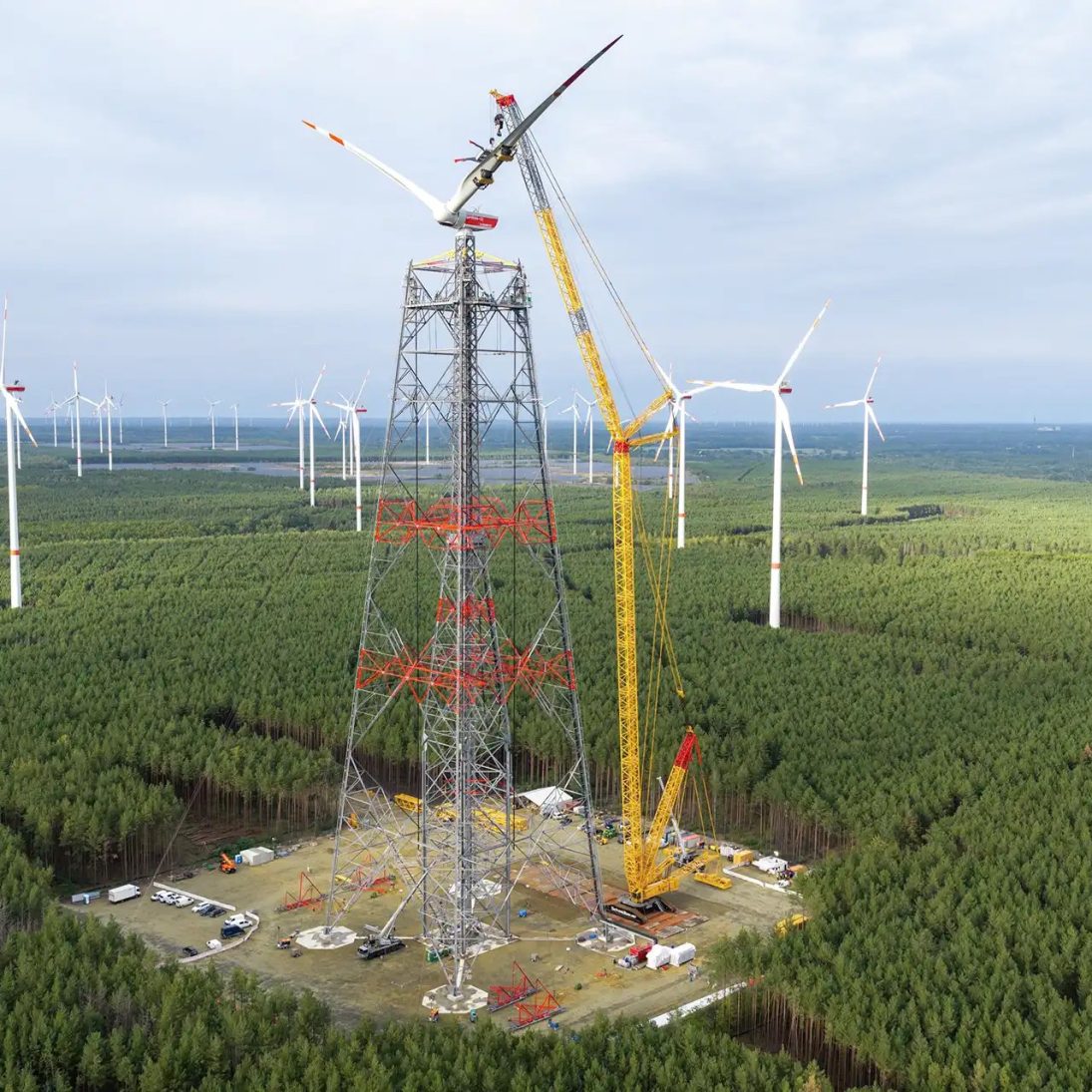
The world’s tallest wind turbine now stands in Lusatia, Brandenburg, after a Liebherr LR 11350 crawler crane from Schmidbauer finished erecting the prototype GICON high-altitude tower, a 365-metre structure topped only by the Berlin TV Tower in Germany.
The pilot plant, developed by Dresden-based GICON-Großmann Ingenieur Consult GmbH, pairs a large steel lattice tower with a telescoping inner tower. Once the three rotor blades were in place, the inner section was telescoped upwards by an integrated system, bringing the 3.8-megawatt machine to its full 365-metre height. The rotor, roughly 126 metres in diameter, is intended to tap the stronger and steadier winds found at that altitude and open up new ground for commercial onshore wind generation.
375 tonnes on the hook
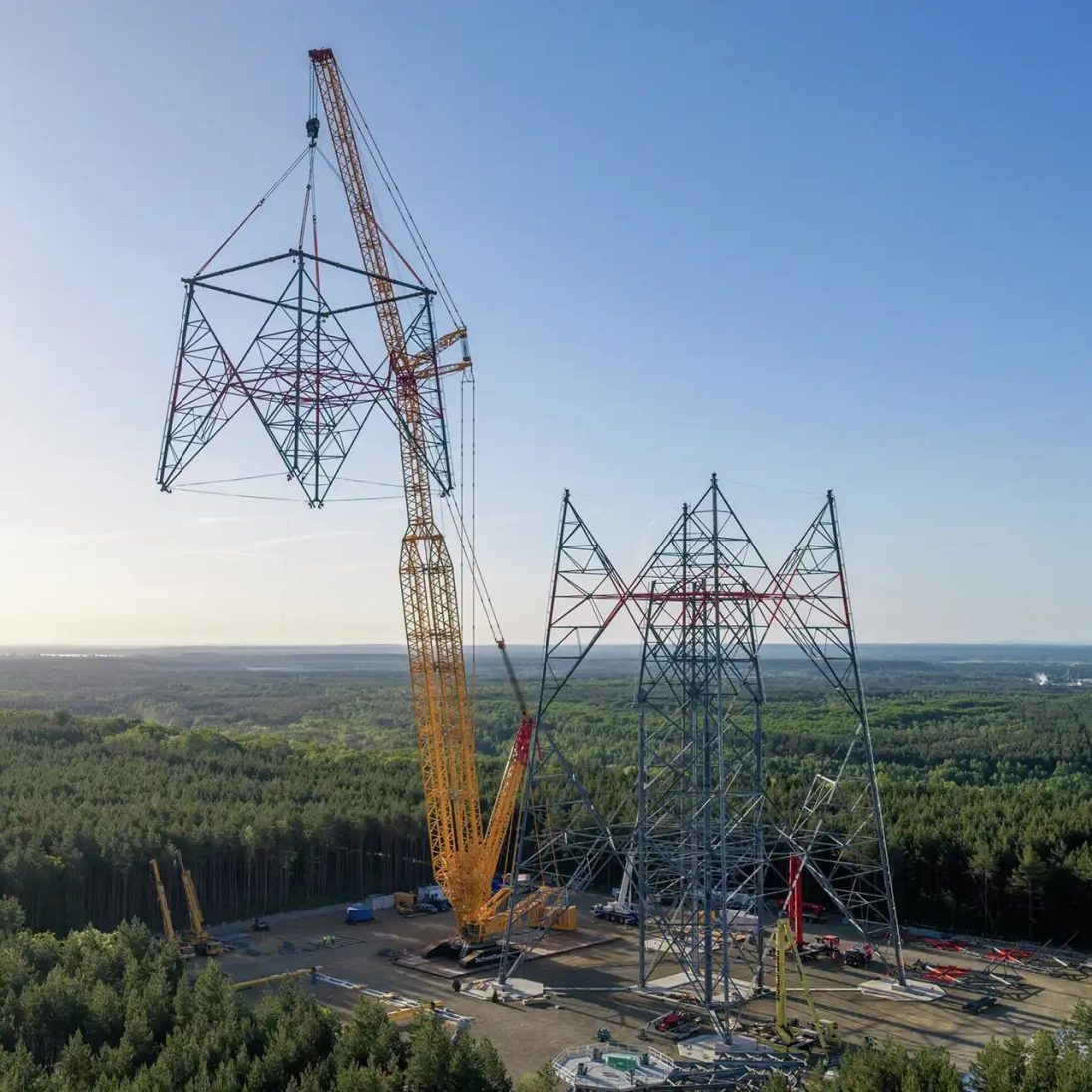
Schmidbauer GmbH & Co. KG had the LR 11350 on site in an existing wind farm between Berlin and Dresden from spring 2025. For most of the campaign the crawler crane worked with Liebherr’s PowerBoom parallel boom system, which kept the heaviest components within reach. The biggest single lift was a tower section measuring around 40 x 40 x 40 metres and grossing 375 tonnes, which the crane set onto the 50-metre-high base structure at a radius of about 44 metres. To get into position, the machine travelled along a purpose-built running track of steel plates and bongossi hardwood.
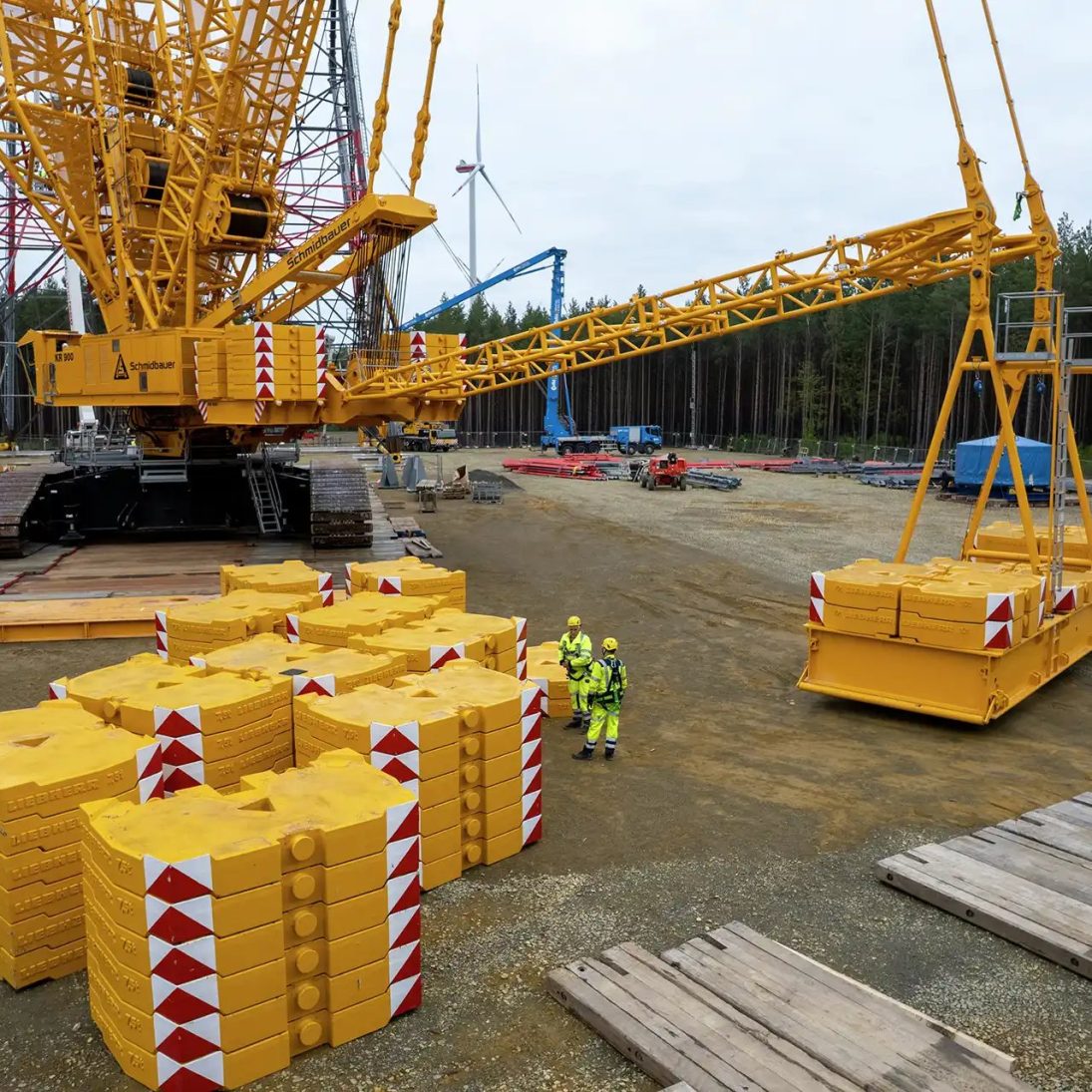
While the outer steel structure went up, the later-telescoping upper tower was fabricated inside it. Up to the provisional tower height of around 160 metres, the LR 11350 ran the PowerBoom with a jib tip of up to 84 metres, carrying a total ballast of up to 850 tonnes on the crane and the derrick jib’s ballast platform.
Rig change in six days
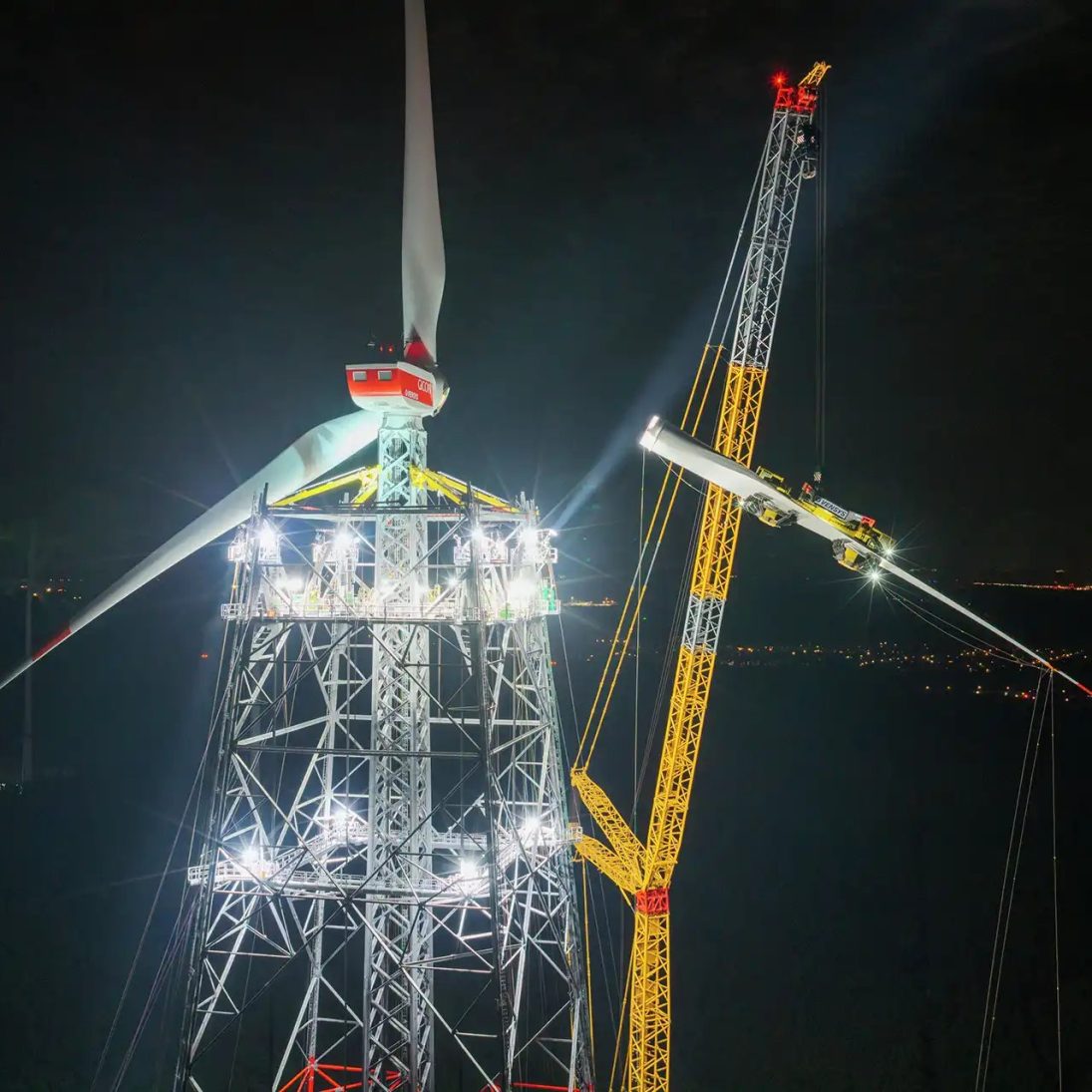
For the rotor blade installation the crane had to be re-rigged. With the LR 11350’s quick set-up concept and enough hands on site, the change from the PowerBoom configuration to a 104-metre lattice boom took just six days. Combined with the 84-metre luffing jib, the crane reached a roller head height of 200 metres. The blade lifts then waited on a long enough window of low wind; when the weather finally cooperated, the teams fitted all three blades at around 170 metres within twelve hours, working partly through the night.
“During its approximately 18-month period of operation, my LR 11350 performed with absolute reliability and without any faults.”
— Fabian Ueck, crane operator, Schmidbauer
Several Liebherr mobile cranes supported the project alongside the big crawler, rigging and ballasting the LR 11350, working on the base structure and pre-assembling the segments of the lattice tower. For GICON, founded in 1994 and part of the internationally active GICON Group, the Lusatia prototype is the proving ground for its high-altitude wind concept.
Facts
- Crane: Liebherr LR 11350 crawler crane (Schmidbauer)
- Turbine: GICON high-altitude wind tower, 3.8 MW, 365 m total height
- Rotor diameter: approx. 126 m
- Heaviest lift: 375 t tower section at approx. 44 m radius
- Ballast: up to 850 t in total
- Blade rig: 104 m lattice boom + 84 m luffing jib, 200 m roller head height
- PowerBoom-to-lattice-boom conversion: six days
- On site: spring 2025 to September 2026
Related Stories
LTM 1450-8.1 lifts historic suspension railway carriage in Wuppertal
Franz Bracht Kran-Vermietung used a Liebherr LTM 1450-8.1 with reduced outrigger base to place a 1950 suspension railway…
Helicopter lifts Liebherr derrick crane onto Paris high-rise roof
A Liebherr 200 DR 5/10 Litronic derrick crane was flown piece by piece onto the roof of the…
Tadano ATF 100G-4 lifts 2.5-tonne Bullhead at Wacken Open Air
Crane rental firm Wilhelm used its Tadano ATF 100G-4 to hoist the 2.5-tonne Bullhead skull onto the main…