

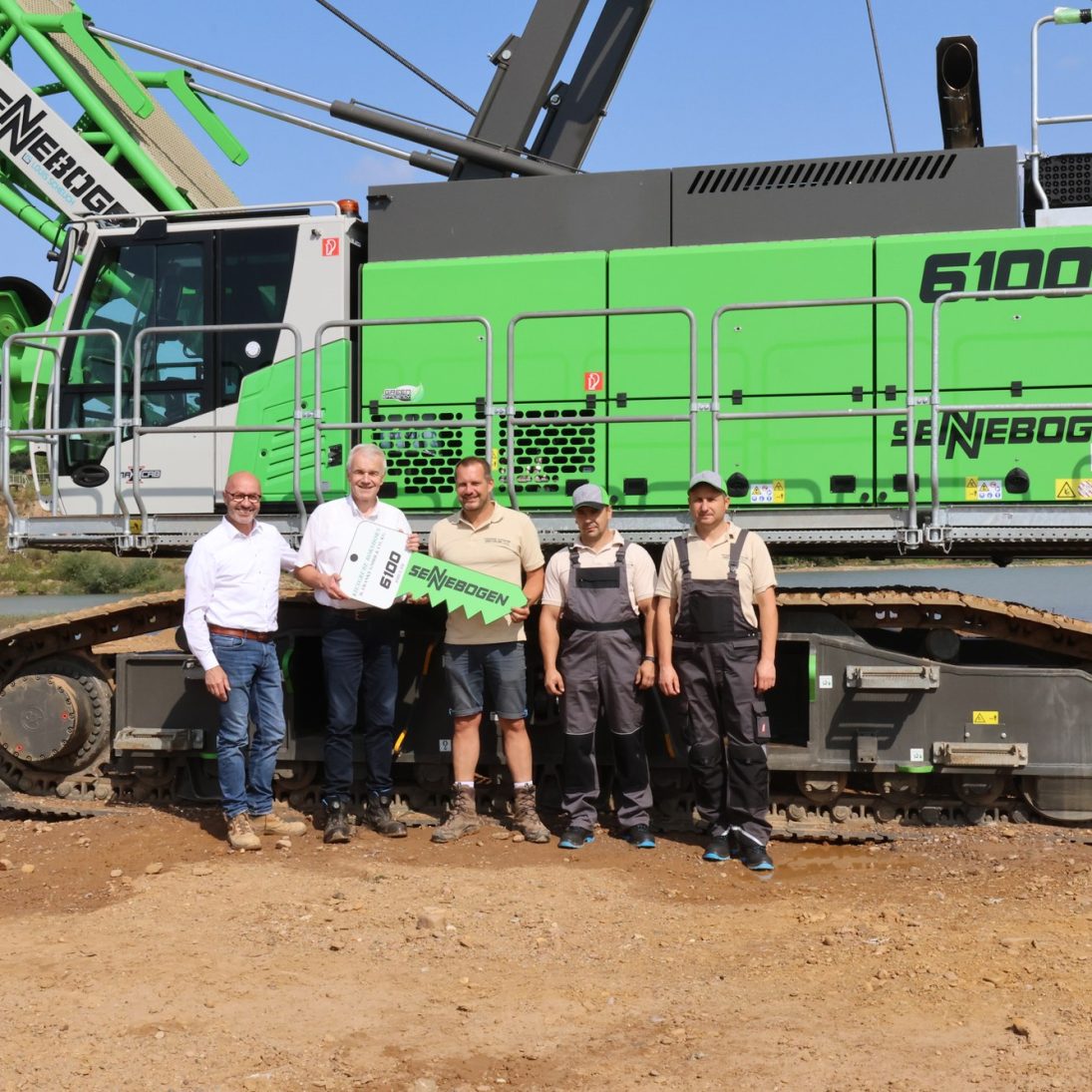
Bokshorn swapped a fixed electric scraper system for a 100-tonne crawler duty cycle crane — and gained a machine it can move
When the Bokshorn gravel pit in Porta Westfalica extended its extraction area, its ageing electric scraper system could not follow. A 100-tonne Sennebogen 6100 duty cycle crane with a dragline bucket took its place.
A new extraction area needed new plant
The Bokshorn gravel pit is a family business founded in 1882 and now working its third site. It produces around 150,000 tonnes of sand and gravel a year for the concrete industry, supplying precast plants and paving stone works. When managing partner Henrik Franke took over from his father in 2024 the extraction area was extended, and the plant had to be re-equipped to reach it. The old scraper system was electric and productive but fixed in place; it could not be moved to follow the working face.
Sizing the machine by digging depth
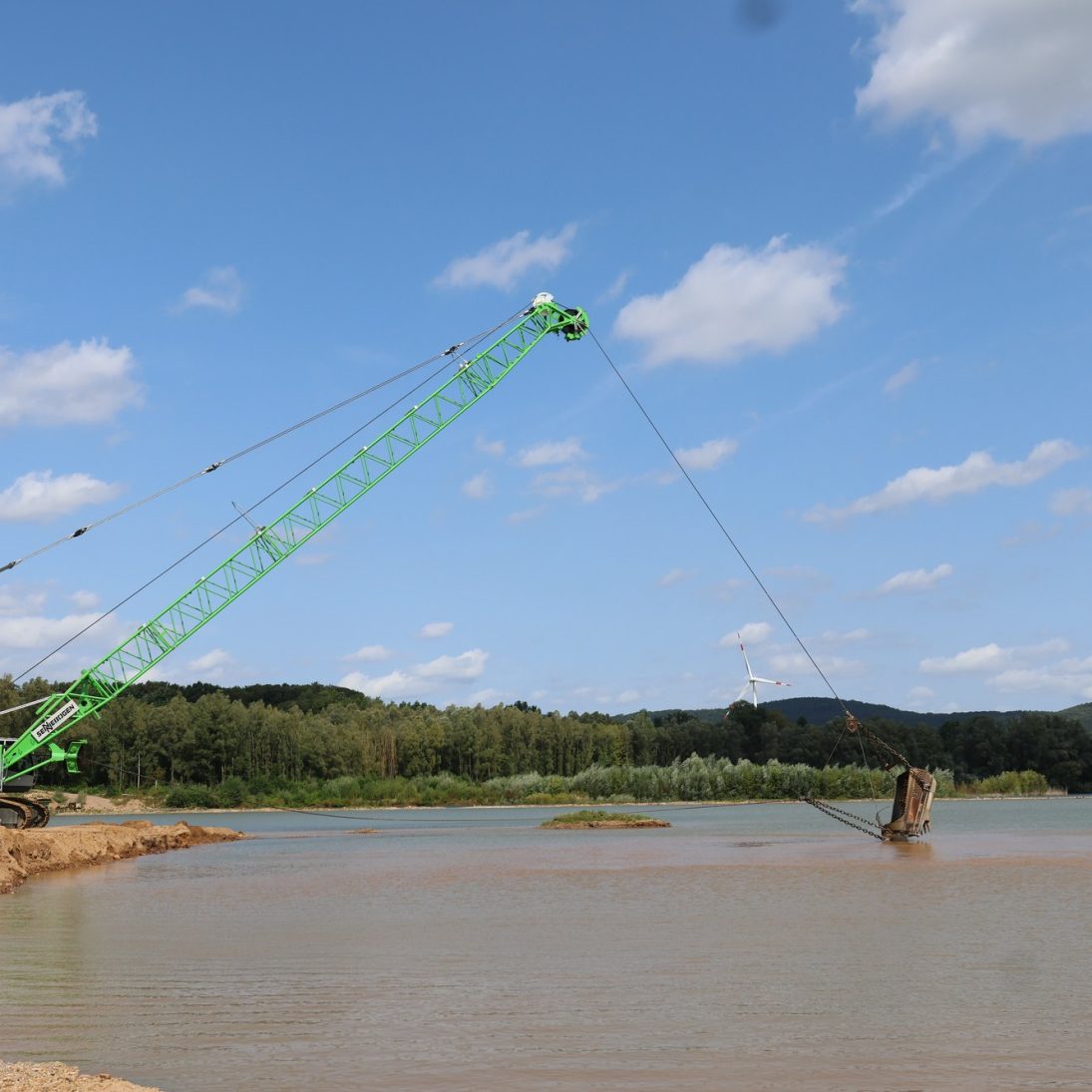
Franke went to Sennebogen’s sales partner Louis Scheuch, trialled the concept with a 70-tonne rental machine and then specified the 100-tonne 6100 with a 3.5 yd³ dragline bucket. The deciding parameter was not cycle speed but depth.
“For us, effectiveness is more important than speed. We want to operate sustainably and exploit the full capacity of the gravel pit. That’s why the desired digging depth of 12 m determined the size of the machine.”
— Henrik Franke, managing director, Bokshorn gravel pit
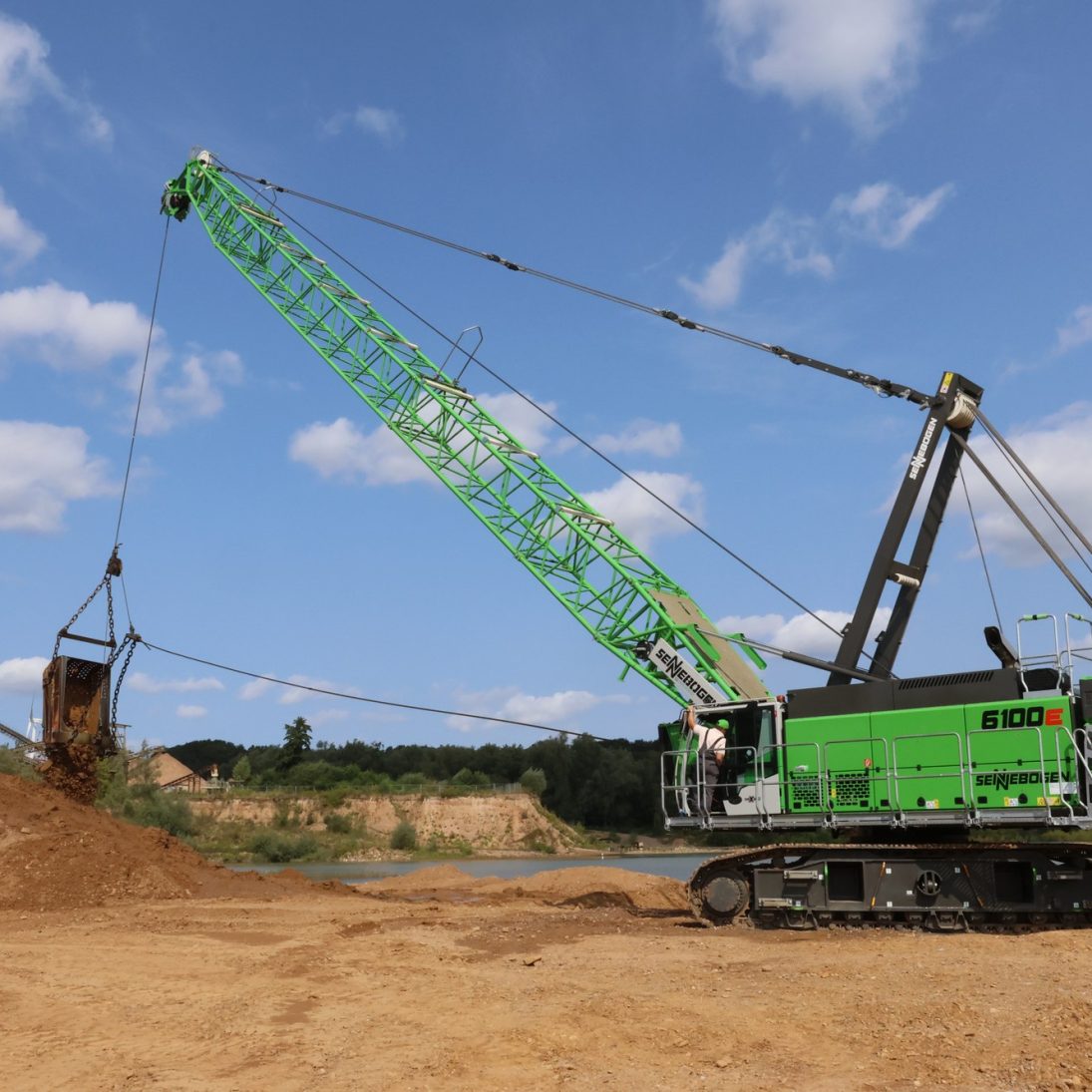
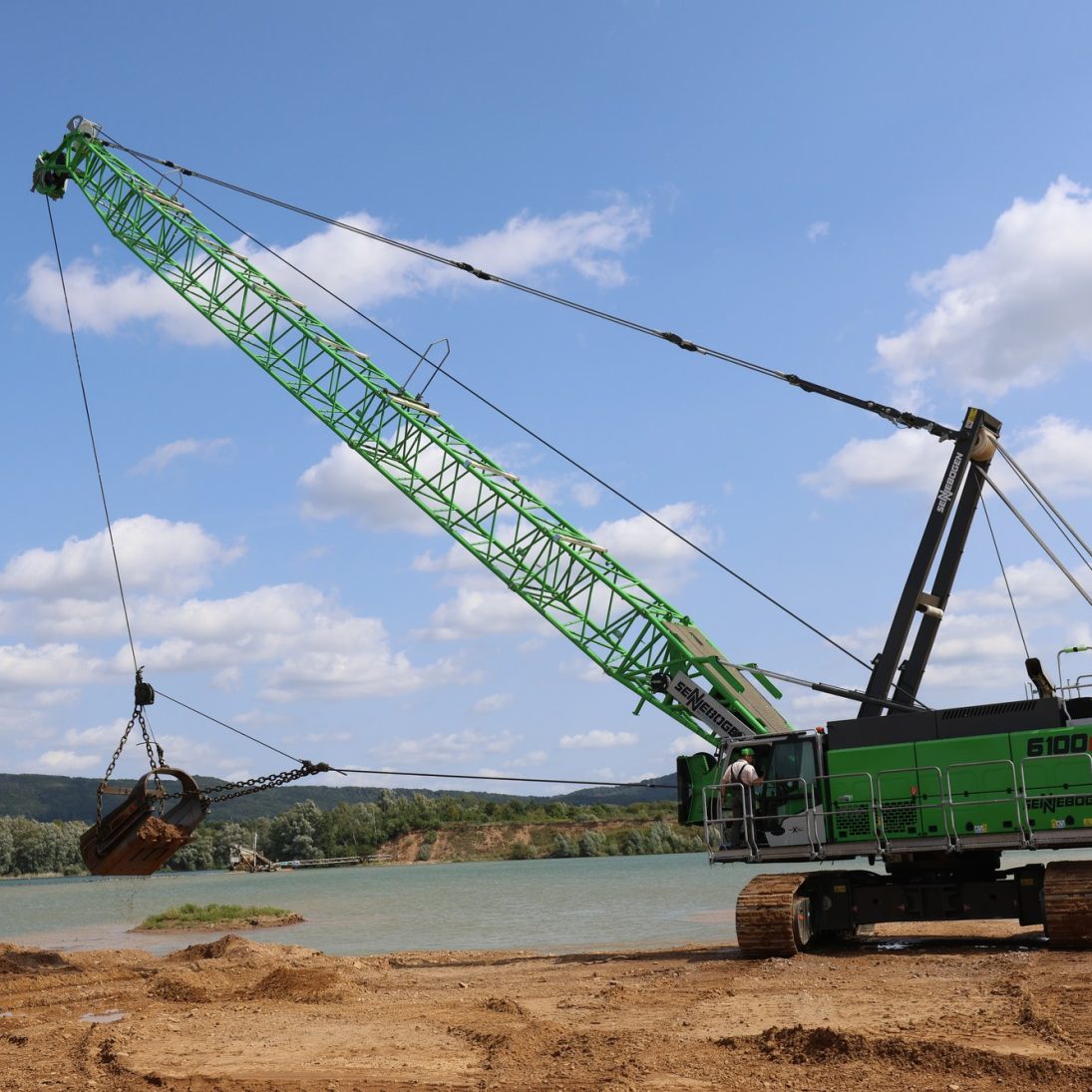
The crane carries a 29.9 m lattice boom, chosen for heavy dynamic dragline duty. The length lets the bucket be dropped and drawn well in front of the tracks, so the bank edge is left standing as long as possible rather than being undercut. A fairlead and deflection rollers built into the boom guide the rope, which keeps both rope wear and bucket control under command and allows the face to be worked precisely.
One machine, several jobs
The crawler undercarriage is what changed the operation. The 6100 can be tracked to wherever it is wanted, and it does not need a power connection, so it is not tied to one corner of the pit. Since delivery it has been used for renaturation work and to dig a supply channel for the pit’s pump — a job that would previously have gone to an outside contractor. It is currently back working the old extraction area.
Fuel use has not been the problem the switch from electric drive might suggest, because the machine spends most of its time working at low line speeds.
“We usually operate the SENNEBOGEN 6100 E at low speeds, so fuel consumption is pleasingly low. The machine still has enough power for our purposes.”
— Henrik Franke, managing director, Bokshorn gravel pit
Franke credits the outcome to the way the project was run, from first contact with Louis Scheuch through the rental trial to commissioning on site. Operators Yury Starodub and Alexander Chernishov took to the dragline work quickly.
Crane and site
- Crane: Sennebogen 6100 duty cycle crane
- Capacity class: 100 tonnes
- Boom: 29.9 m lattice
- Attachment: 3.5 yd³ dragline bucket
- Digging depth: 12 m
- Undercarriage: crawler, no power supply needed
- Site: Bokshorn gravel pit, Porta Westfalica, Germany
- Annual output: approx. 150,000 t of sand and gravel
- Dealer: Louis Scheuch
Related Stories
Seven jobs that show the range of Liebherr Tower Crane Solutions
From a luffing jib crane above the Sagrada Familia to rail-mounted flat-tops at Santiago airport and more than…
Link-Belt RTC-80130 SII builds emergency-route bridge in California
A Shimmick crew used a 130 US ton Link-Belt RTC-80130 SII to build the new Mosquito Road bridge…
Four Liebherr LTC 1050-3.1s build THW’s 70-metre Danube bridge
Germany's THW used four Liebherr LTC 1050-3.1 compact cranes to pre-assemble a 70-metre temporary Danube crossing at Tuttlingen,…