

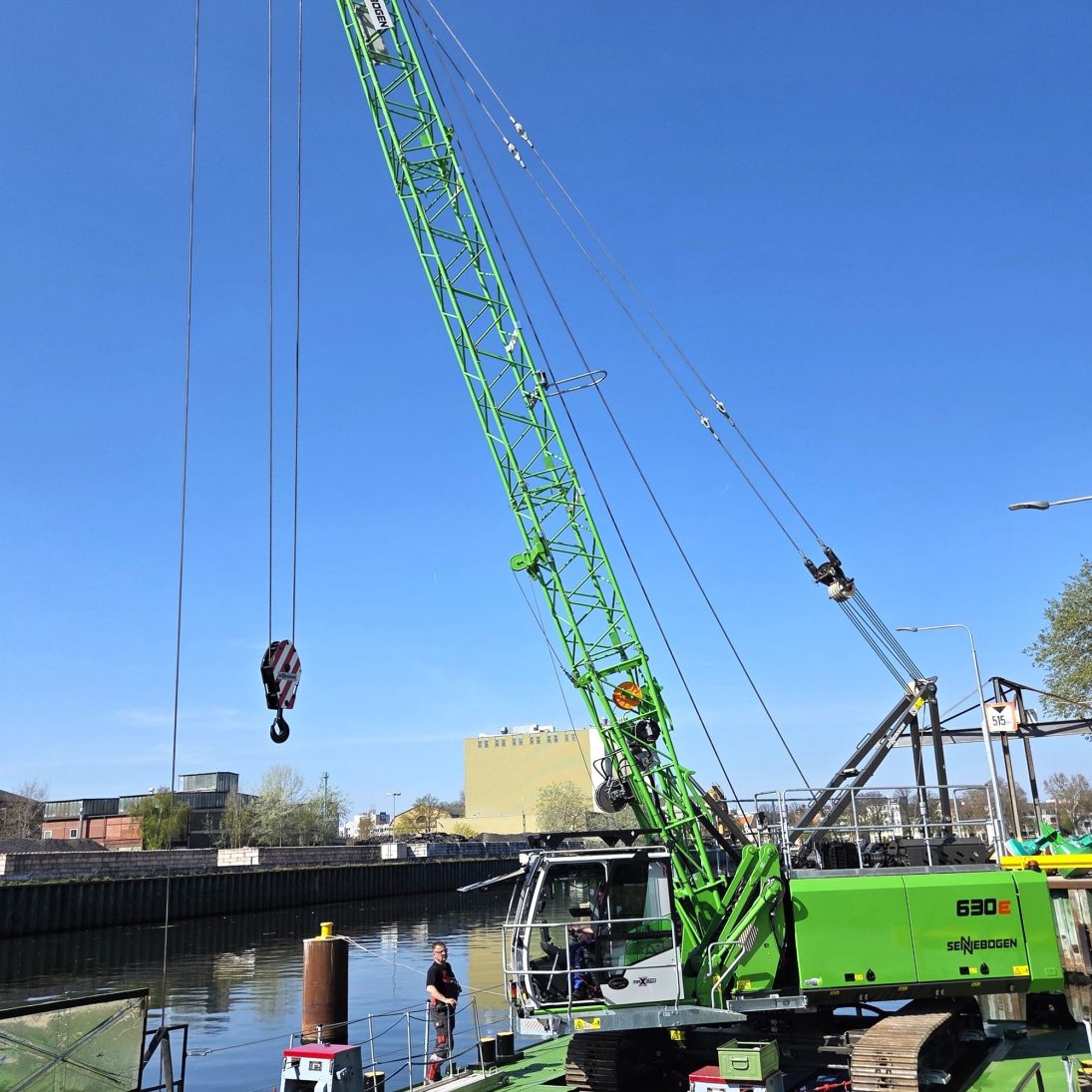
Pontoon-mounted Sennebogen 630 E duty cycle crane takes over waterway work for WSA Spree-Havel
Germany’s Waterways and Shipping Office Spree-Havel has put a Sennebogen 630 E duty cycle crane to work from a refurbished pontoon, covering lifting at locks and weirs, underwater dredging, slope maintenance and emergency response across the Berlin and Brandenburg waterway network.
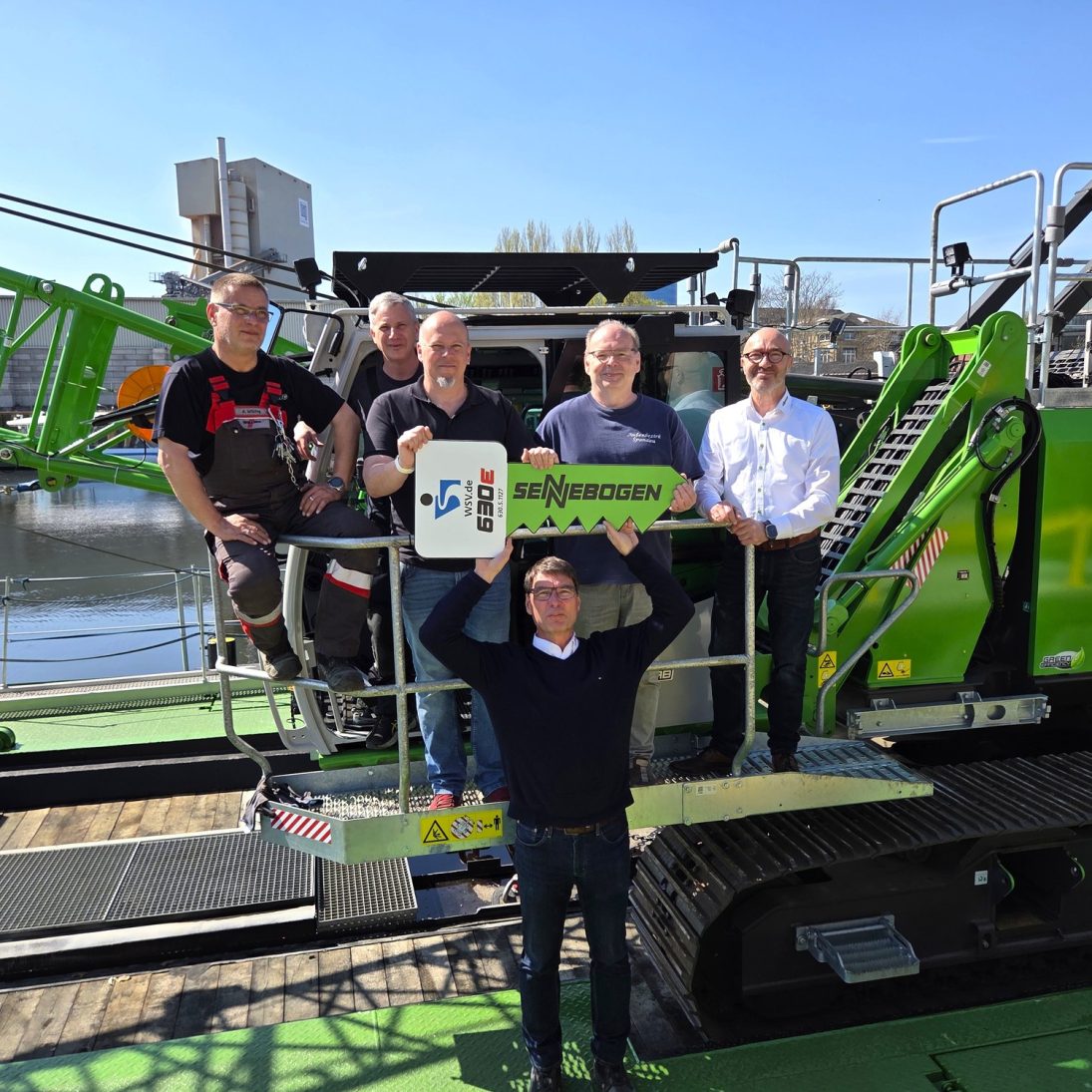
The Waterways and Shipping Office (WSA) Spree-Havel, the federal authority responsible for the inland waterways of Berlin and Brandenburg, has commissioned a Sennebogen 630 E duty cycle crane mounted on a pontoon. The machine was delivered to the authority’s Spandau operational district by Sennebogen sales and service partner Gebr. Willing GmbH of Falkensee, near Berlin.
The purchase fills a gap that opened when a previously operated duty cycle crane was taken out of service following an accident. It quickly became clear to the authority that hydraulic excavators alone could not cover every task: jobs demanding long outreach, high line pull or work at greater water depths call for cable-operated duty cycle crane technology, which can also serve as a hook-duty crane for a wide range of lifting operations.
Configured for work afloat
The 630 E was configured specifically for floating duty through close cooperation between manufacturer, dealer and end user. Securely fastened to a comprehensively refurbished pontoon, the machine was specified for maximum versatility, safe operation on the water, and reliable lifting, grabbing, dredging and support work. An integrated heel angle monitoring system allows it to operate safely at inclinations of up to four degrees.
Many of the hydraulic engineering structures managed by the German Federal Waterways and Shipping Administration can only be reached by water. Travelling on its pontoon, the crane sails directly to locks and weirs, where its first priority will be crane duty during dewatering operations, alongside general construction support across several WSA districts.
Dredging, riprap and emergency response
Equipped with clamshell and multi-shell grabs, the 630 E will also carry out conventional underwater dredging and slope maintenance, and handle riprap and other construction materials for hydraulic engineering projects. The machine additionally plays a key role in emergency response, allowing WSA Spree-Havel to react quickly to incidents on the network with recovery, salvage and securing operations.
WSA Spree-Havel was formed in 2020 through the merger of the former Berlin and Brandenburg waterways authorities. It keeps navigation safe, operates locks, weirs and bridges, and maintains waterways and riverbanks, with much of the work handled by regional maintenance depots and operational districts — capabilities the floating duty cycle crane now extends by putting heavy lifting and dredging capacity directly on the water.
Support from Gebr. Willing
Operator instruction, training and ongoing maintenance are provided by Gebr. Willing GmbH, keeping the machine close to local service support for long-term availability.
Facts
- Machine: Sennebogen 630 E duty cycle crane
- Mounting: fastened to a comprehensively refurbished pontoon
- Operator: WSA Spree-Havel, Spandau operational district
- Dealer: Gebr. Willing GmbH, Falkensee
- Attachments: clamshell and multi-shell grabs, hook duty
- Safety: heel angle monitoring, safe operation up to 4° inclination
- Duties: lock and weir dewatering lifts, underwater dredging, slope maintenance, riprap handling, emergency response
Related Stories
Gertzen retrofits Liebherr LR 1800-1.0 with X3 boom for 175 m hubs
Gertzen Kranlogistik has fitted its 800-tonne Liebherr LR 1800-1.0 crawler crane with the X3 boom system and erected…
UNIC puts the spotlight on its smallest spider crane, the URW-094
UNIC Cranes Europe has profiled the URW-094, the smallest machine in its spider crane range: a 595 mm…
Patriot Crane & Rigging takes first Tadano AC 5.250L-2
Nebraska taxi crane specialist Patriot Crane & Rigging has bought its first Tadano AC 5.250L-2 through dealer RTL…