

Two LTM 1100-5.3 taxi cranes bring Liebherr’s third-generation control system to Africa
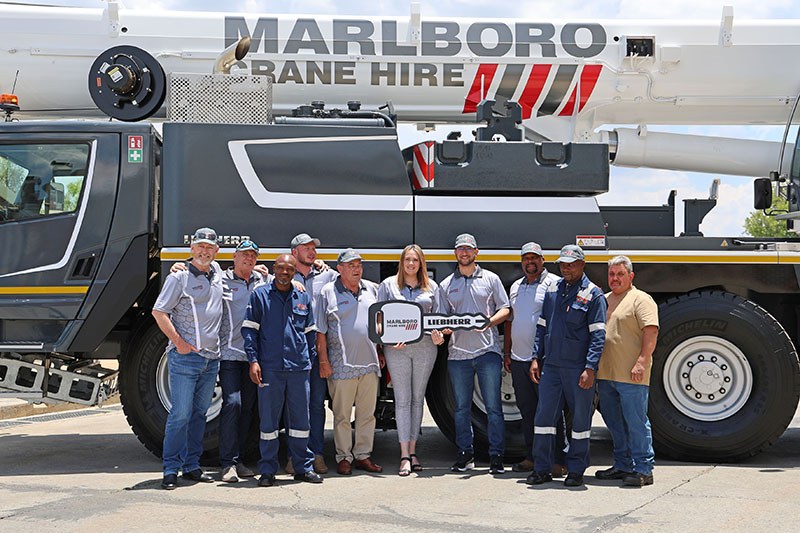
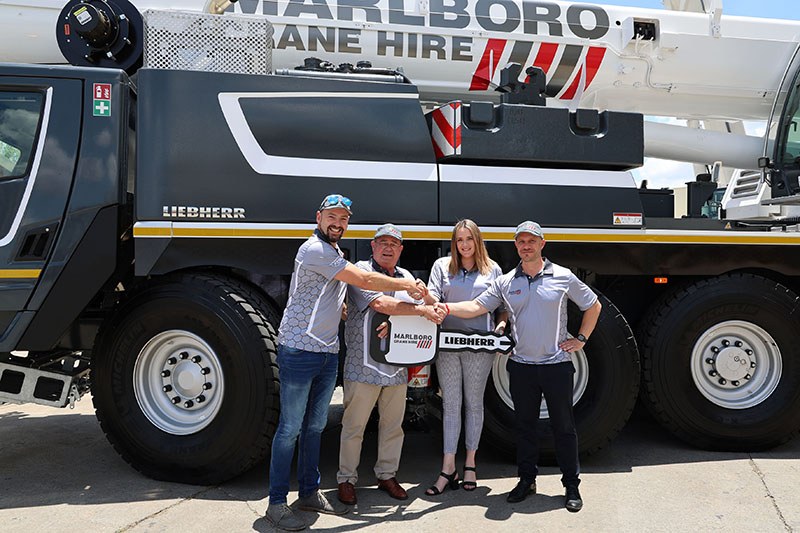
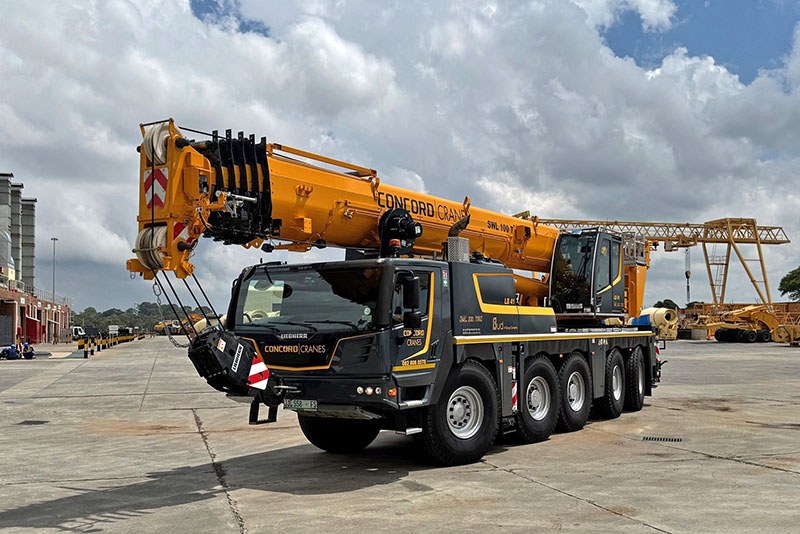
Marlboro Crane Hire and Concord Cranes have taken the first Liebherr mobile cranes with the LICCON3 control system to reach Africa. Both are 100-tonne LTM 1100-5.3 machines, chosen as much for the control system as for the crane.
Two of South Africa’s largest hirers first in line
The arrival of LICCON3 in South Africa has drawn close attention in the local heavy lifting sector. Concord Cranes and Marlboro Crane Hire, two of the country’s leading crane hire businesses, are the first recipients on the continent, each taking an LTM 1100-5.3.
Marlboro Crane Hire was founded in 1992 by Henry Oliver Dalais and now operates a 125-strong fleet with a maximum lifting capacity of 1,200 tonnes. The new crane forms part of a wider replacement programme covering machines above 80 tonnes. Concord Cranes, part of the Bud Group, offers crane hire, rigging and specialised transport across southern Africa.
Why the LTM 1100-5.3
Kathleen Dias, managing director of Marlboro Crane Hire, points to the combination of a 62-metre telescopic boom, hoisting heights of up to 76 metres with lattice extensions and radii out to 64 metres. The crane also carries 16.9 tonnes of counterweight as standard and still stays below the 12-tonne axle load limit, which is what makes it work as a taxi crane.
“Because of its ability to travel with this high amount of ballast, the crane reduces the need for additional trucks to transport counterweight. We believe this will be one of the ‘great selling tools’ for us as a crane hire company.”
— Kathleen Dias, managing director, Marlboro Crane Hire
What changes with LICCON3
Francois Pretorius, sales manager for mobile and crawler cranes at Liebherr-Africa, lists the main differences against LICCON2 as greater operational efficiency, improved safety systems and a redesigned interface. A larger touchscreen display in the superstructure cab replaces the previous arrangement, the way information is presented has been simplified, and the cranes are telemetry- and fleet-management-ready as standard.
The system works together with VarioBase, measuring the extension length and support force of each individual outrigger so the controller can calculate permissible lifting capacities in real time for asymmetric set-ups. Other functions include home-coming and departing lighting for the driver and operator cabs, and RemoteDrive, which lets the operator position the crane from outside using the BTT-E remote control.
Concord Cranes chief executive Wayne McCullagh describes the transition as deliberately undramatic: “With the new LICCON3 system, one will experience the same familiar simplicity of LICCON2, now enhanced with a modern interface and the practical engineering excellence that Liebherr is known for.”
Support as a buying criterion
Dias is direct about what decides a purchase in her market. Downtime is the primary driver of financial loss, so spare parts availability, technical support and service networks weigh heavily. Liebherr is Marlboro’s preferred supplier above 100 tonnes and accounts for roughly 30 per cent of its overall fleet.
Related Stories
Gertzen retrofits Liebherr LR 1800-1.0 with X3 boom for 175 m hubs
Gertzen Kranlogistik has fitted its 800-tonne Liebherr LR 1800-1.0 crawler crane with the X3 boom system and erected…
UNIC puts the spotlight on its smallest spider crane, the URW-094
UNIC Cranes Europe has profiled the URW-094, the smallest machine in its spider crane range: a 595 mm…
Patriot Crane & Rigging takes first Tadano AC 5.250L-2
Nebraska taxi crane specialist Patriot Crane & Rigging has bought its first Tadano AC 5.250L-2 through dealer RTL…