

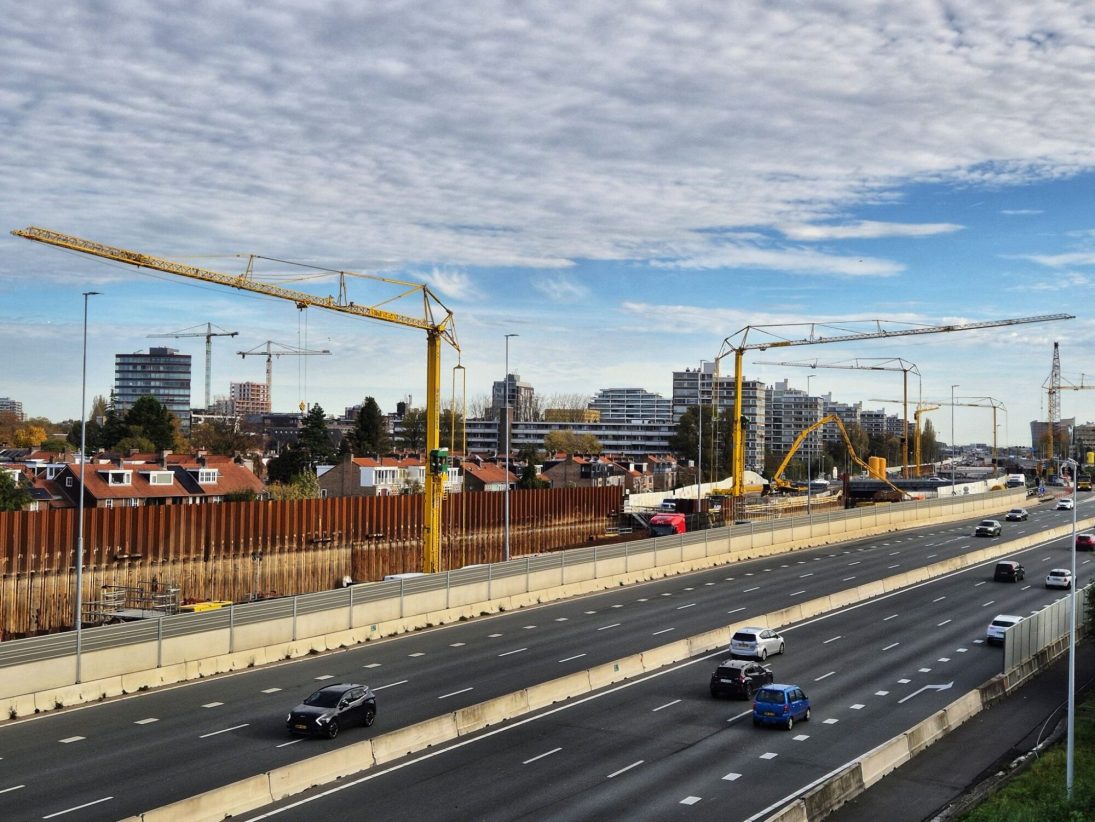
A row of folding tower cranes above the traffic on the VeenIX A9 motorway job
A line of Spierings mobile tower cranes has become a fixture on the A9 between Badhoevedorp and Holendrecht, where the VeenIX consortium is widening the motorway to four lanes each way and adding a reversible lane.
Working over live traffic
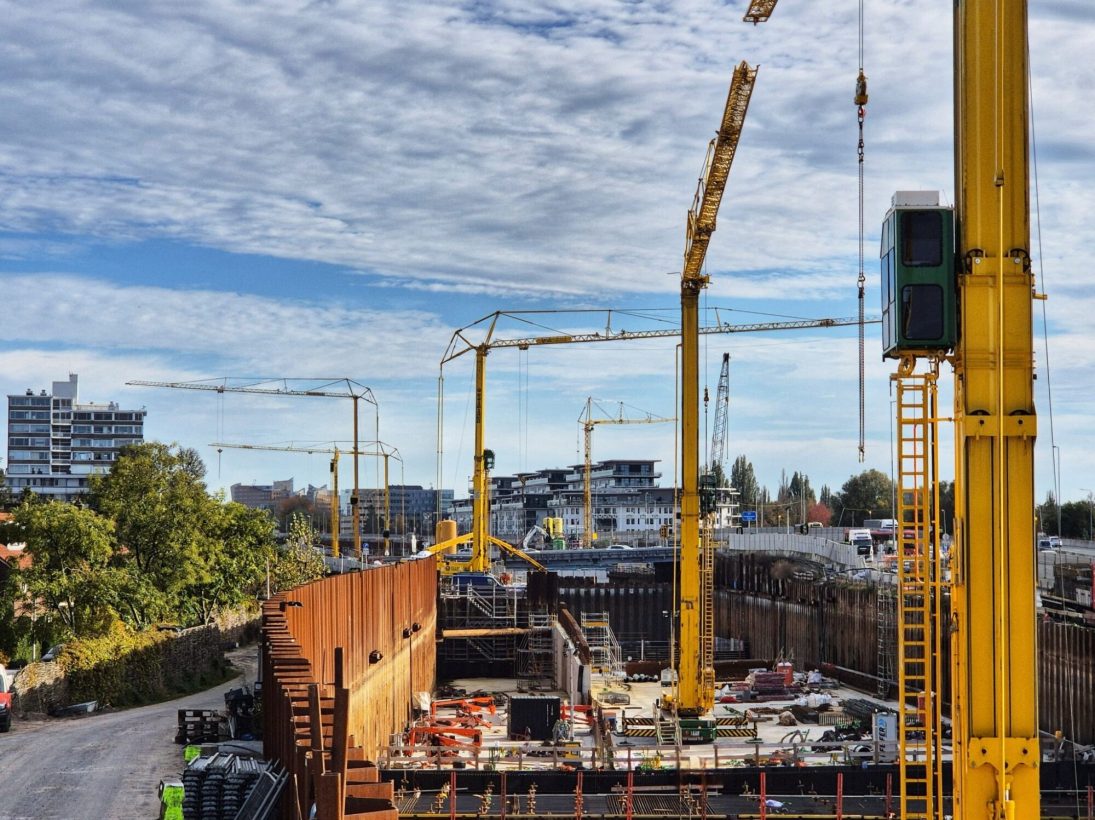
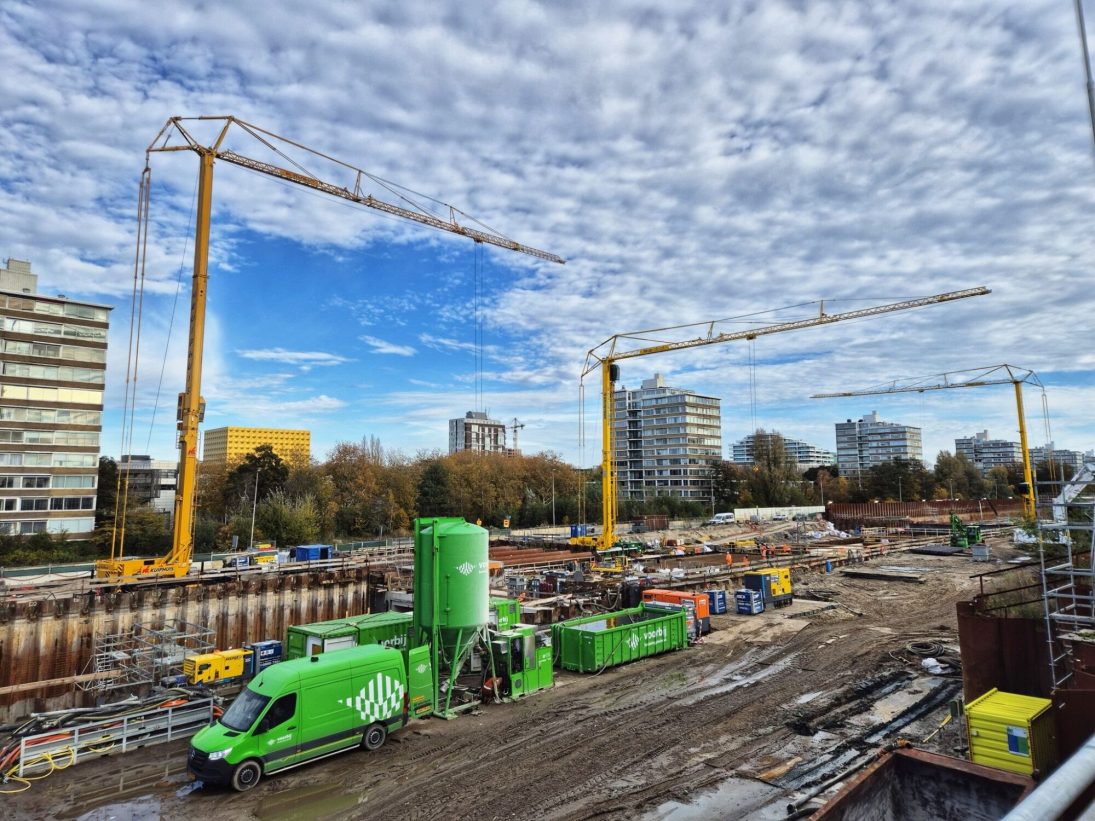
The scheme, commissioned by Dutch roads authority Rijkswaterstaat, is being built in a corridor where space, traffic flow and programme are all under pressure at once. Cranes on this kind of job have to work above running lanes, viaducts and temporary structures, and they have to move as the works advance through their phases.
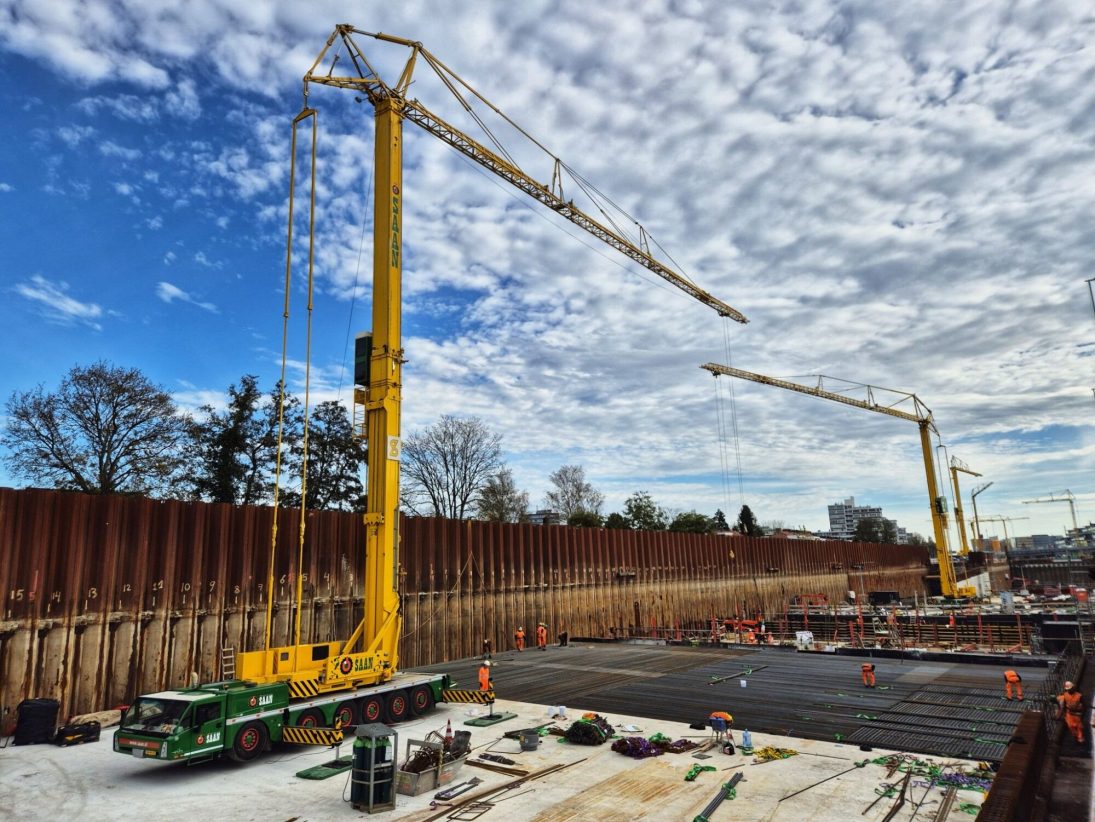
The machines are deployed in numbers by two Spierings customers, Koninklijke Saan and Kuiphuis Kraanverhuur, both of which run substantial mobile tower crane fleets.
Why the type suits the job
Spierings puts the fit down to three characteristics. The first is relocation: the cranes travel between positions as each phase of the works progresses without requiring changes to the infrastructure to accommodate them, which cuts preparation and setup time on a site where every metre is contested.
The second is jib length. The cranes on the A9 carry jibs ranging from 42 to 60 metres, giving the reach needed to work over traffic lanes and structures from set-up positions outside the carriageway. For the heaviest picks on the project a crawler crane provides the additional capacity and stability.
Emission-free running on site
Part of the Spierings fleet on the A9 is equipped with eLift technology, allowing fully emission-free operation wherever a power supply is available. The company says a 16 A construction supply is enough for a full day of electric working, which removes both engine noise and exhaust emissions from a corridor bordered by housing.
Every new Spierings crane has been delivered with eLift as standard since 2023, and the manufacturer has since stopped building conventional diesel machines. On a project of this length, that shifts the emissions profile of the lifting operation as a whole rather than of individual machines.
Spierings notes that the cranes can run electrically all day on that supply, producing a quieter and cleaner working environment for both the site teams and the neighbouring streets. It also aligns the works with Dutch national policy on emission-free construction, an increasingly common requirement on publicly procured infrastructure contracts.
The manufacturer credits the combination of its customers’ operating experience and the characteristics of the machines for keeping assembly and lifting work moving safely in a constrained corridor. The A9 widening is intended to improve access to the Randstad conurbation once complete.
Project facts
- Project: A9 widening, Badhoevedorp–Holendrecht
- Client: Rijkswaterstaat
- Contractor: VeenIX consortium
- Scope: four lanes in each direction plus a new reversible lane
- Crane operators: Koninklijke Saan, Kuiphuis Kraanverhuur
- Jib lengths on site: 42–60 m
- Site power for eLift machines: 16 A supply
- eLift standard on new cranes since: 2023
Related Stories
Seven jobs that show the range of Liebherr Tower Crane Solutions
From a luffing jib crane above the Sagrada Familia to rail-mounted flat-tops at Santiago airport and more than…
Link-Belt RTC-80130 SII builds emergency-route bridge in California
A Shimmick crew used a 130 US ton Link-Belt RTC-80130 SII to build the new Mosquito Road bridge…
Four Liebherr LTC 1050-3.1s build THW’s 70-metre Danube bridge
Germany's THW used four Liebherr LTC 1050-3.1 compact cranes to pre-assemble a 70-metre temporary Danube crossing at Tuttlingen,…