

Classen’s Crane Service picks a 120-ton telescopic truck crane for boom length rather than capacity
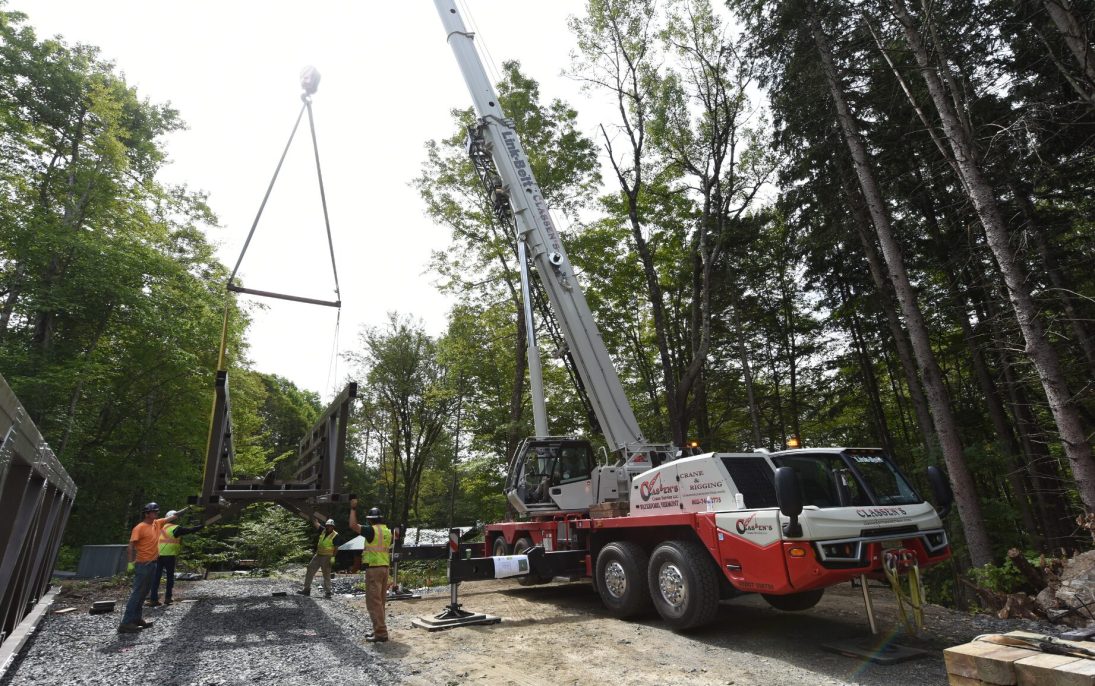
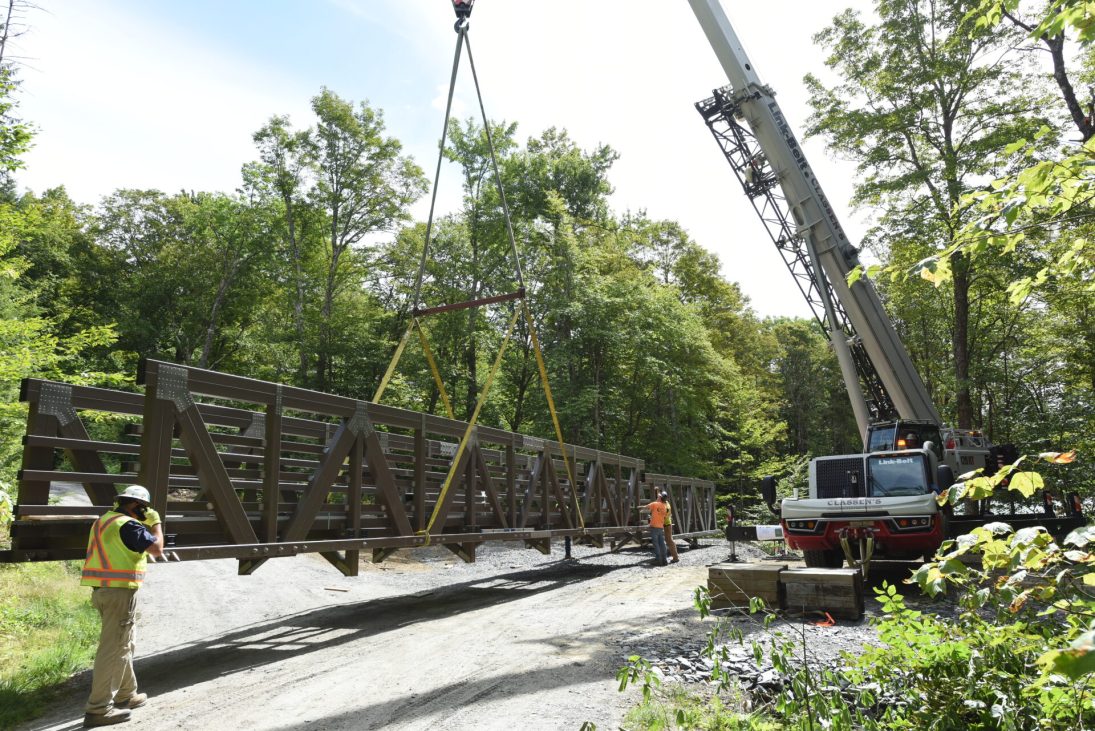
A Link-Belt 120|HT has lifted an 80ft fibreglass pedestrian bridge into place over a 30ft-deep ravine in Fayston, Vermont, working at a 65ft radius with 125ft of boom out for Classen’s Crane Service.
The lift
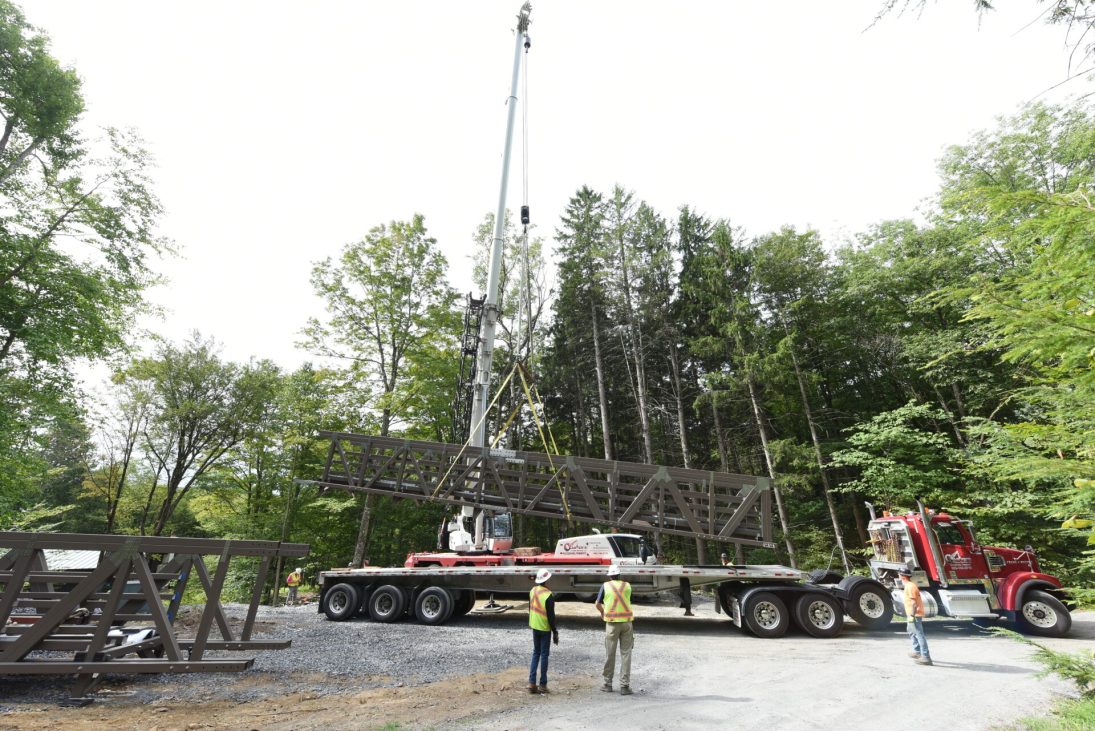
The structure replaced a deteriorating wooden walkway built in 1972. Shipped from Texas in sections and assembled on site in two parts, the completed fibreglass bridge weighed a combined 15,500lb. Classen’s Crane Service of Waterford, Vermont, set it at a 65ft radius with 125ft of boom extended, landing it across a ravine some 30ft deep.
By weight it is a modest pick for a 120-ton machine. The governing factor was geometry: reaching out over a ravine to land a long, light and comparatively flexible structure requires boom length and control rather than raw chart capacity.
Why the 120|HT
The crane occupies a specific gap in Classen’s fleet. It replaced a 100-ton Link-Belt HTC-86100 and sits between the company’s 175-ton 175|AT and a 65-ton Link-Belt truck crane. Vice President Ben Classen said the purchase was driven by capacity, reach and — given where the company works — service availability.
“When we look for a piece of equipment, we look for capacity, reach and availability of service in the remote areas we work in. The five biggest things that drive our focus are service, service, service, service, and service. We get that service from our dealer CR Woods and Link-Belt.”
— Ben Classen, Vice President, Classen’s Crane Service
The company works primarily in hard-to-access locations including mountaintops, where a crane that needs a jib rigged for every long-reach pick costs time and demands set-up space that often is not there. The 120|HT’s 164.1ft of telescopic boom addresses that directly.
“The extra boom length, it makes a big difference. It lessens the need to use the jib that requires more set-up time and space, and it is American made.”
— Ben Classen, Vice President, Classen’s Crane Service
From the seat
Operator Jacob Davis, who has already logged 600 hours on the machine, said the combination of chart and reach was what made the bridge pick workable — particularly with uncertainty over the final rigged weight.
“I think this crane was the right choice for this job because of the capacities and radius we’re working here as well as the weight of the bridge itself. We needed that specific boom length and the right capacity combined to be able to set it at about a 70-foot radius, especially when we were not sure of its weight with rigging.”
— Jacob Davis, crane operator, Classen’s Crane Service
Davis rated the machine on simple set-up and assembly and on its boom length, which he said pays off on HVAC installations onto rooftops and on cell antenna work. He also found the Pulse 2.0 system useful for fine metering and for establishing counterweight configurations.
“I would recommend this machine because it’s so versatile. It’s big enough to do some of the bigger crane work we have or the smaller crane work. It’s a good size for a little bit of everything.”
— Jacob Davis, crane operator, Classen’s Crane Service
Crane facts
- Model: Link-Belt 120|HT telescopic truck crane
- Capacity: 120 US tons
- Main boom: 164.1ft telescopic
- Control system: Pulse 2.0
- Owner: Classen’s Crane Service, Waterford, Vermont
- Dealer: CR Woods
- Hours logged: 600
The lift
- Load: 80ft fibreglass pedestrian bridge, two sections
- Weight: 15,500lb combined
- Radius: 65ft
- Boom out: 125ft
- Location: Fayston, Vermont
- Obstacle: 30ft-deep ravine
- Replaced: Wooden walkway built in 1972
Related Stories
Helicopter lifts Liebherr derrick crane onto Paris high-rise roof
A Liebherr 200 DR 5/10 Litronic derrick crane was flown piece by piece onto the roof of the…
Tadano ATF 100G-4 lifts 2.5-tonne Bullhead at Wacken Open Air
Crane rental firm Wilhelm used its Tadano ATF 100G-4 to hoist the 2.5-tonne Bullhead skull onto the main…
Seven jobs that show the range of Liebherr Tower Crane Solutions
From a luffing jib crane above the Sagrada Familia to rail-mounted flat-tops at Santiago airport and more than…