

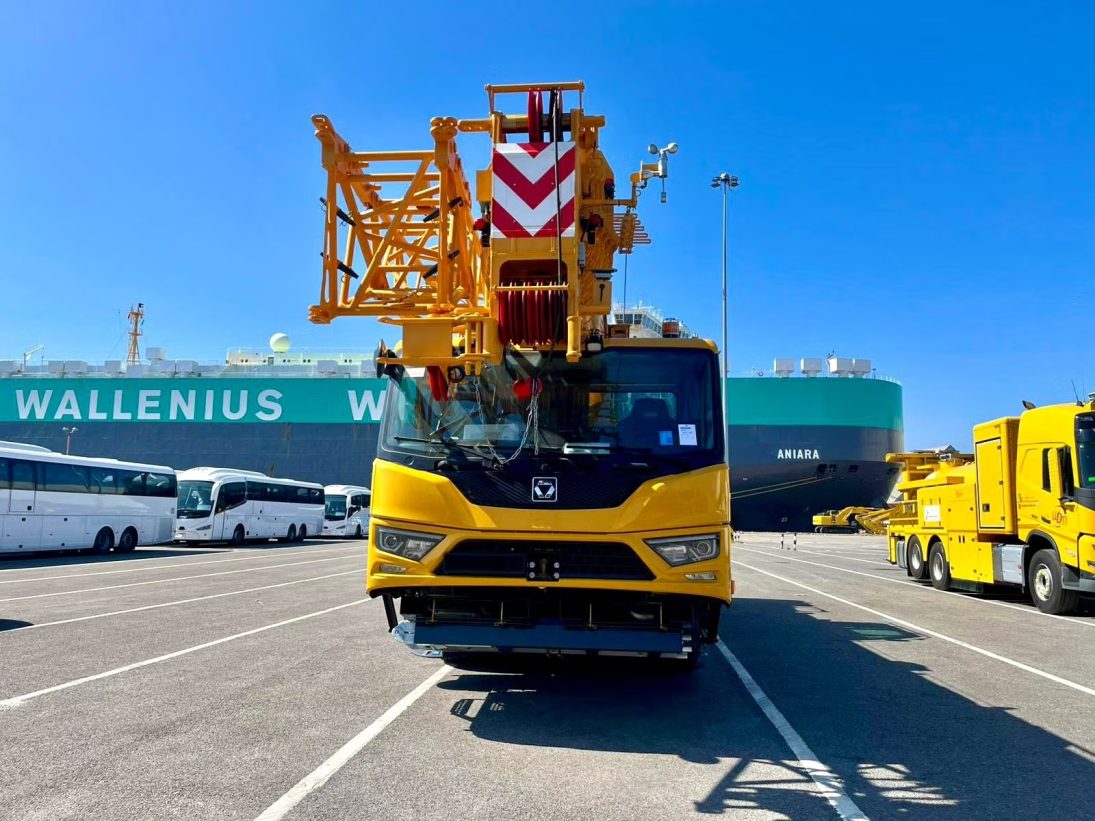
Bristol landfall: XCMG’s first XCA60_EV hybrid all-terrain arrives in Britain
The first XCMG XCA60_EV — a 60-tonne, three-axle hybrid all-terrain crane — has been landed at the Port of Bristol, the manufacturer’s opening move for the model in the British market.
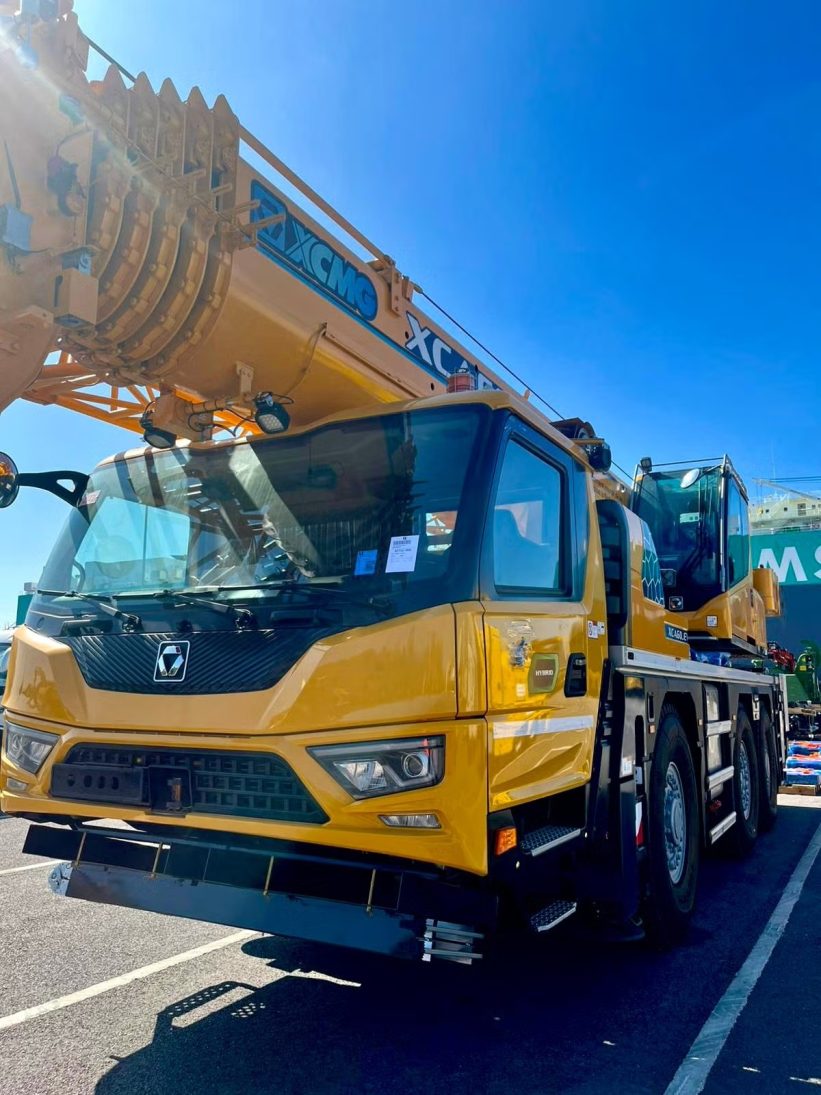
Shipped direct from China
The crane came straight from XCMG’s production base in China rather than through a European stockholding operation. The manufacturer says it can also arrange onward delivery through UK logistics channels depending on where the customer is based.
Lead times are correspondingly long by European standards. XCMG quotes roughly three months for production once an order is confirmed, plus one to two months’ shipping to the UK or continental Europe — around four to five months in total from order to handover.
Bristol is a working ro-ro and project cargo port rather than a crane distribution hub, so the machine’s arrival there reflects the direct-shipment model: units come in on a vessel and are driven off, with no European pre-delivery inspection centre in between.
Rental interest
XCMG reports strong interest in the XCA60_EV from UK and European rental houses, and says more units are already being scheduled for production. It points to Mammoet and Sarens, both of which have indicated on their own social media channels that they will be working with XCMG; the manufacturer describes those arrangements as in progress rather than concluded.
Whether that interest converts into fleet orders is the real test. Hybrid all-terrains in the 60-tonne class are aimed at urban and industrial work where noise and emissions rules are tightening, a segment where the established European builders already have machines in the market.
Service and training
Aftersales is the usual sticking point for a new entrant, and XCMG has set out a tiered approach. Routine maintenance and minor repairs are handled by its local service teams in the UK, who visit the customer’s site; more serious faults are escalated to factory-level support, with technicians dispatched for on-site work.
That structure is the same one XCMG has used elsewhere in Europe, and it is the part of the offer most likely to be scrutinised by fleet buyers weighing a Chinese machine against a European one, where a dealer network and parts stock are already in place.
Training is provided after delivery. XCMG’s service manager and product manager attend the customer’s site to run the initial handover, and customers wanting more depth can be trained at the company’s European headquarters or at its headquarters in China.
Related Stories
Enercon adds 1,000-tonne Liebherr LR 11000 to its erection fleet
Wind turbine manufacturer Enercon has taken delivery of a Liebherr LR 11000 crawler crane, which is already erecting…
WW Builders takes first knuckle boom with Tadano PM 38525 SP
Oklahoma contractor WW Builders Inc. has added its first loader crane, a Tadano PM 38525 SP with J813.20…
Cantiniau takes Tadano AC 4.080-1 handover at JDL Expo in Beaune
French lifting specialist Cantiniau has returned to the 80-tonne class with a new Tadano AC 4.080-1, handed over…