

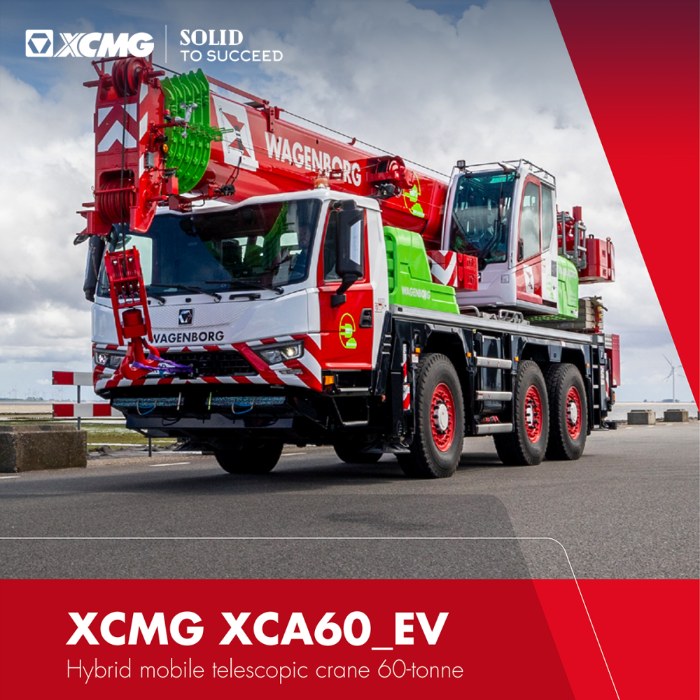
Battery in the counterweight: how XCMG builds the case for the XCA60_EV
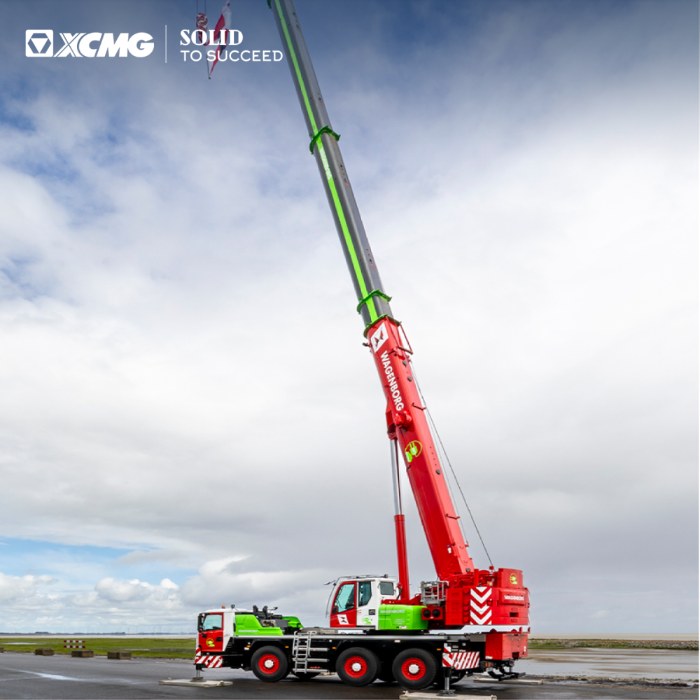
XCMG has set out the technical argument for the XCA60_EV, a 60-tonne hybrid mobile telescopic crane that carries its battery inside the counterweight and can work on electric power alone for six to eight hours.
Electric lifting, hybrid travel
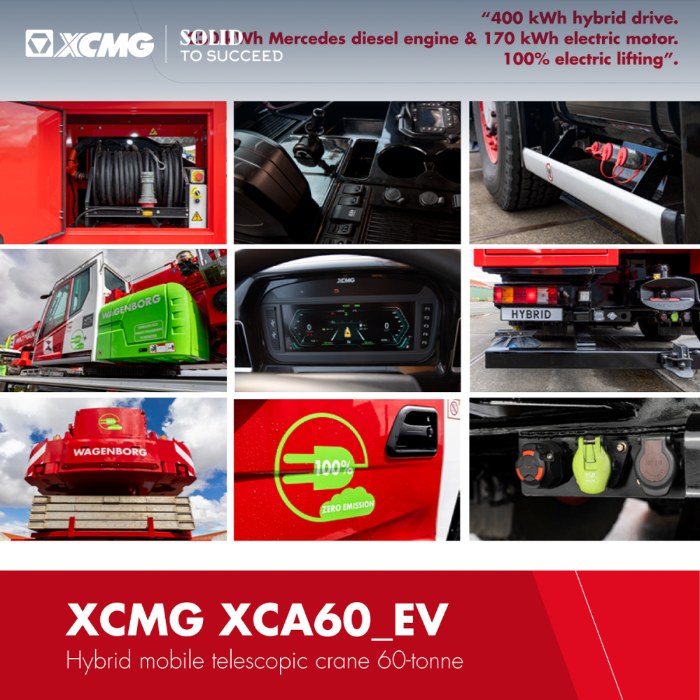
The premise is a split between the two jobs a mobile crane does. Lifting is handled electrically, which XCMG says produces zero emissions on site without giving up hoisting speed or cycle efficiency. Road travel remains hybrid, with a diesel driveline available for the run between jobs.
The packaging is the more interesting part. Rather than adding a separate battery pack or towing a battery truck, the energy storage is integrated into the crane’s counterweight — mass that has to be carried anyway. XCMG argues that this avoids the cost and logistics of a second vehicle on site.
Charging and consumption
The crane recharges regeneratively while driving and braking, so on XCMG’s account it should reach the job with a full battery and no need to stop and charge en route — the operator can start work on arrival. Charging on site is offered with a choice of supply options for flexibility where site power is limited.
Fuel use on the road is part of the same argument. Contractors increasingly have to account for mileage and consumption between sites as well as emissions at the point of work, and XCMG claims exceptionally low consumption for the hybrid system.
The cost argument
XCMG frames the crane less as a green statement than as an operating-cost proposition. Customers are being pushed by tightening environmental requirements and emission standards, and a machine that lifts electrically lets a contractor bid work on sites where diesel operation is restricted. Because the battery is part of the counterweight rather than a separate unit, XCMG argues the running-cost comparison with a crane plus a dedicated battery truck falls in the hybrid’s favour.
Charging options are described as flexible, with the crane able to fall back to a low-current supply where nothing heavier is available on site.
Noise and vibration
The secondary benefit of electric operation is a quieter, less fatiguing machine. XCMG cites low noise and vibration levels as a health and safety gain for the operator and for anyone working near the crane — which in practice is also what makes the model viable for night work and inner-city sites subject to noise restrictions.
The XCA60_EV is presented as the world’s first 60-tonne hybrid mobile telescopic crane. XCMG has not published detailed load charts alongside these claims.
Related Stories
Enercon adds 1,000-tonne Liebherr LR 11000 to its erection fleet
Wind turbine manufacturer Enercon has taken delivery of a Liebherr LR 11000 crawler crane, which is already erecting…
WW Builders takes first knuckle boom with Tadano PM 38525 SP
Oklahoma contractor WW Builders Inc. has added its first loader crane, a Tadano PM 38525 SP with J813.20…
Cantiniau takes Tadano AC 4.080-1 handover at JDL Expo in Beaune
French lifting specialist Cantiniau has returned to the 80-tonne class with a new Tadano AC 4.080-1, handed over…