

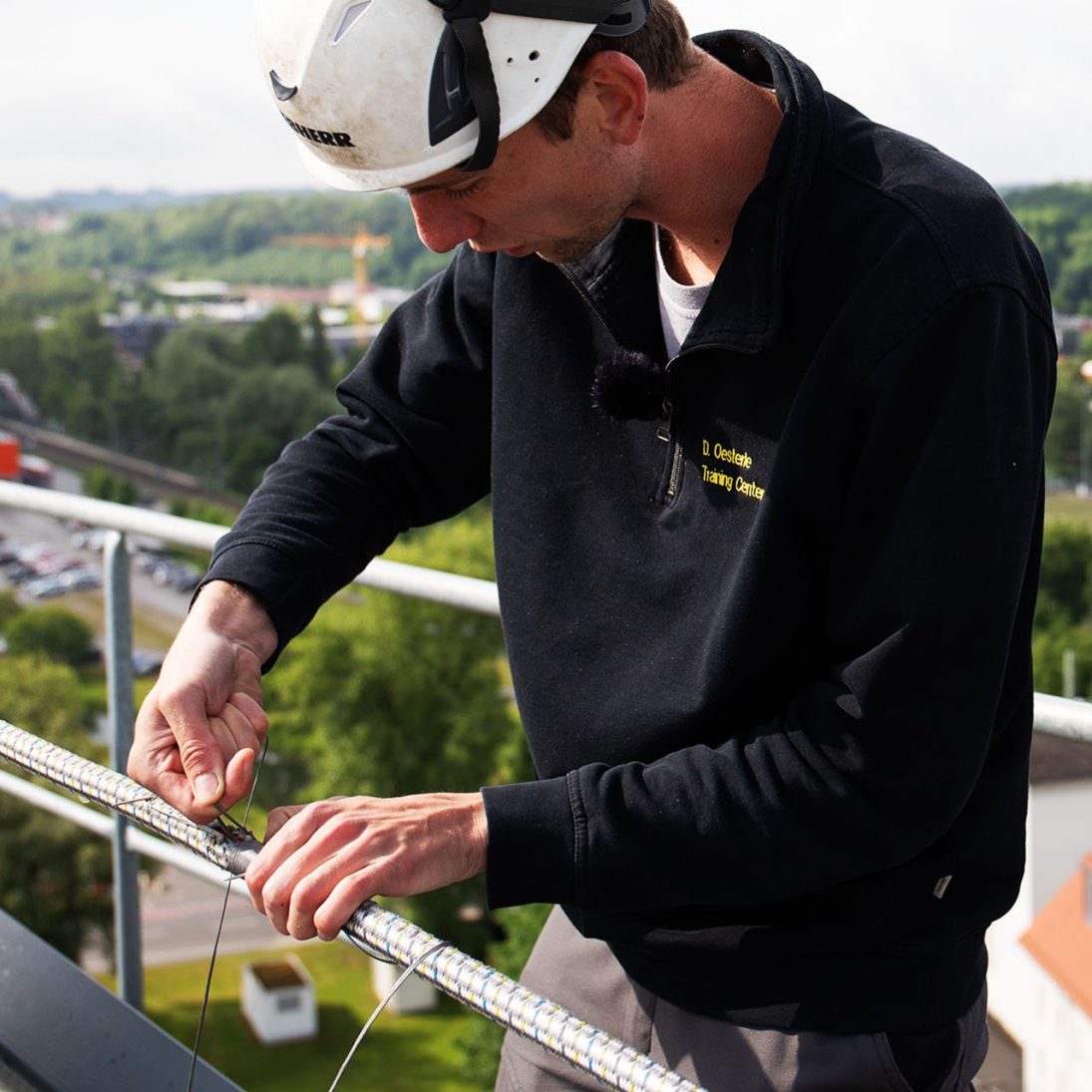
Liebherr extends Fibre rope life for tower cranes to 16 years
Liebherr has raised the overall service life of its Fibre tower crane ropes from 14 to 16 years, with the permitted period of use climbing to as much as 12 years — a change that applies automatically to every rope already in the field.
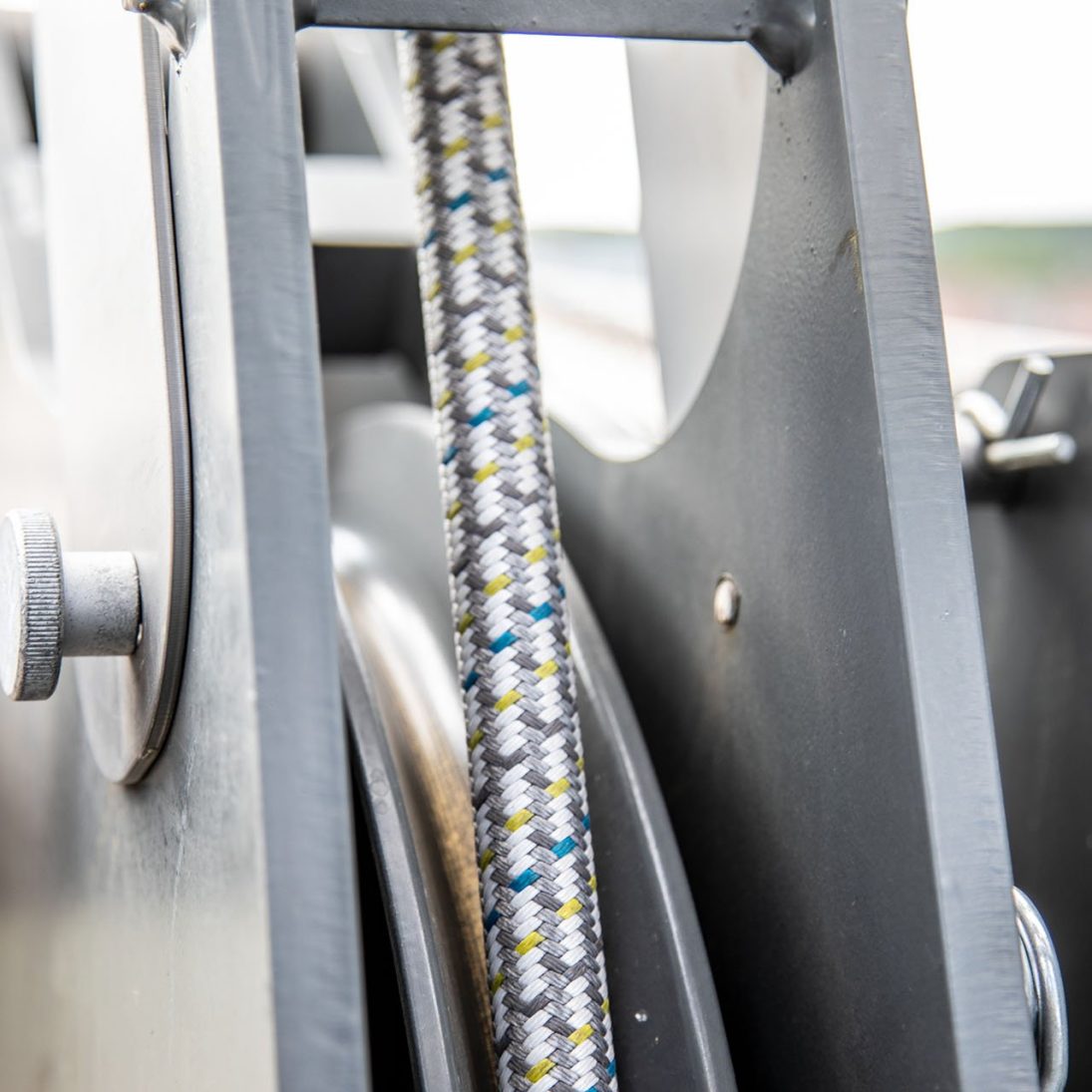
The revised figures rest on multi-year ageing trials and on analysis of ropes working in the field. Liebherr exposed sample ropes to outdoor weathering at locations around the world for two, four and six years, then tested them to failure under realistic conditions. Even after six years, the company says, the ropes achieved values nearly identical to those of a new rope.
In parallel, Liebherr evaluated how Fibre cranes are actually used in the market and what that means for rope life. Keeping the storage allowance constant while raising the overall service life allows the maximum period of use to grow — a change that chiefly benefits cranes whose ropes have seen comparatively low stress. According to seven years of field data, at least half of all Fibre cranes stand to gain significantly.
Repair on the crane instead of rope change
Liebherr contrasts the fibre rope’s record with that of conventional steel hoist ropes, which rarely reach their theoretical maximum life. Figures from the company’s own rental fleets — covering almost 200 cranes over periods of up to 13 years — show steel ropes typically stay on a crane for just two to 2.5 years before damage forces replacement, a pattern several major partners have confirmed from their own fleets.
Most damage to a Fibre rope, by contrast, can be repaired directly on the crane. Combined with rope shortening, around 90 per cent of all rope damage can be resolved without a rope change, so most Fibre ropes can run right up to their discard criterion. That point is still signalled, as before, by the appearance of the red indicator layer woven into the rope; the overall service life continues to be counted from the make-up date engraved on the end connection.
Part of a wider cost push
Owners need take no action: the new ruling applies automatically to all new ropes and those already working, regardless of production date. Liebherr says more than 400 Fibre cranes will be on the market by the turn of the year.
The move follows a 26 per cent price cut on replacement Fibre ropes in April and lifts the cost-effectiveness of the technology by up to 20 per cent, part of a deliberate campaign since bauma 2025 to establish fibre rope as the standard in the tower crane market. Building on existing steel-rope crane systems, the lighter rope also permits load capacity increases of up to 40 per cent.
“We are convinced that the technology will prevail in the market thanks to its economic advantages.”
— Jochen Huber, Product Manager Fibre Technology, Liebherr Tower Crane Division
Facts
- Overall service life: raised from 14 to 16 years
- Maximum period of use: now up to 12 years
- Cost-effectiveness gain: up to 20 per cent
- Repairability: around 90 per cent of rope damage resolvable on the crane
- Fleet: more than 400 Fibre cranes in the market by year end
- Steel rope comparison: average 2–2.5 years on the crane before replacement
Related Stories
Grove Wire Rope Cleaner updated to fit ropes on any crane brand
Customer feedback has led Manitowoc to redesign its automated Wire Rope Cleaner, which now suits ropes from 12…
Spierings eLift wins JDL d’Or 2026 for equipment electrification
Spierings Mobile Cranes has won the JDL d'Or 2026 at JDL Expo in Beaune, taking first place in…
Hoeflon compares electric and diesel mini crane running costs
Hoeflon has set its electric C6e against a three-tonne-class diesel mini crane in a detailed running-cost comparison: electric…