

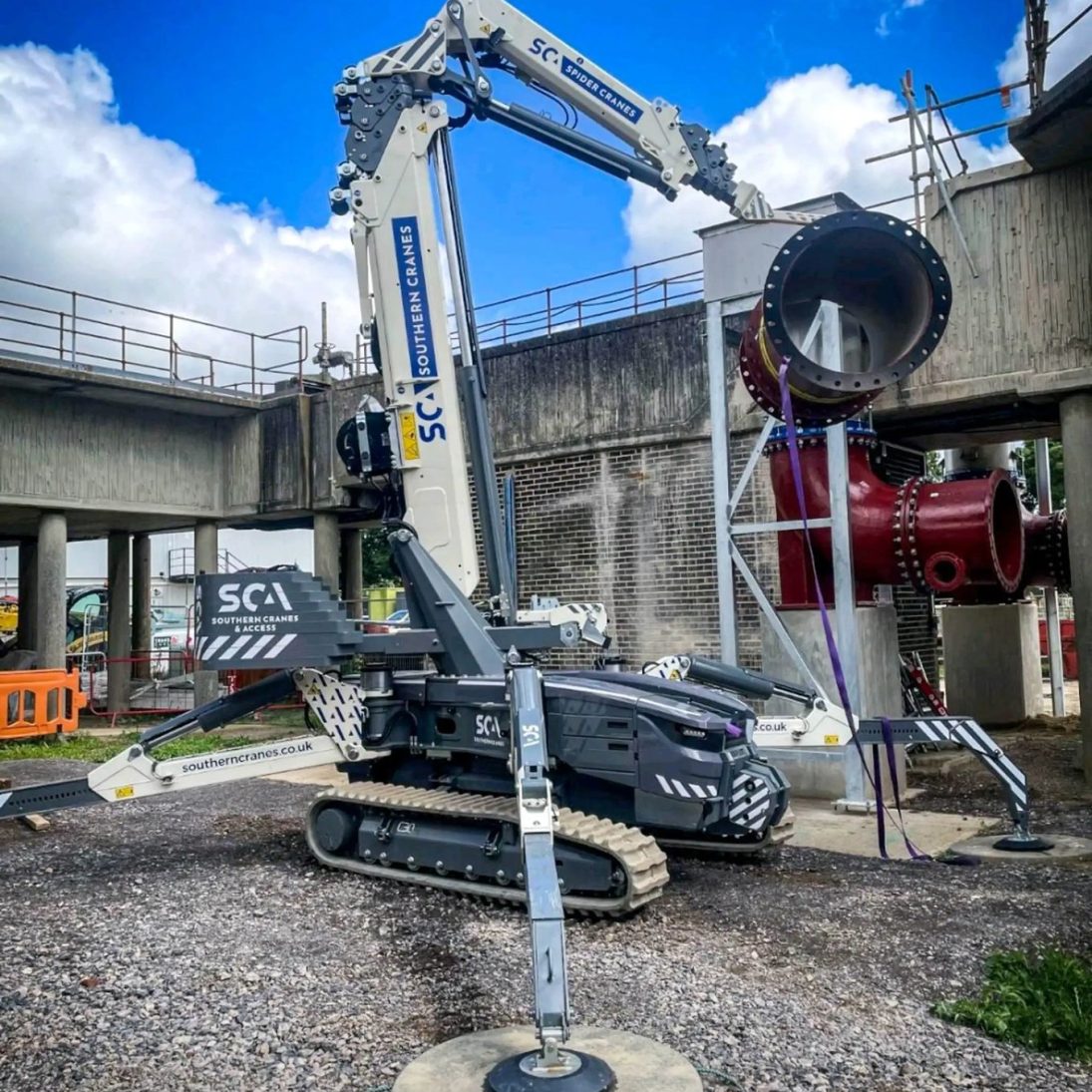
Compact electric mini cranes move heavy machinery where mobile cranes and forklifts cannot reach
Dutch mini crane builder Hoeflon has set out why its compact electric machines have become standard kit for industrial relocations, where production machinery weighing several tonnes must be lifted, moved and repositioned to the millimetre inside cramped, working factories.
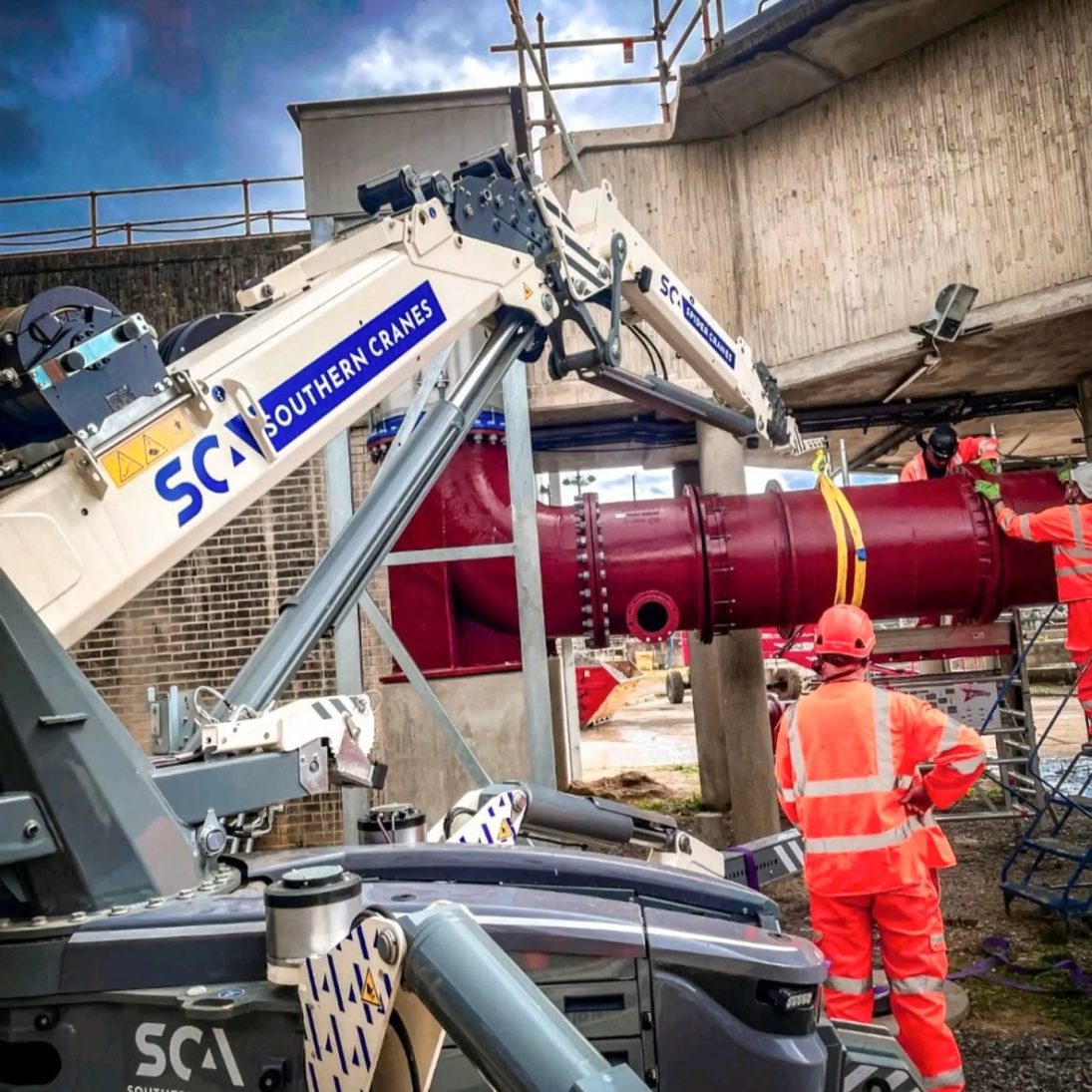
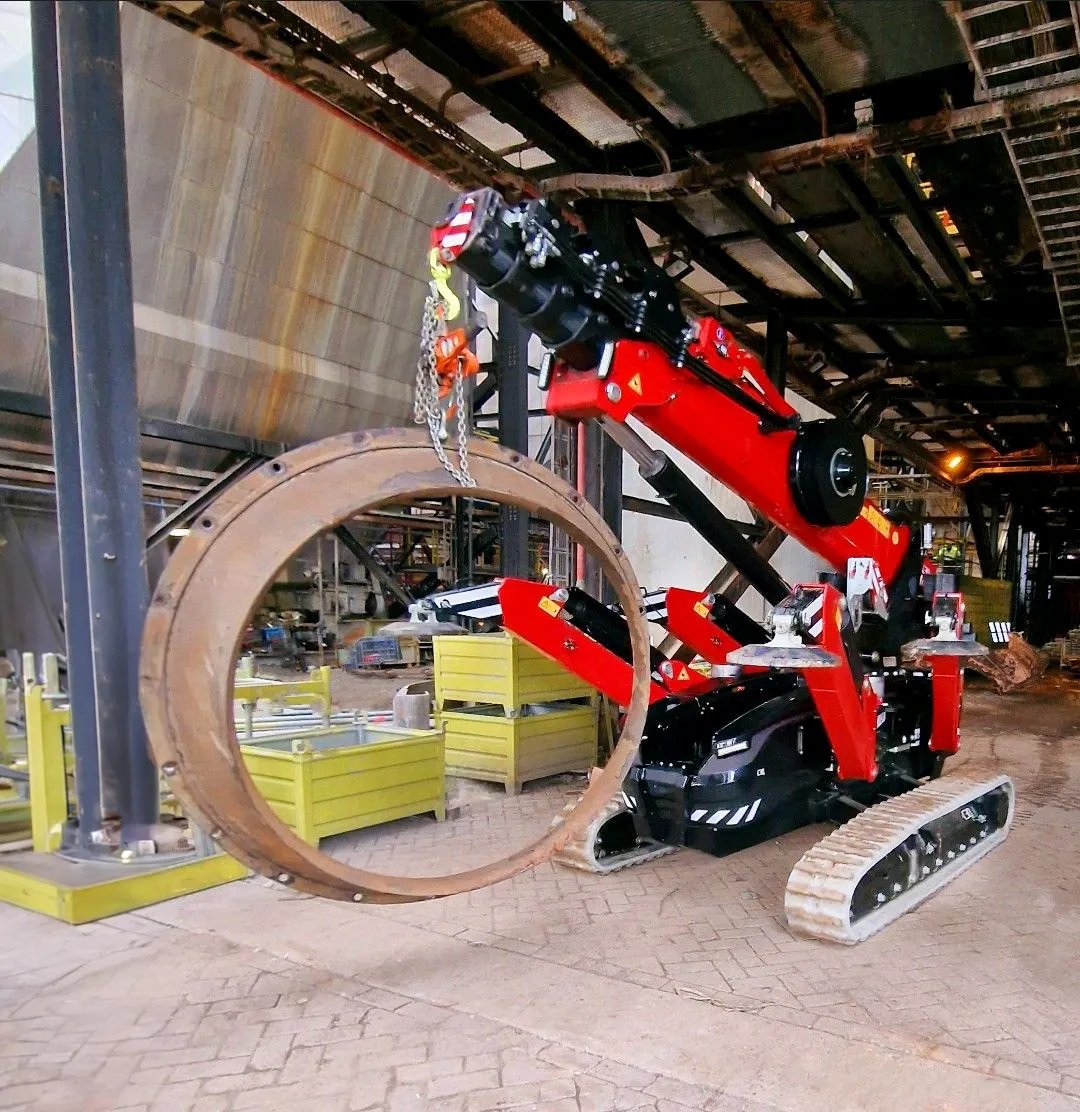
Hoeflon, based in Barneveld in the Netherlands, does not carry out relocations itself. It builds and supplies the compact cranes that relocation specialists and lifting companies use to dismantle, lift and reposition machines, production lines and technical installations – often within a single building, or between sites.
Little room, no margin for error
According to the manufacturer, industrial relocation combines several awkward factors at once. Machines can easily weigh several thousand kilograms yet remain sensitive to impacts and tilting. Narrow passageways, low ceilings, platforms and crowded production halls leave little room to manoeuvre. Lifting frequently takes place while operators and other staff carry on working nearby, and a machine often has to be set back onto its foundation or anchor points to the millimetre – all while every hour of line standstill costs money.
That combination, Hoeflon argues, is exactly where a mini crane earns its keep. A large mobile crane will not fit inside a production hall, and a forklift often cannot reach the load. With machine widths from around 75 cm, the company’s cranes drive through doorways, corridors and between existing machinery. Because the range is fully electric, they work without exhaust fumes and with far less noise – a significant advantage in enclosed halls where production partly continues. Their low dead weight also allows use on upper floors that cannot carry heavy equipment.
Control from outside the cab
Every Hoeflon crane is driven by a wireless remote control that displays the load weight directly, letting the operator stand wherever the view of the load is best. Adjustable outriggers provide support on uneven or delicate floors. Set-up time feeds straight into downtime: on the C10e the outriggers fold out automatically and level themselves, while the pick-and-carry function allows a load to be moved while driving, so the crane does not have to be rigged afresh for every metre gained.
Five models from 2.35 to 9 tonnes
Which model fits a relocation depends on the weight of the load, the width of the passageway and the dead weight the floor can bear. The line-up runs from the C4e, a 2,350 kg capacity machine light enough for upper floors and platforms, through the C6e – which lifts more than its own weight – and the 4-tonne C10e, up to the C30e, the 9-tonne flagship that can also travel with its load in pick-and-carry mode. The C30eL variant trades capacity for reach, lifting 7,000 kg where the boom must stretch over existing installations or parts of the building.
Hoeflon mini crane range
- C4e – 2,350 kg capacity, 0.75 m wide, 2,150 kg dead weight
- C6e – 3,000 kg capacity, 0.77 m wide, 2,850 kg dead weight
- C10e – 4,000 kg capacity, 0.80 m wide, 5,075 kg dead weight
- C30e – 9,000 kg capacity, 1.20 m wide, 8,700 kg dead weight
- C30eL – 7,000 kg capacity, 1.20 m wide, 8,895 kg dead weight
All models fully electric; C30e offers pick & carry, C30eL extra reach.
Related Stories
Unic puts its URW-095 mini spider crane under the spotlight
Unic Cranes Europe has profiled the URW-095, a 995 kg capacity mini spider crane that folds to 600…
Spierings details four crane configurations of the SK1265-AT5 eLift
Spierings has explained how its five-axle SK1265-AT5 eLift mobile tower crane switches between four ballast configurations, from a…
Spierings details four ballast configurations for SK1265-AT5 eLift
Spierings' five-axle SK1265-AT5 eLift mobile tower crane runs in four ballast configurations, from a sub-60-tonne road set-up to…