

Why planning a tower crane deployment is harder than it looks
From the Sagrada Família to the Çanakkale Bridge, Liebherr’s Tower Crane Solutions team plans some of the world’s most demanding tower crane deployments. Head of Project Planning Max Widder explains why the hardest work happens long before a crane reaches site.

Ask why a record-breaking structure cannot simply be served by the strongest crane on the market and Widder has a ready answer. Long before a tower crane arrives on site, his team works with specialist engineers to assess ground bearing capacity, access routes, wind loads at height, snow and ice, seismic effects, marine environments, clearances to existing structures and, crucially, how the crane will eventually come down again.
“Simply choosing the strongest crane isn’t enough. What matters is finding an overall concept that works across the entire construction sequence.”
— Max Widder, Head of Project Planning, Tower Crane Solutions, Liebherr
Complexity is not a numbers game
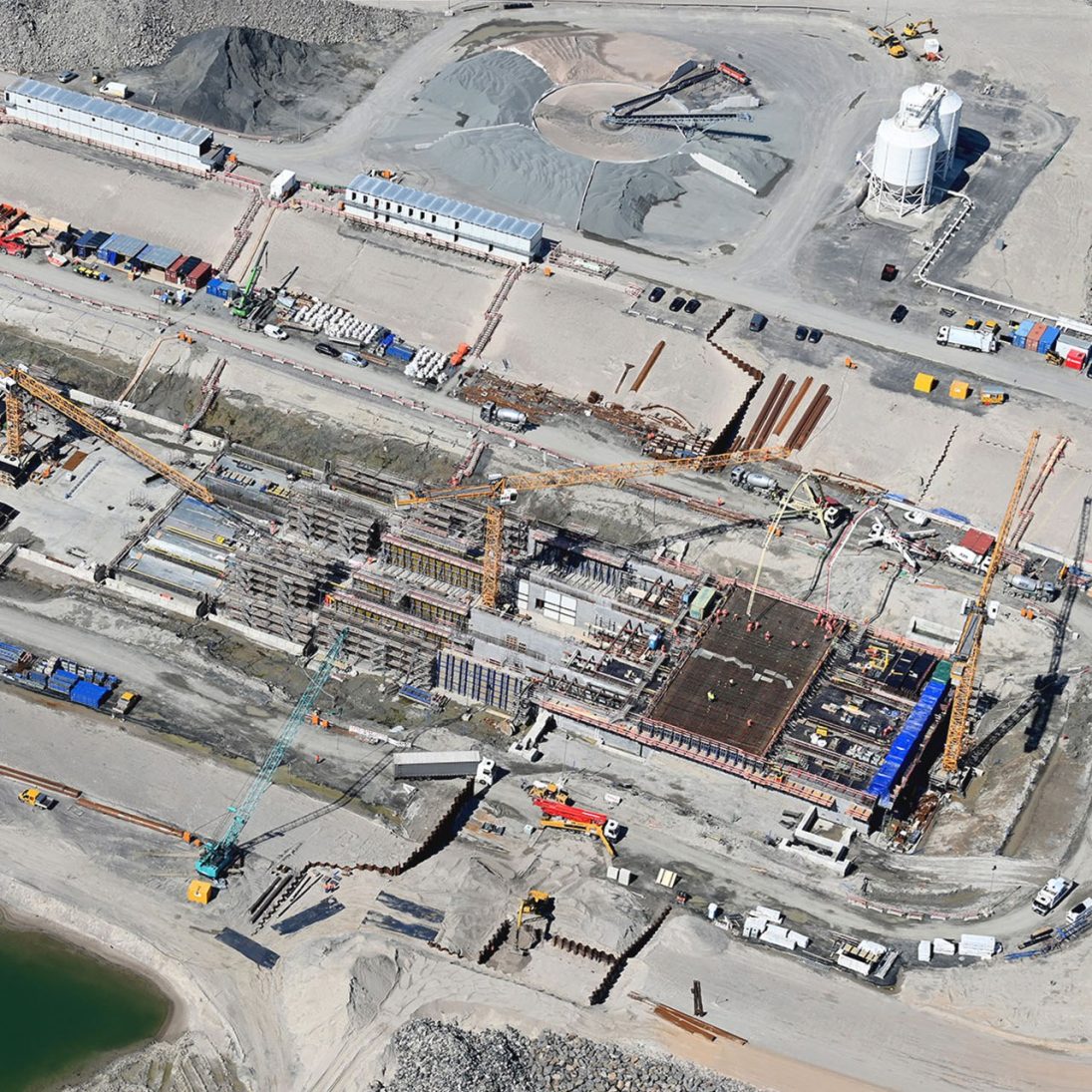
Nor does complexity scale with fleet size. At the Fehmarnbelt Tunnel between Denmark and Germany — at around 18 kilometres the longest immersed tunnel in the world — more than 20 Liebherr tower cranes are at work, many of them rail-mounted so they can shift between production and assembly areas. Yet a single crane in a difficult spot can be harder to plan, Widder says, particularly once climbing cranes enter the picture: positions, climbing sequences, building ties, overlap zones and coordination with other trades all have to align precisely.
The Sagrada Família in Barcelona illustrates the point. A 710 HC-L 32-64 Litronic luffing jib crane — the first of its kind used in Spain — stands directly above the basilica’s nave, with visitors passing beneath it throughout the works, and has helped raise the Tower of Jesus Christ to its final height of 172 metres.
“It’s precisely this contrast between historic architecture with a load-limited supporting structure and modern lifting technology that makes the project so special to me.”
— Max Widder, Head of Project Planning, Tower Crane Solutions, Liebherr
From tender documents to dismantling
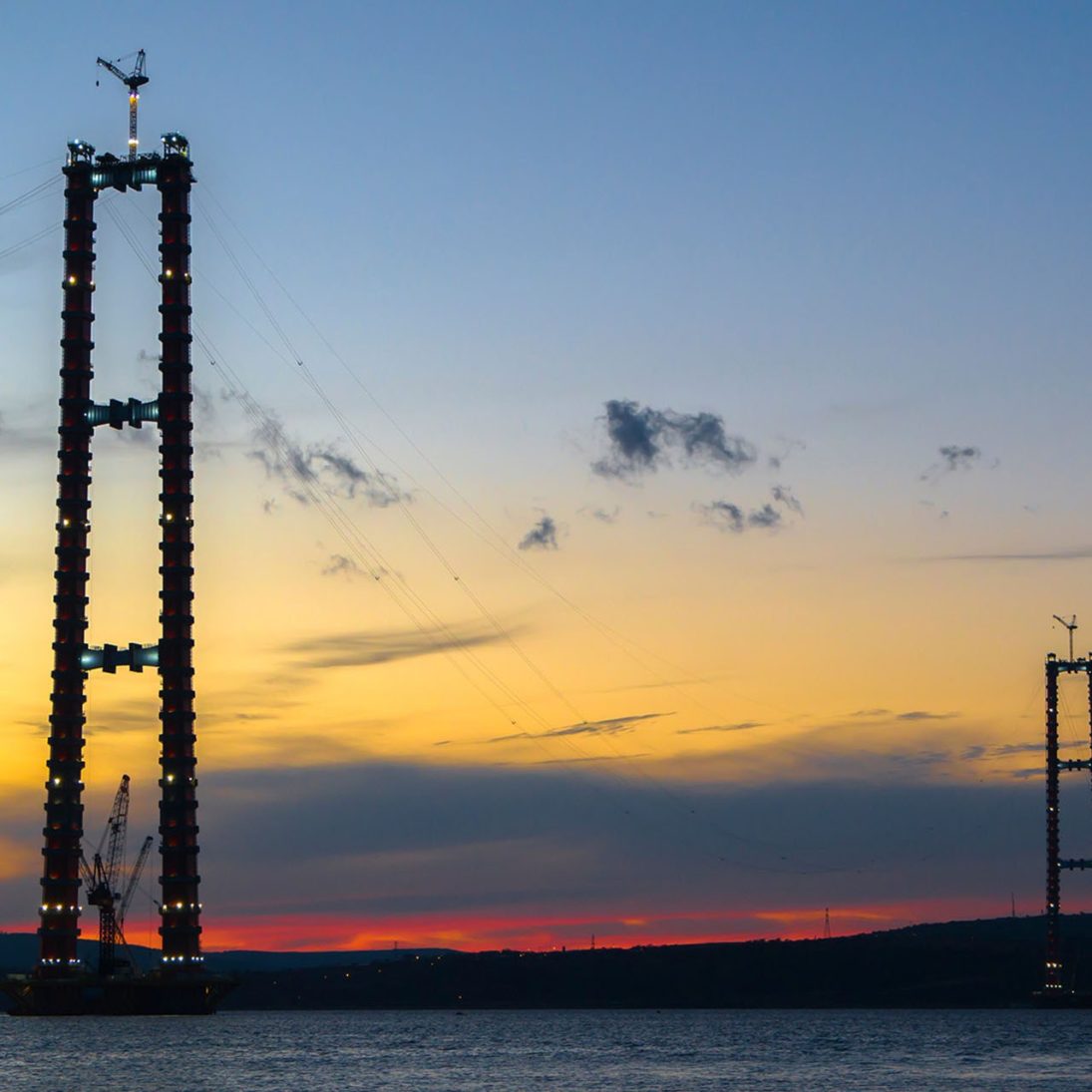
A typical assignment starts with an analysis of the tender documents, followed by feasibility studies, 2D and 3D CAD planning and structural calculations reflecting local conditions. On larger schemes, Tower Crane Solutions frequently takes on complete project management through to commissioning and final dismantling — as it did on the pylons of Türkiye’s Çanakkale Bridge, the world’s longest suspension bridge, where two 357 HC-L 12/24 Litronic luffing jib cranes were erected at a height of 318 metres.
The manufacturer’s advantage
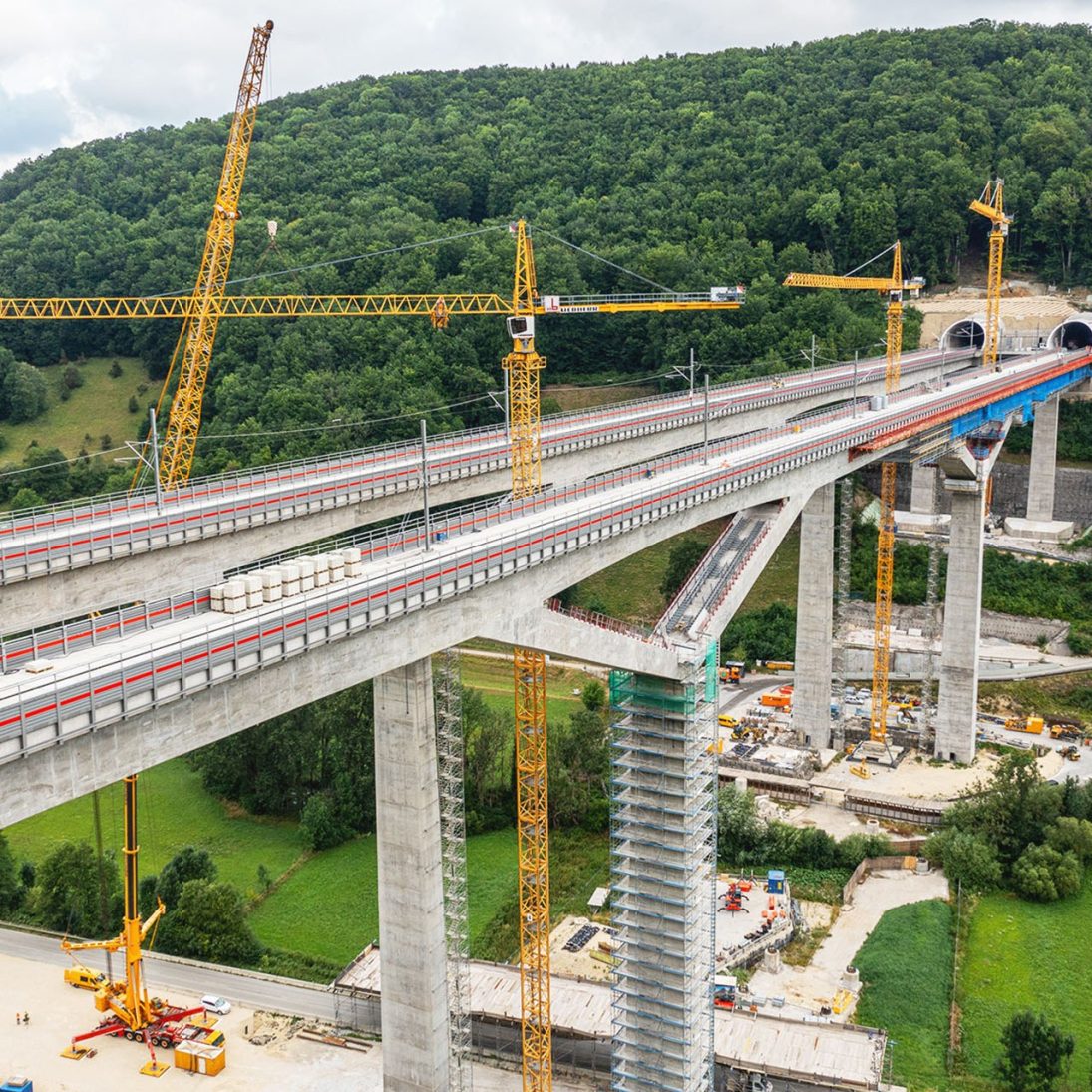
What separates the unit from an external planning consultancy, Widder argues, is direct access to the engineering behind the machines. Lessons learned on sites such as the MoMA Tower in New York and the Filstal Bridge on the Wendlingen–Ulm high-speed line — where four EC-H series cranes, including a 630 EC-H 40 Litronic, were deployed — feed straight back into the next generation of tower cranes.
“An external planning consultancy can propose a solution. With a manufacturer behind us, we can also think it through to the end, both technically and economically.”
— Max Widder, Head of Project Planning, Tower Crane Solutions, Liebherr
Reference projects
- Çanakkale Bridge, Türkiye: 2,023 m span; two 357 HC-L 12/24 Litronic cranes at 318 m
- Sagrada Família, Barcelona: 710 HC-L 32-64 Litronic, 64 t capacity; tower height 172 m
- Fehmarnbelt Tunnel: ca. 18 km; more than 20 tower cranes, many rail-mounted
- Filstal Bridge, Germany: four EC-H series cranes incl. 630 EC-H 40 Litronic
Related Stories
CCRA honours Tadano’s Justin Andrews with Talking Stick Award
The Canadian Crane Rental Association has presented Tadano's Justin Andrews with a Talking Stick Award as he ends…
Kees Hoogendoorn appointed export manager at Jekko
Jekko has created an export manager role and filled it with Kees Hoogendoorn, who will develop the rental…
Ivo Heuvelmans appointed MD of Böcker Nederland
Ivo Heuvelmans has taken over as managing director of Böcker Nederland B.V. from 16 March 2026, with strategy,…