

Four modules, one helicopter: how an SPX328 reached 2,050 m in the Puez-Odle park
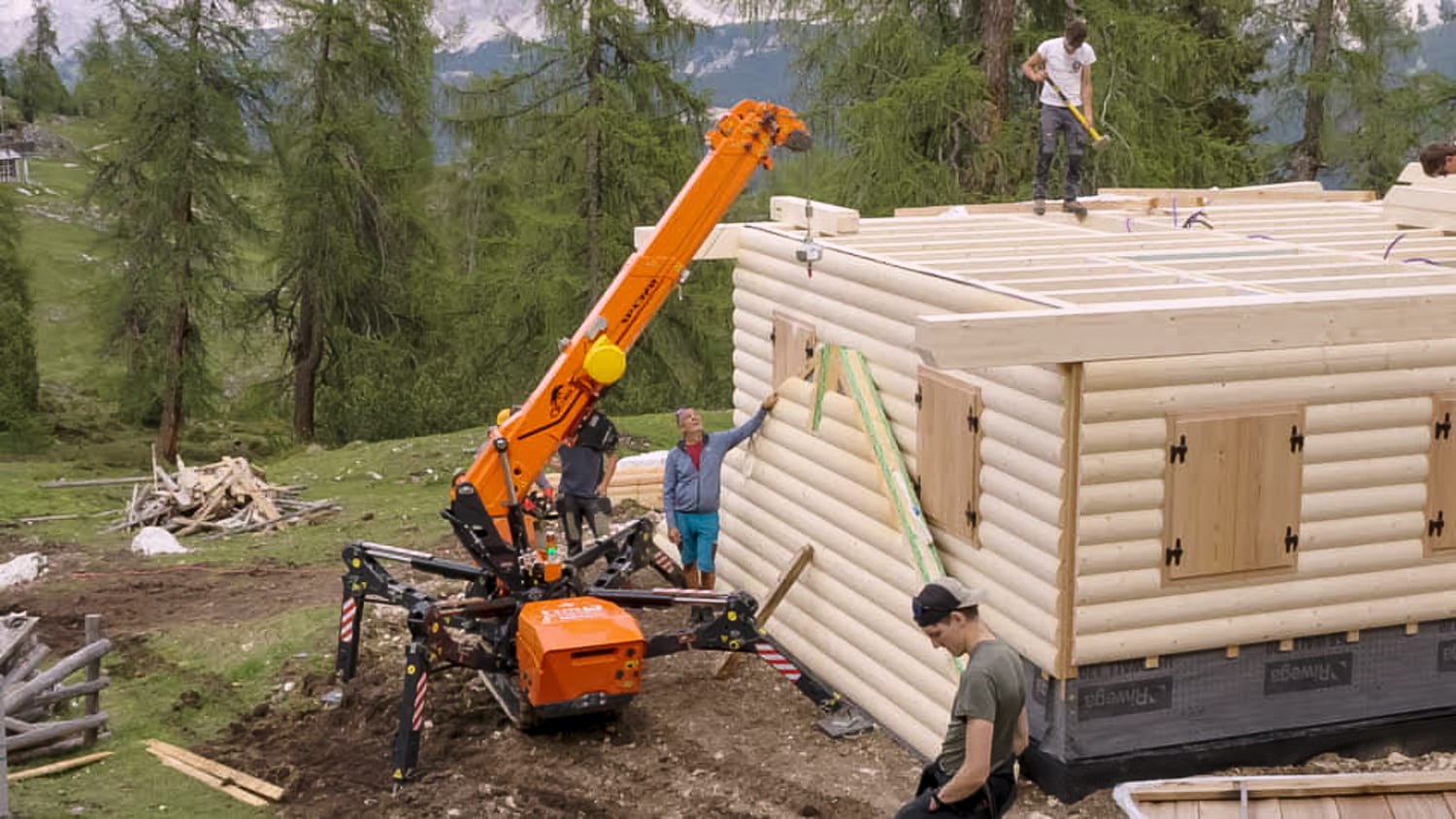
A Jekko SPX328 mini crane was stripped into four airliftable blocks, flown to a mountain hut site at 2,050 metres in the Italian Dolomites and rebuilt on the spot, allowing a prefabricated timber building to be erected in hours.
A jobsite with no road
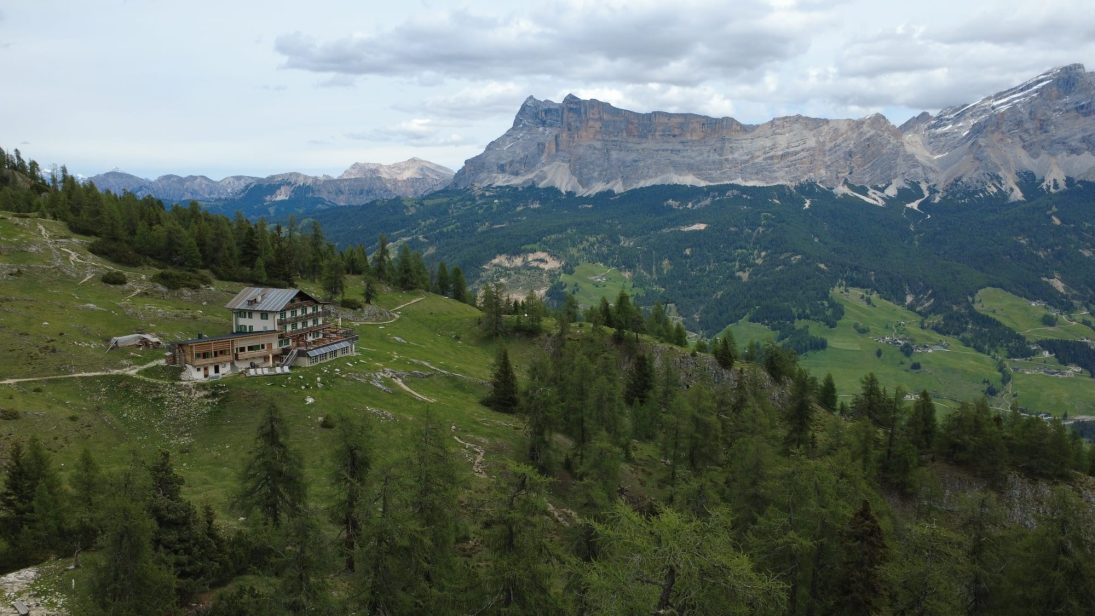
The Municipality of La Villa, in Alta Badia, commissioned a new mountain hut of roughly 80 m² close to the Rifugio Gardenacia, inside the Puez-Odle Nature Park. The site sits at 2,050 metres above sea level and can only be reached on foot, which ruled out every conventional means of getting lifting equipment to the working area.
Main contractor Nagler Holzbau Srl built the hut from high-efficiency prefabricated timber modules and turned to Jekko dealer NMG Italia for the lifting. NMG selected the SPX328 tracked mini crane, chosen for its compact footprint and, above all, for the fact that it can be broken down into light sub-assemblies suitable for helicopter or light-vehicle transport.
“Finding the optimal solution for this specific case was the cornerstone of the project. We chose the SPX328 because it’s compact, versatile, agile and intuitive to use, and because it was designed for quick disassembly into lightweight components that can be transported by helicopter or light vehicles. To keep helicopter usage time to a minimum and reduce logistics costs, as well as on-site working time, we carefully planned the crane’s disassembly procedure, component balancing and subsequent reassembly at altitude.”
— Stefano Vecchiato, project manager, NMG Italia
Dismantling, flying, rebuilding
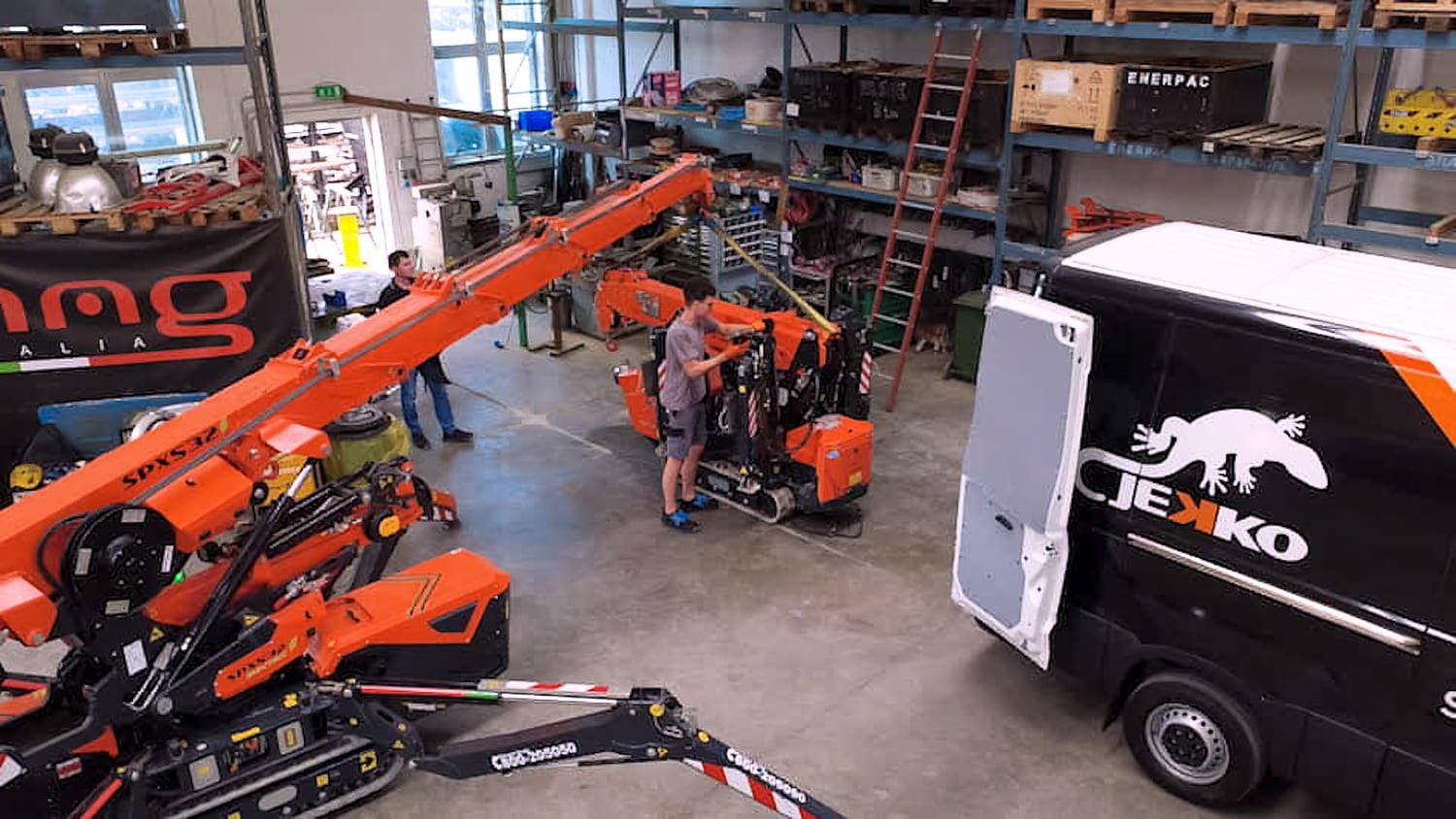
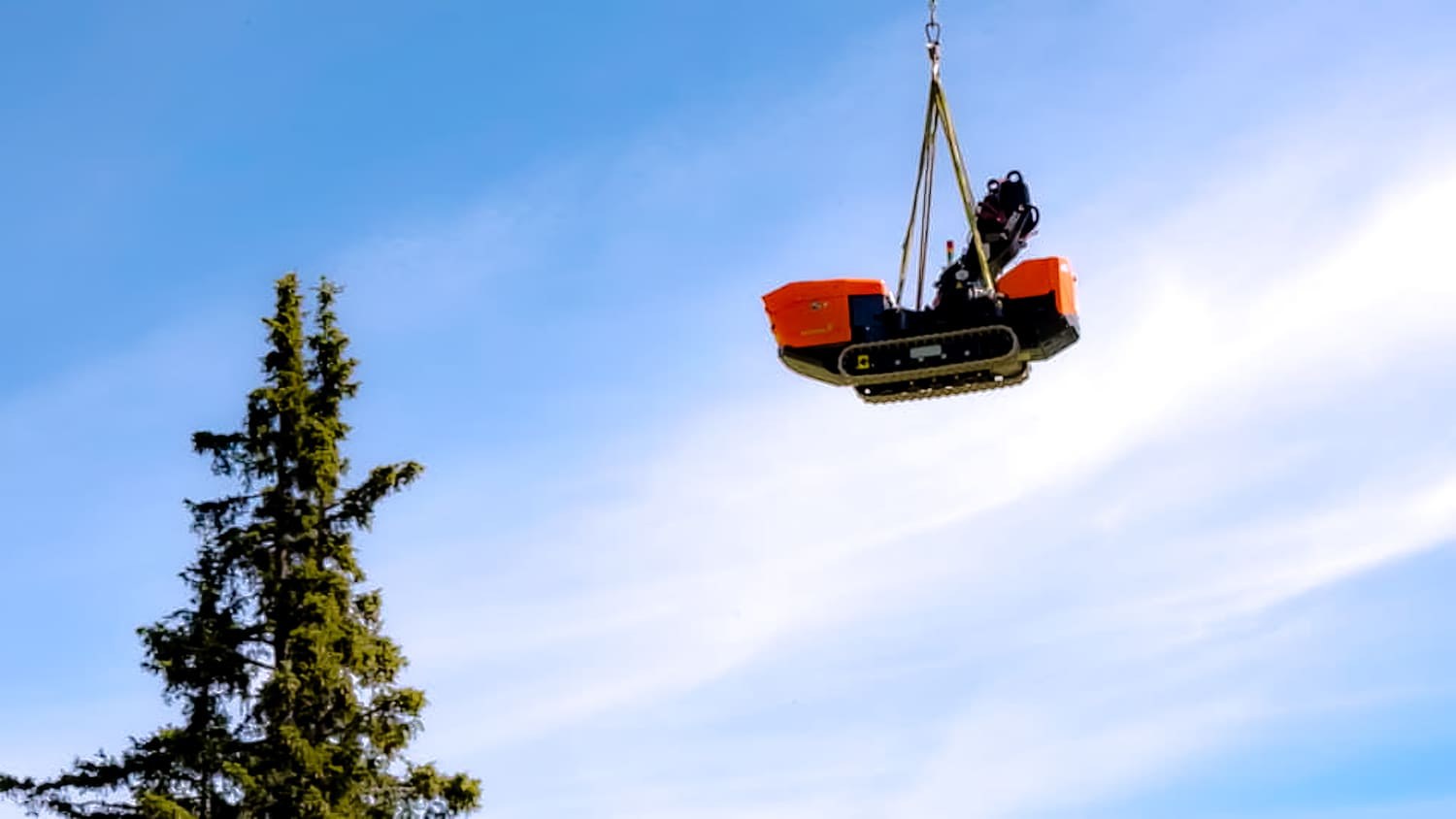
Strip-down began at NMG’s premises in Verona. The telescopic boom came off first, with controlled disconnection of the hydraulic and electrical circuits, followed by the four outriggers and finally the lithium battery pack and ancillary equipment. The crane was then split into four macro-blocks, each kept within a 1,000 kg limit and balanced for slinging under the helicopter. The flights themselves took only a few dozen minutes in total.
Reassembly at altitude followed the reverse sequence — battery first, then outriggers, then the telescopic boom. The whole operation, from dismantling to commissioning on site, was completed over two planned days. With the crane working, most of the hut’s perimeter structure went up in a few hours and the building was handed over turnkey in under a week.
After-sales as engineering support
Jekko’s after-sales team worked alongside NMG through each phase of the job, from the initial teardown to the commissioning check at the refuge.
“These projects really show what technical assistance means today. Our partners, like NMG Italia, are extremely skilled and technically qualified. Thanks to interlocutors like these, Jekko’s after-sales role becomes more consultative: supporting the customer through every operational and planning phase, especially when conditions become extreme.”
— Igor Pachera, After Sales Manager, Jekko
On remote sites where weather closes the working window without warning, transport planning is no longer a support task but a determining factor in whether the job runs at all. The full account of the project is published as a Jekko case study.
Project facts
- Crane: Jekko SPX328 tracked mini crane
- Site: Rifugio Gardenacia, Puez-Odle Nature Park, Alta Badia, Italy
- Altitude: 2,050 m above sea level, foot access only
- Transport: four helicopter loads, each under 1,000 kg
- Duration: two days for dismantling, flight, reassembly and commissioning
- Building: approx. 80 m² prefabricated timber mountain hut
- Parties: Municipality of La Villa (client), Nagler Holzbau Srl (contractor), NMG Italia (crane)
Related Stories
Helicopter lifts Liebherr derrick crane onto Paris high-rise roof
A Liebherr 200 DR 5/10 Litronic derrick crane was flown piece by piece onto the roof of the…
Tadano ATF 100G-4 lifts 2.5-tonne Bullhead at Wacken Open Air
Crane rental firm Wilhelm used its Tadano ATF 100G-4 to hoist the 2.5-tonne Bullhead skull onto the main…
Seven jobs that show the range of Liebherr Tower Crane Solutions
From a luffing jib crane above the Sagrada Familia to rail-mounted flat-tops at Santiago airport and more than…