

Narrow access, soft ground and a 60-metre boom: rigging the Karl May Festival stage set
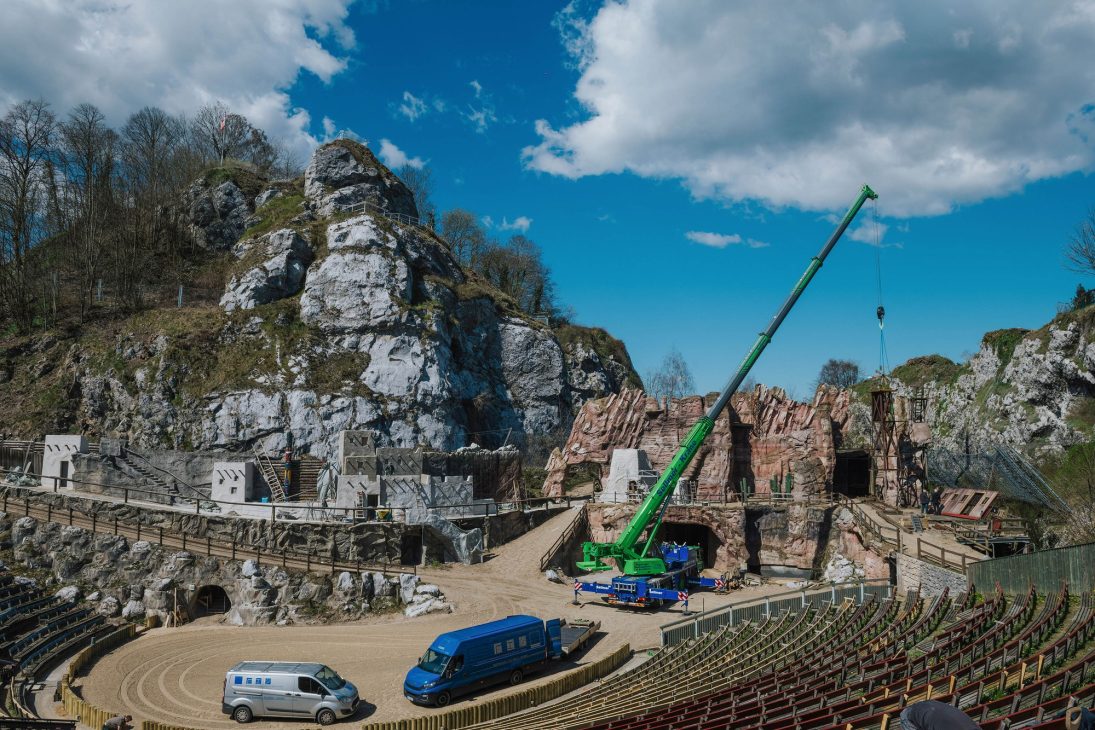
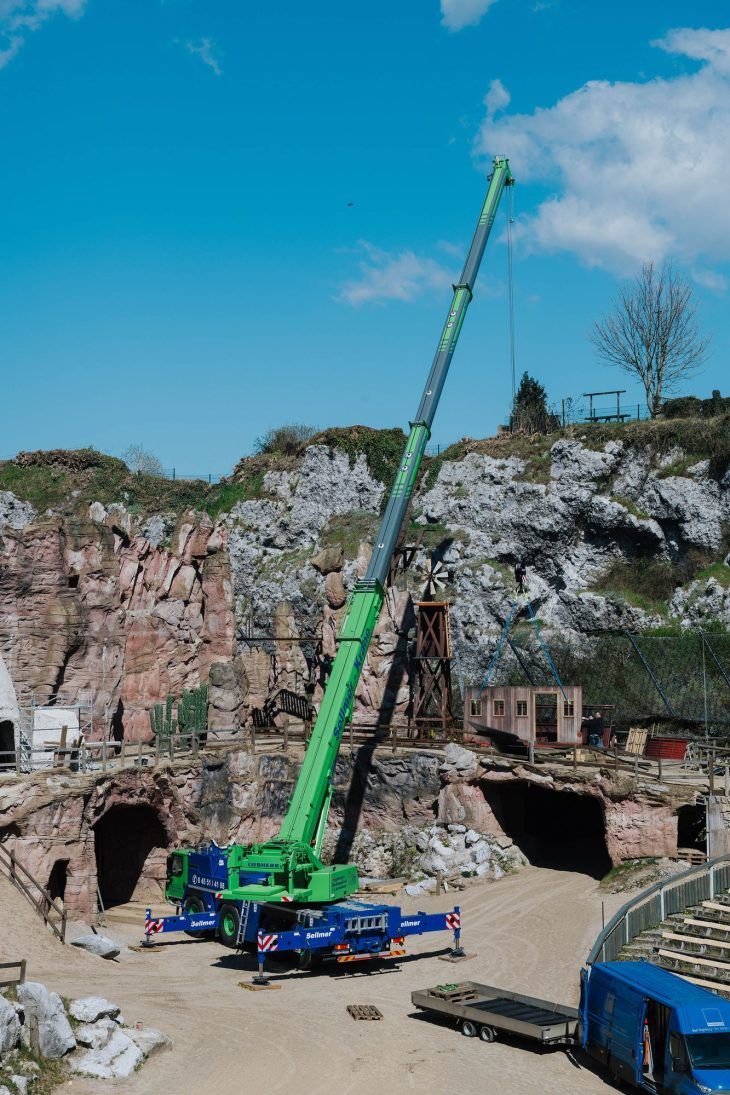
A Liebherr LTM 1090-4.2 has assembled the scenery for the 2023 Karl May Festival at Bad Segeberg in northern Germany, working from a single set-up position on ground that would not take a full outrigger base.
One crane position for the whole set
Segeberger Abschleppdienst & Krandienst has been building the stage set for the Karl May Festival for years, and for the 2023 season — a staging of “Winnetou I – Blood Brothers”, running from 24 June to 3 September — it used the LTM 1090-4.2 it took delivery of in February. The open-air theatre at Bad Segeberg, one of the largest in Europe with room for 7,700 spectators, has been staging adaptations of Karl May’s novels every year since 1952.
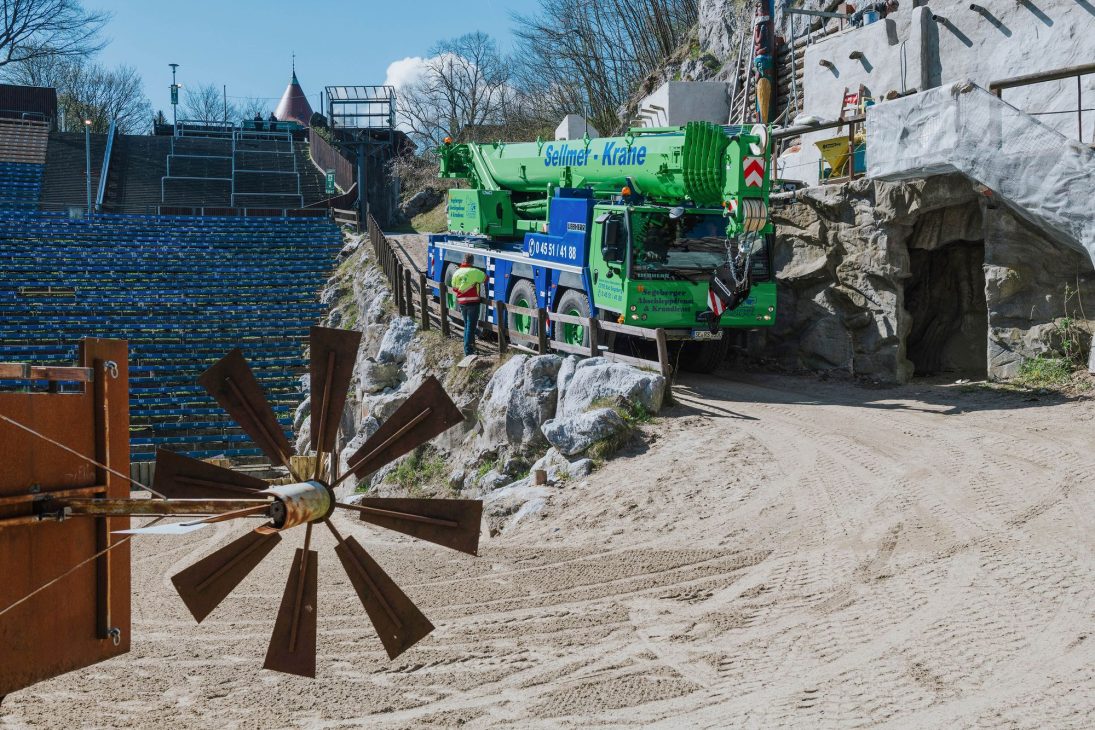
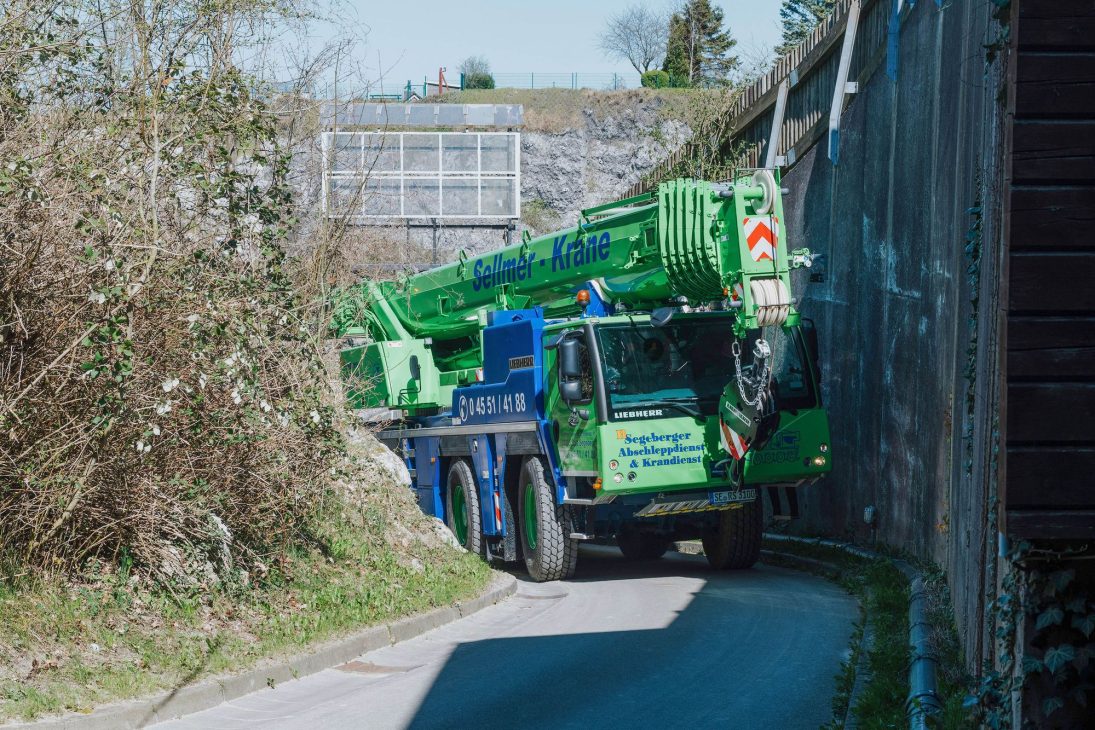
The job is a study in constraints rather than weight. The access road to the arena is narrow, so the crane has to be compact and manoeuvrable to get in at all. Once inside, the ground that will carry the machine is limited, which means picking one position and reaching everything from it.
“The Liebherr 90-tonner is perfect for this job. On the one hand, it’s sufficiently compact and manoeuvrable for the narrow access road. On the other, with its 60-metre telescopic boom, it can reach all the required assembly areas from one crane location, where the soil is sufficiently load-bearing. However, since we can’t fully extend all the sliding beams, the VarioBase® variable support base is worth its weight in gold since it enables us to work safely.”
— René Sellmer, owner, Segeberger Abschleppdienst & Krandienst
Taxi crane duty
The LTM 1090-4.2 travels with 8.8 tonnes of ballast at a 12-tonne axle load, which means it can turn up and work without a separate counterweight vehicle. For the festival set that configuration is more than adequate: the individual scenery components weigh up to 3.5 tonnes, and a new set is designed for each season, so the rigging sequence changes from year to year.
Because the sliding beams cannot all be run out to full width, the variable support base is doing real work here rather than simply adding capacity — it lets the crane’s load chart be calculated for the asymmetric outrigger positions the site actually allows, instead of forcing the operator back to the smallest fully supported chart.
From towing to lifting
Segeberger Abschleppdienst & Krandienst started life as a towing business and still runs recovery and towing vehicles alongside telescopic loaders, low-loaders and trailers. The LTM 1090-4.2 is now the largest crane on its fleet list.
Related Stories
LTM 1450-8.1 lifts historic suspension railway carriage in Wuppertal
Franz Bracht Kran-Vermietung used a Liebherr LTM 1450-8.1 with reduced outrigger base to place a 1950 suspension railway…
Helicopter lifts Liebherr derrick crane onto Paris high-rise roof
A Liebherr 200 DR 5/10 Litronic derrick crane was flown piece by piece onto the roof of the…
Tadano ATF 100G-4 lifts 2.5-tonne Bullhead at Wacken Open Air
Crane rental firm Wilhelm used its Tadano ATF 100G-4 to hoist the 2.5-tonne Bullhead skull onto the main…