

Why a telescopic crawler beat a rough terrain crane on a tight dam site near Eugene, Oregon
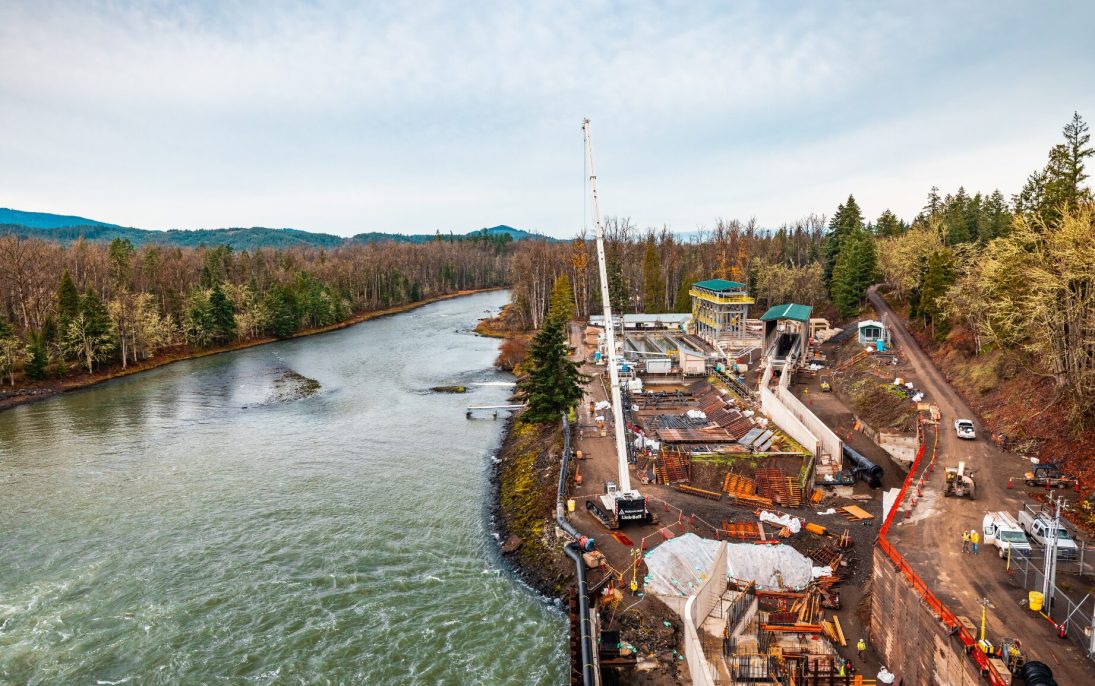
A Link-Belt TCC-1400 telescopic crawler crane has been working the Dexter Dam reservoir site near Eugene, Oregon, chosen over a rough terrain machine specifically for its ability to pick and carry in a confined working area.
The job
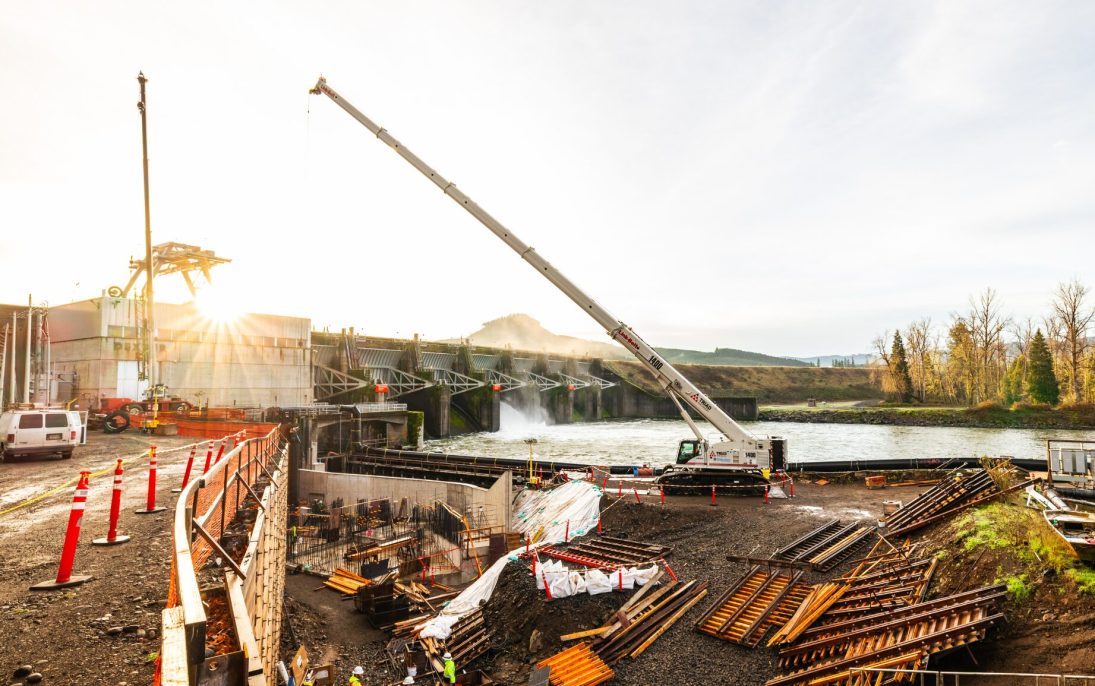
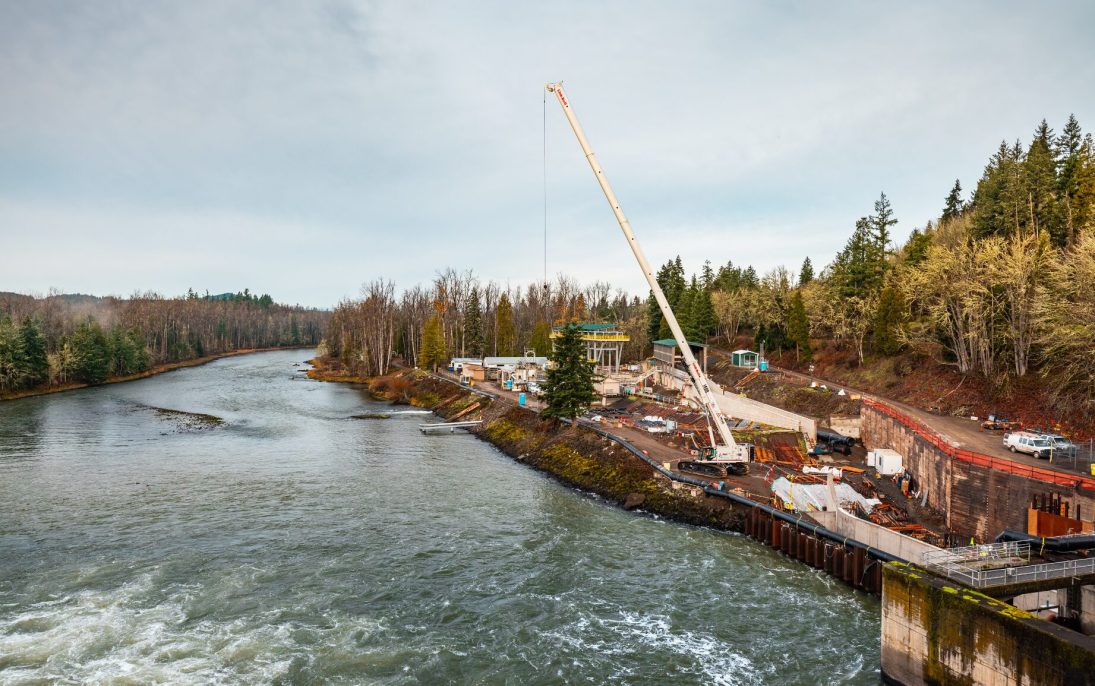
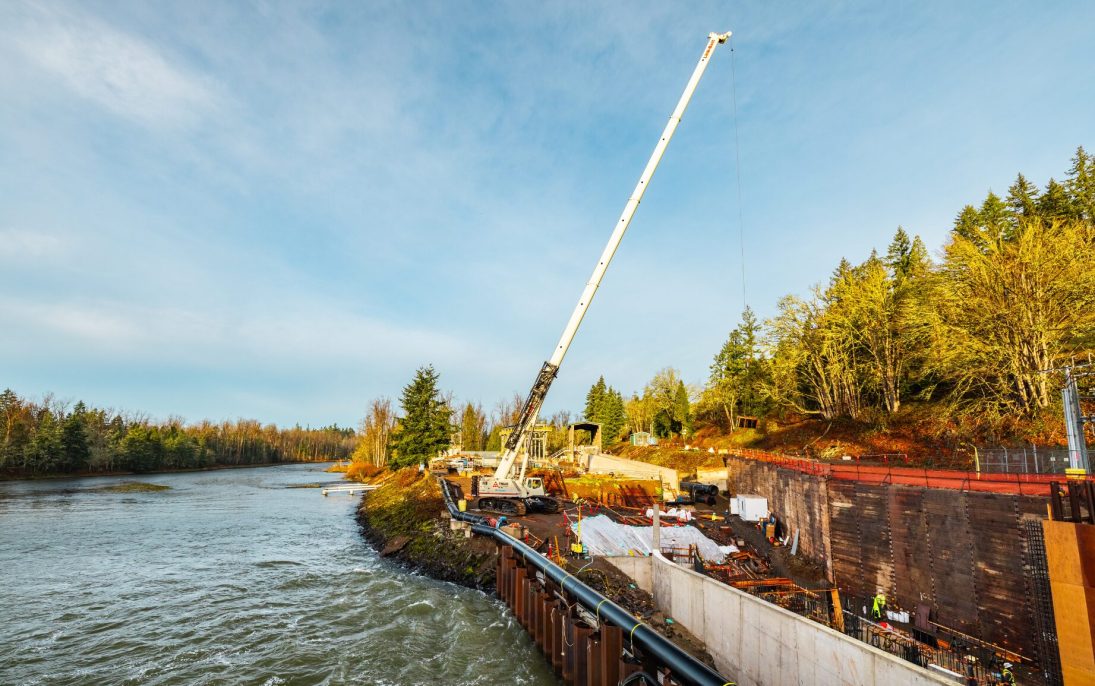
Work at the Dexter Dam reservoir, on the Middle Fork Willamette River south-east of Eugene, has been carried out on a narrow strip of ground between the water and the dam structure. Triad Machinery of Portland, Oregon, supplied and managed the crane on site, putting forward a TCC-1400 telescopic crawler rather than the rough terrain crane that might otherwise have been the default choice.
The deciding factor was mobility under load. Crawler undercarriages allow a machine to travel with a suspended load within its rated chart, and on a site where materials have to be moved repeatedly across restricted ground that saves a great deal of rigging and repositioning.
“Pick and carry was important to this job and why we went with the TCC versus an RT crane.”
— Burl Redman, territory manager, Triad Machinery
Telescopic boom, not lattice
The second argument for the TCC-1400 was the boom itself. A telescopic crawler can retract to a short working length in a way a lattice crawler cannot, and on a constrained site that changes how the machine behaves between picks.
“The TCC has a hydraulic boom, not a lattice boom, allowing for short or long boom lifting. This was a tight job site. If you have 100 or 200 feet of boom, it can be harder to move around. With a short boom, you don’t have as much of that pendulum.”
— Burl Redman, territory manager, Triad Machinery
Redman said the hydraulic boom increased the machine’s versatility tenfold and allowed for flexible operations across the site. Reducing load swing is not a minor point when a crane is travelling with a load past plant, formwork and site personnel in a narrow corridor.
Long boom still available
Crucially, the short-boom advantage did not come at the cost of reach. The same machine could be extended when the job called for it, which is what kept it in work across a range of tasks rather than being brought in for a single lift.
“A big reason the TCC was right for this job was the convenience with the ability to use a short boom. Pick and carry and short and long boom capacities were both important for this job.”
— Burl Redman, territory manager, Triad Machinery
It is a familiar trade-off for anyone specifying a crane on a restricted site: capacity chart on paper against what the machine can actually do once it is boxed in. On this job the telescopic crawler settled it.
Crane facts
- Model: Link-Belt TCC-1400 telescopic crawler crane
- Boom type: Hydraulic telescopic
- Key capability: Pick and carry on crawlers
- Supplied and managed by: Triad Machinery, Portland, Oregon
Project
- Site: Dexter Dam reservoir
- Location: Near Eugene, Oregon
- Site conditions: Confined working area
Related Stories
Helicopter lifts Liebherr derrick crane onto Paris high-rise roof
A Liebherr 200 DR 5/10 Litronic derrick crane was flown piece by piece onto the roof of the…
Tadano ATF 100G-4 lifts 2.5-tonne Bullhead at Wacken Open Air
Crane rental firm Wilhelm used its Tadano ATF 100G-4 to hoist the 2.5-tonne Bullhead skull onto the main…
Seven jobs that show the range of Liebherr Tower Crane Solutions
From a luffing jib crane above the Sagrada Familia to rail-mounted flat-tops at Santiago airport and more than…