

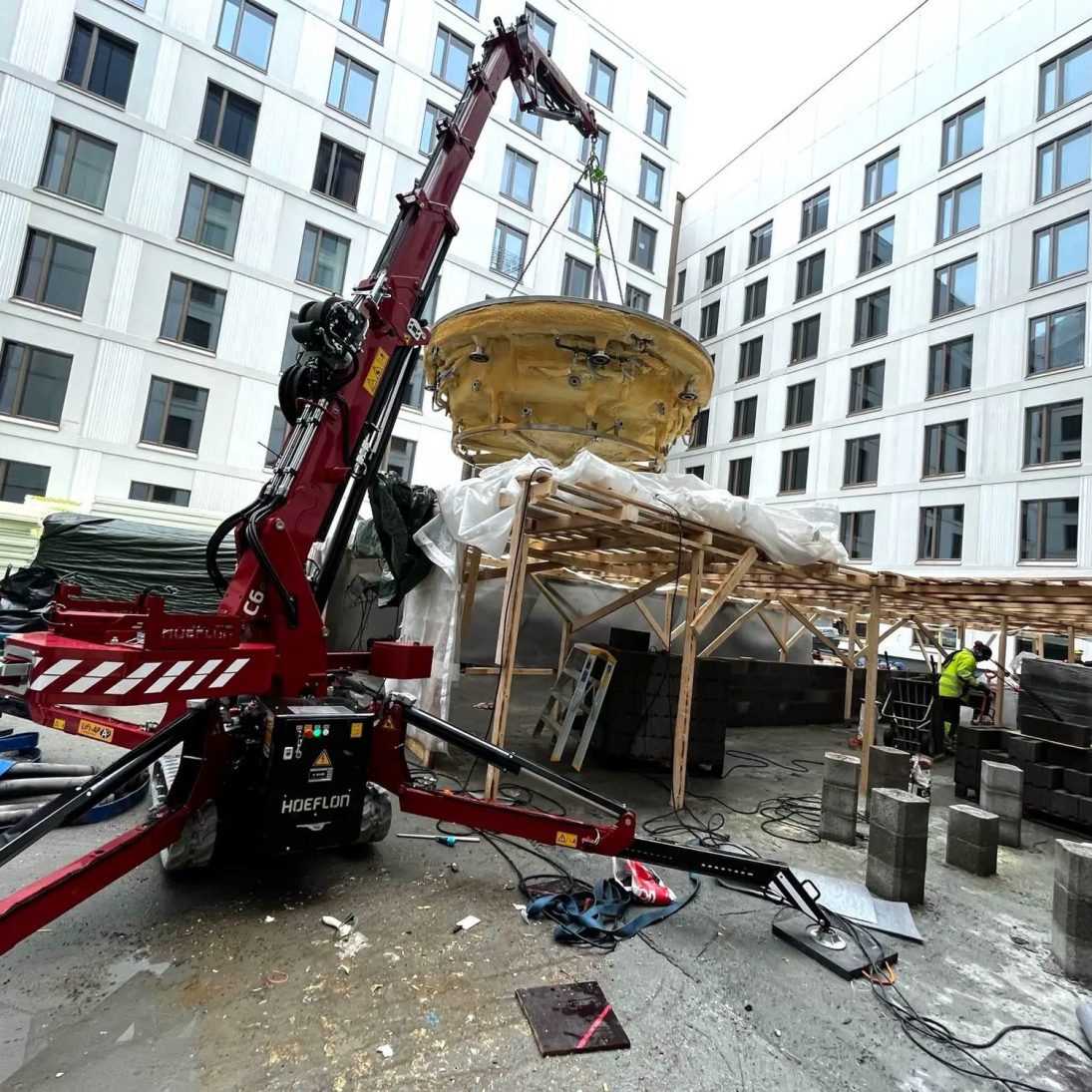
Hoeflon puts hard numbers on the electric versus diesel mini crane question
Electric starts paying off at roughly 570 operating hours a year, Hoeflon calculates in a new running-cost comparison that sets its battery-powered C6e against a diesel mini crane from the same three-tonne class.
Two machines, one capacity class
The Dutch compact-crane manufacturer has built the comparison around two machines that are used for the same work in practice: its own C6e, an electric mini crane running on battery power or mains electricity, and a diesel mini crane in the three-tonne class with a 15.2 kW engine. The C6e lifts 3,000 kg, reaches a lifting height of 16 m and weighs 2,850 kg; the diesel reference machine handles 2,980 kg at 2.5 m radius with a 12.52 m lifting height. Hoeflon stresses that this is a comparison within a capacity class, not between two technically identical machines.
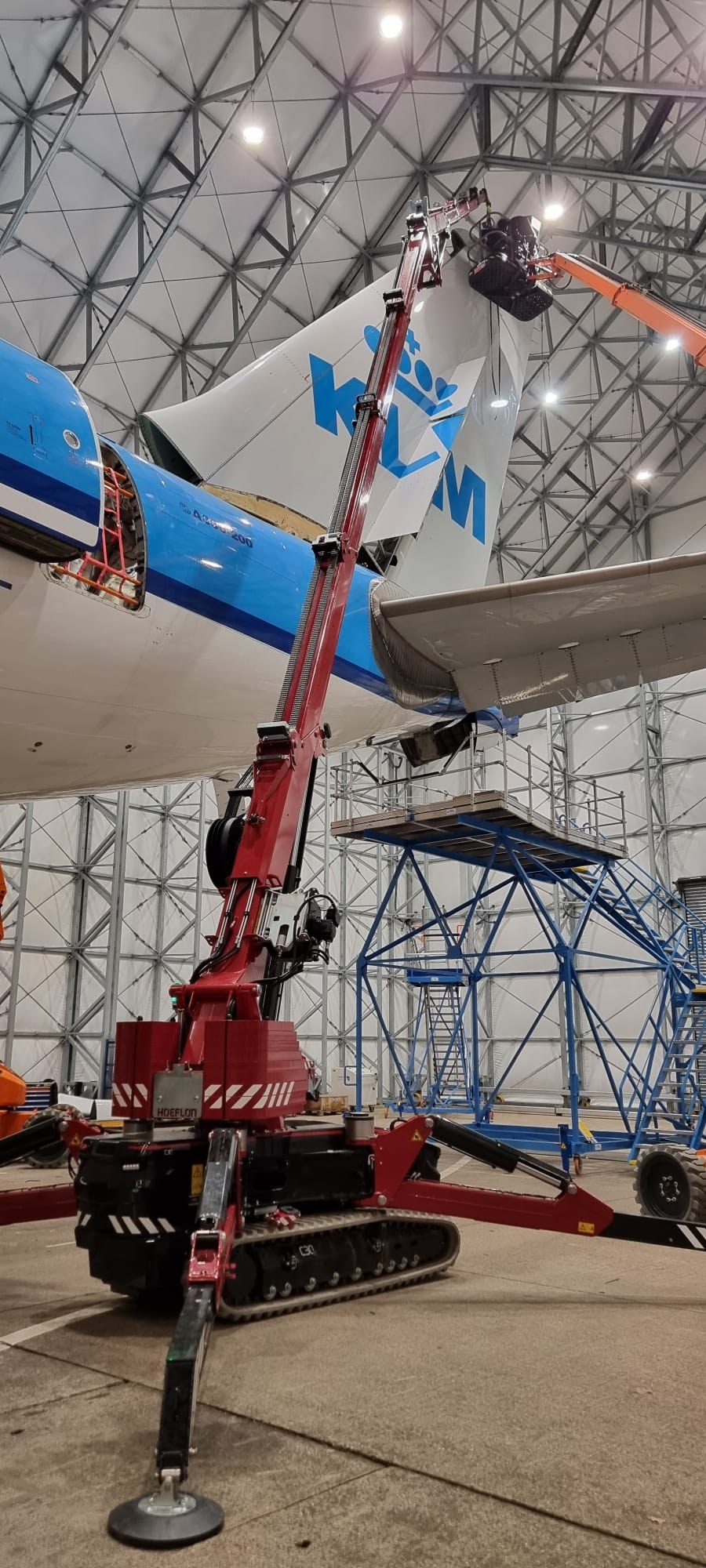
On the jobsite the difference in driveline is felt immediately. The C6e produces no exhaust gases and measures 63 dB(A) at one metre on the engine side, which opens up indoor work in factory halls, occupied buildings such as hospitals and schools, low-emission zones and night shifts governed by noise limits.
Where the money goes per operating hour
Per operating hour the electric crane draws 4.5 kWh from the grid, worth about €0.99, against 2.0 litres of diesel at €3.64 for the combustion machine. Operational CO2 comes to 1.10 kg per hour on the Dutch grid mix versus 6.50 kg for diesel. The electric driveline needs no engine oil, filters or fuel system, although hydraulics, tracks, outriggers and periodic inspections still require attention on both machines.
Adding maintenance, depreciation and a battery-replacement reserve of €2.00 per hour on the electric side, Hoeflon arrives at a total of €17.92 per operating hour for the C6e against €19.14 for diesel, calculated at 750 hours a year. The purchase gap in the example — €150,000 electric against €110,000 diesel — flips the outcome at low utilisation: at 250 hours a year diesel works out €6.45 per hour cheaper, while at 1,500 hours the electric advantage grows to €1.63 per hour. Break-even sits at around 570 hours a year, or about 820 hours when the machine is financed.
Diesel keeps its place
Hoeflon is careful not to declare diesel dead. Sites without a reliable power supply, long intensive stints without a charging window, low annual hours and international work with unknown charging infrastructure all still favour the diesel machine. Hybrid mini cranes that combine both drivelines exist, but carry two systems to maintain, extra weight and a higher purchase price. As for battery life, the manufacturer indicates eight to ten years, calculating with 10 years or 8,000 operating hours, whichever comes first.
Facts
- Hoeflon C6e: 3,000 kg capacity, 16 m lifting height, 2,850 kg own weight
- Energy use per operating hour: 4.5 kWh (€0.99) vs 2.0 l diesel (€3.64)
- CO2 per operating hour: 1.10 kg vs 6.50 kg
- Total cost at 750 h/year: €17.92 vs €19.14 per hour
- Break-even: about 570 operating hours a year, 820 when financed
- Example purchase prices: €150,000 electric, €110,000 diesel
Related Stories
Grove Wire Rope Cleaner updated to fit ropes on any crane brand
Customer feedback has led Manitowoc to redesign its automated Wire Rope Cleaner, which now suits ropes from 12…
Spierings eLift wins JDL d’Or 2026 for equipment electrification
Spierings Mobile Cranes has won the JDL d'Or 2026 at JDL Expo in Beaune, taking first place in…
Potain launches battery energy systems for tower cranes
Manitowoc's new Potain Power Solutions battery systems are built for tower crane duty cycles, offering 135 kVA to…